What's the actual difference between a petrol and diesel engine? Here's how each combustion type works, where each one excels, and which makes more sense for different NZ drivers
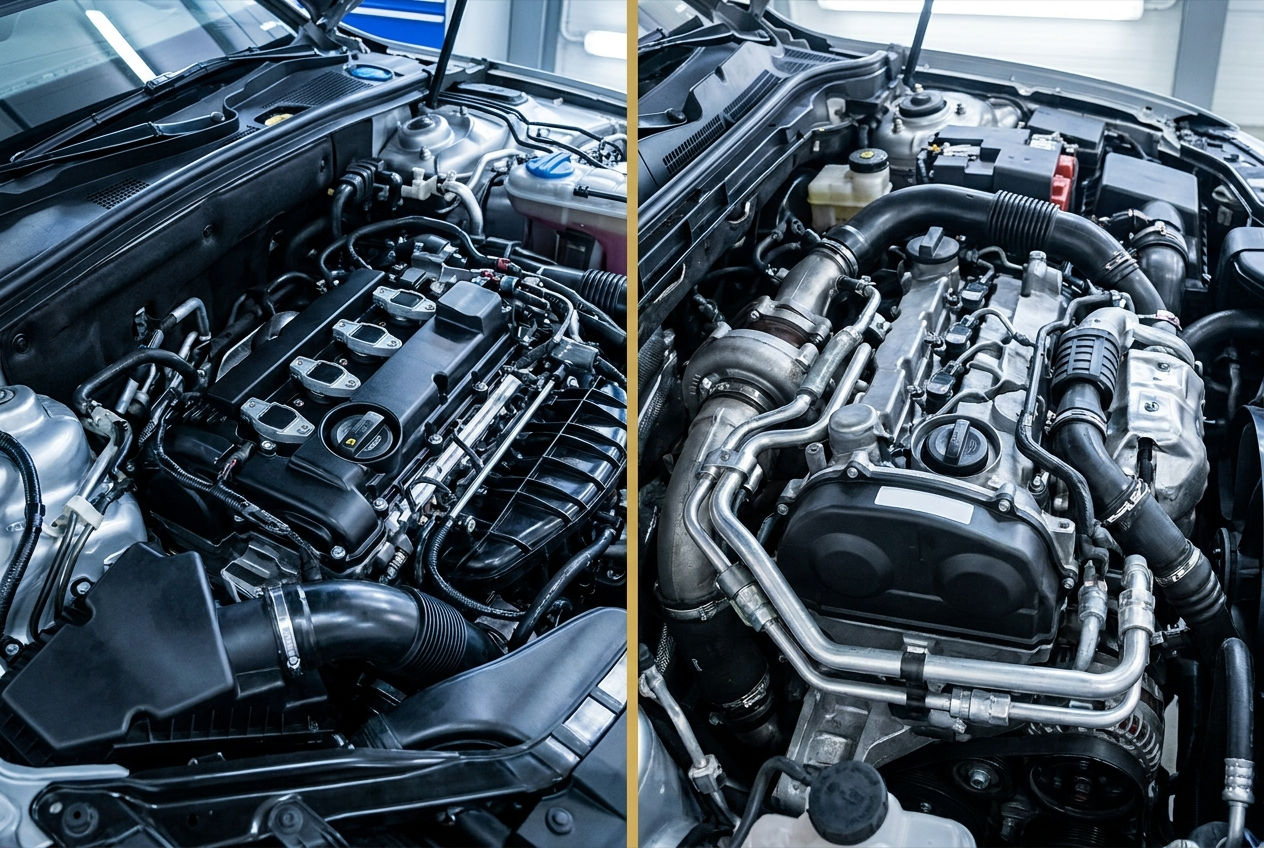
Most drivers have a vague sense that petrol and diesel engines are different, one uses a spark plug, the other doesn't, but few could explain precisely why that difference exists, what it means for how each engine behaves, and why it matters when choosing a vehicle. Understanding the fundamentals makes you a better-informed buyer and helps explain why certain vehicles suit certain uses so much better than others.
Here's how each combustion type actually works, where each excels, and how to think about the choice in a New Zealand context in 2026.
The shared foundation: internal combustion
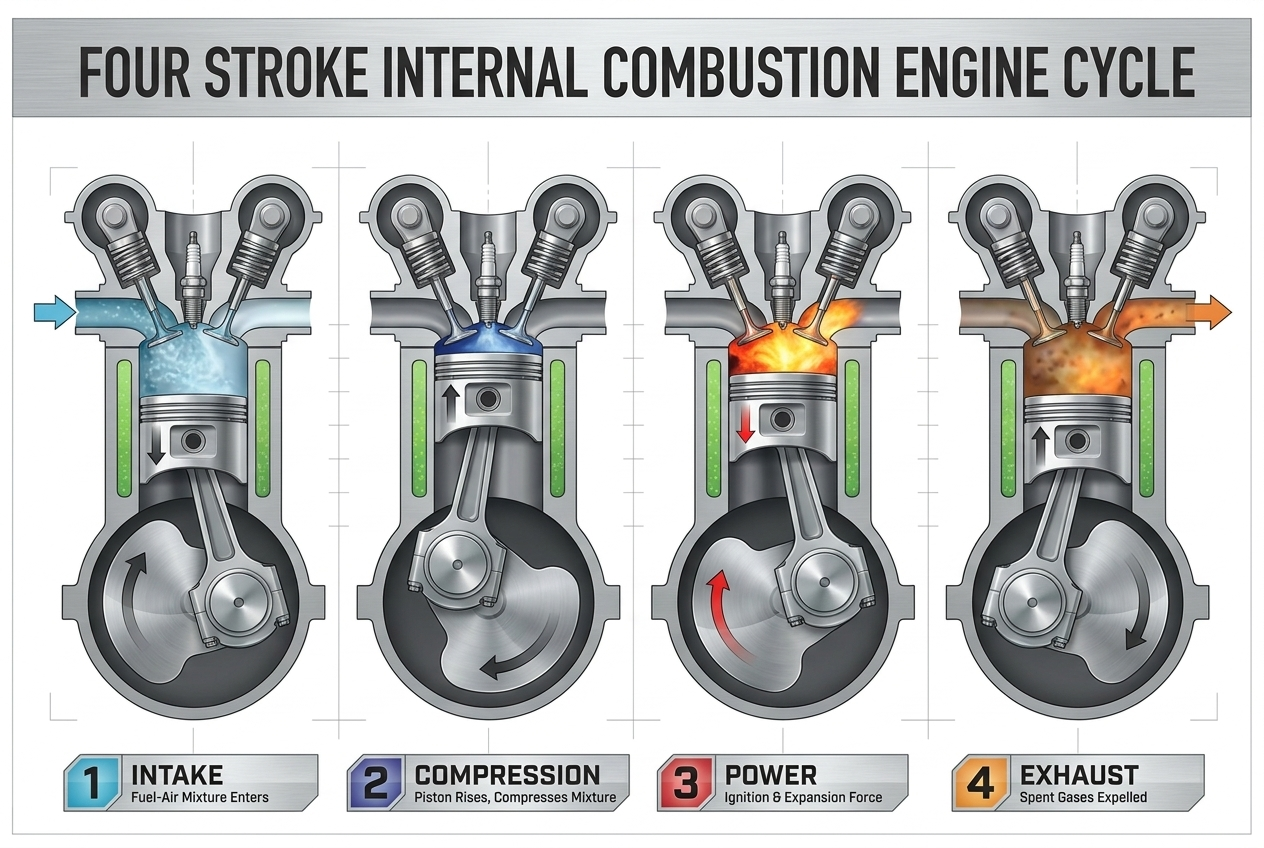
Both petrol and diesel engines are internal combustion engines, meaning they generate power by burning fuel inside the engine itself, rather than externally as a steam engine would. Both follow the same basic four-stroke cycle:
- Intake: The piston moves down, drawing a mixture of air and fuel into the cylinder
- Compression: The piston moves back up, compressing the mixture
- Power: The fuel-air mixture ignites, forcing the piston down powerfully
- Exhaust: The piston moves back up, pushing the burnt gases out
The fundamental difference between petrol and diesel engines lies in Step 3, specifically, how ignition is triggered.
How a petrol engine works
In a petrol engine, fuel and air are mixed together before compression, either by fuel injectors spraying petrol directly into the cylinder (direct injection, common on modern engines) or by mixing in the intake system (port injection, common on older designs).
This fuel-air mixture is then compressed by the piston, but not too much. Compress a petrol-air mixture too aggressively and it will ignite spontaneously and unevenly before the piston reaches the top of its stroke, causing a phenomenon called "knock" or "detonation" that can damage the engine. Petrol engines therefore use relatively modest compression ratios, typically between 10:1 and 13:1 on modern naturally aspirated engines.
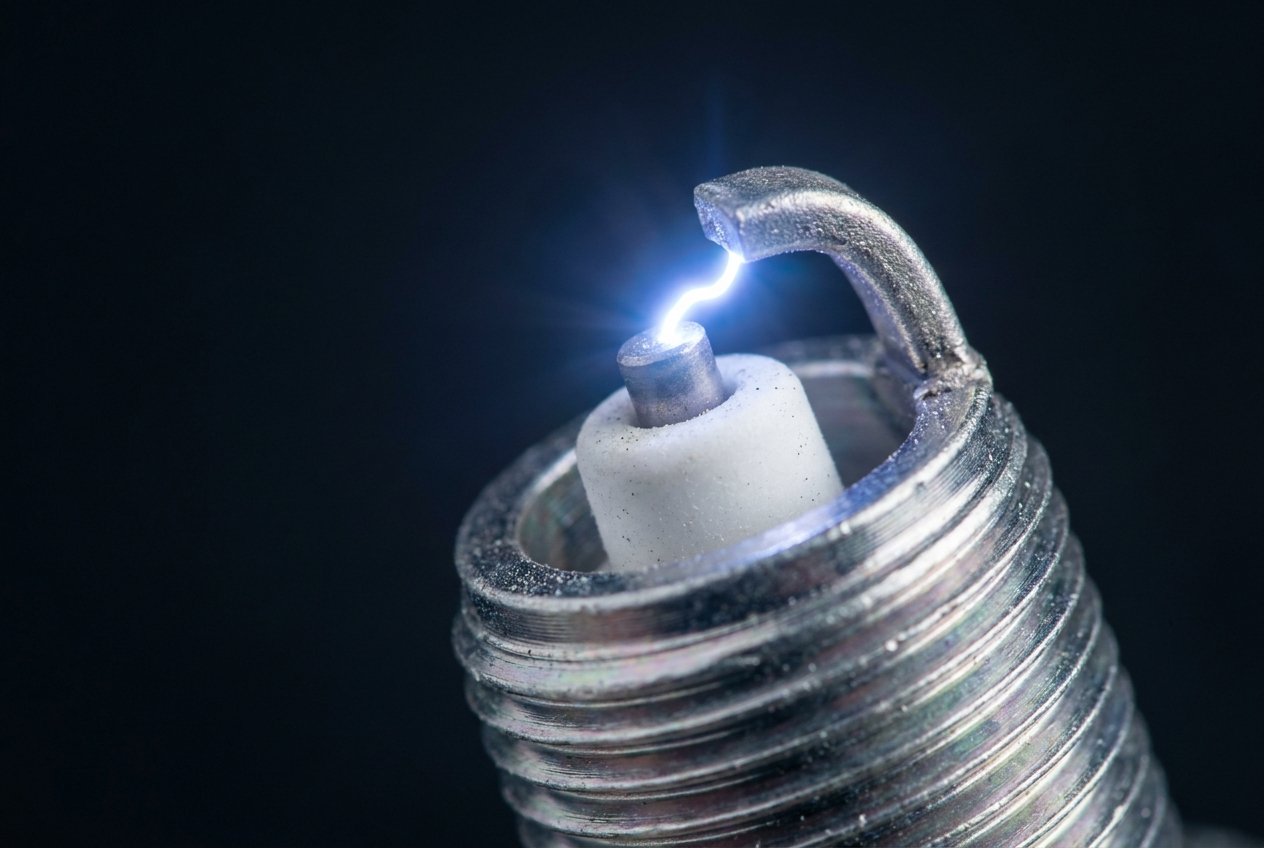
At the top of the compression stroke, a spark plug fires, generating a precisely timed electrical spark that ignites the compressed mixture in a controlled, even burn that drives the piston down powerfully.
The key components unique to petrol ignition:
- Spark plugs — one per cylinder, requiring periodic replacement
- Ignition coils — generate the high voltage needed for the spark
- Throttle body — controls airflow into the engine to manage power output
How a diesel engine works
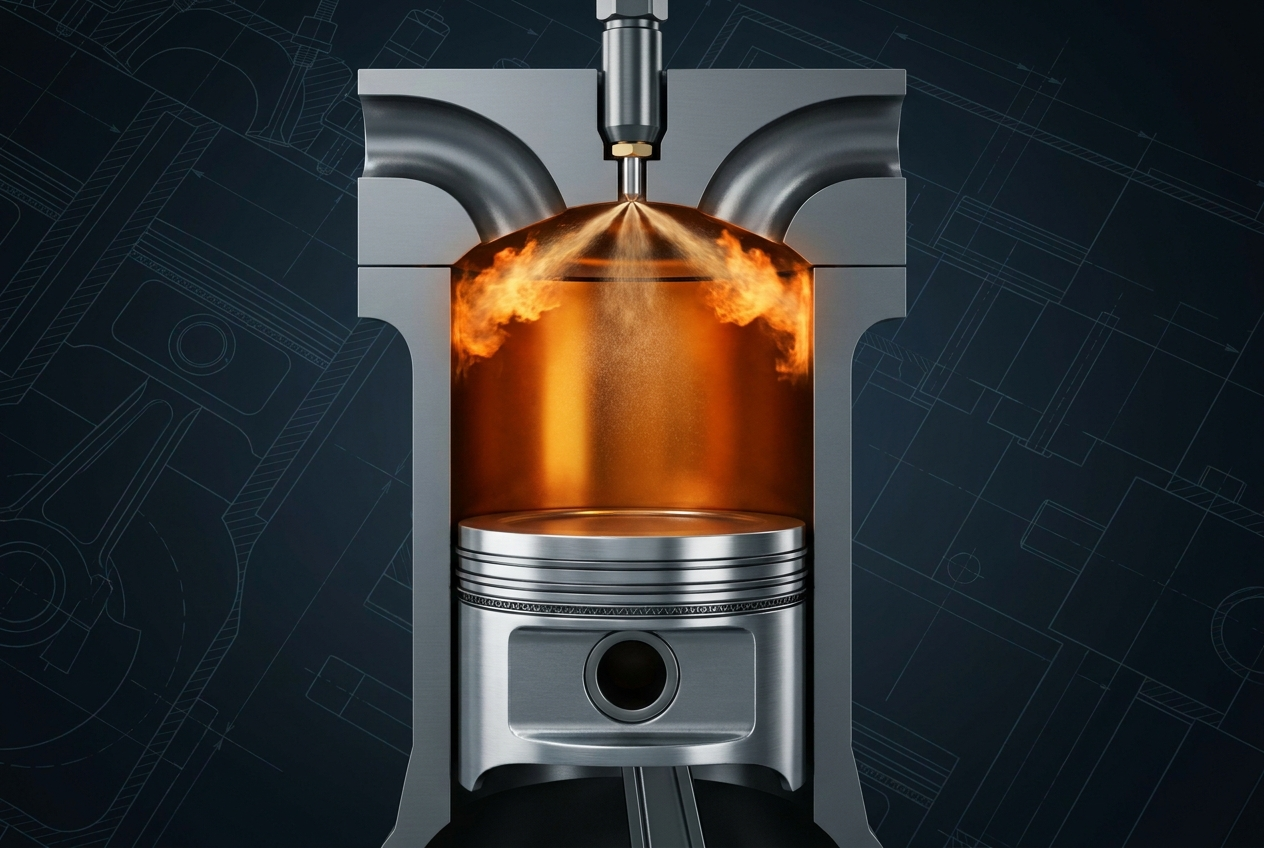
Diesel engines take a fundamentally different approach to ignition, one that eliminates the spark plug entirely.
In a diesel engine, only air is drawn into the cylinder during the intake stroke, no fuel. That air is then compressed far more aggressively than in a petrol engine, typically at ratios between 14:1 and 25:1. This extreme compression heats the air to very high temperatures, often exceeding 700–900°C, entirely through compression alone.
At the top of the compression stroke, diesel fuel is injected directly into this superheated air at extremely high pressure. The fuel ignites spontaneously on contact with the hot compressed air, no spark required. This is called compression ignition, and it's the defining characteristic of every diesel engine ever built.
The key components unique to diesel ignition:
- High-pressure fuel injectors — operating at pressures of 1,500 to 2,500 bar on modern common rail systems, compared to 50–300 bar for petrol direct injection
- Common rail fuel system — stores fuel at very high pressure for precisely timed injection events
- Glow plugs — electrical heating elements used to pre-warm the combustion chamber on cold starts, helping diesel ignite reliably when the engine is cold
- No spark plugs, no ignition coils
Why the compression difference matters
The higher compression ratio of diesel engines has cascading effects on every aspect of how they behave:
Thermal efficiency: Higher compression ratios extract more energy from the same amount of fuel. Diesel engines are typically 30–40% thermally efficient, compared to 20–35% for petrol engines. This is the primary reason diesel vehicles use less fuel per kilometre for equivalent work.
Torque characteristics: Diesel fuel ignition is slower and more progressive than a spark-ignited petrol burn. This produces a longer, more sustained push on the piston, which is what generates torque. Diesel engines produce their maximum torque at low RPM, often peaking between 1,500 and 2,500 RPM. This makes diesel engines feel very strong from low speeds, exactly what you want when towing, carrying heavy loads, or pulling away in hilly terrain.
Power characteristics: Petrol engines rev more freely, their sharp, fast combustion suits high RPM operation. Petrol engines typically produce peak power higher in the rev range (4,000–7,000 RPM is common) and feel more responsive to sudden throttle inputs. They're a natural fit for vehicles where spirited driving matters.
Engine construction: Because diesel engines generate far higher cylinder pressures during combustion, they must be built more robustly, heavier cylinder blocks, stronger pistons, more substantial crankshafts. This contributes to diesel engines being heavier and more expensive to manufacture, but also generally longer-lived when maintained correctly.
Petrol vs diesel: the practical comparison for NZ drivers

Fuel economy: Diesel wins on raw fuel consumption for most driving, particularly long-distance highway driving and towing. A diesel SUV or ute will typically use 15–25% less fuel per 100km than an equivalent petrol model under the same conditions. At current NZ pump prices, that saving adds up significantly over 100,000km of ownership.
However, diesel fuel in New Zealand has historically cost slightly more per litre than 91 octane petrol (though prices fluctuate). The economy advantage narrows when calculated as cost per kilometre rather than litres per 100km.
Performance feel: Petrol engines feel more immediate and eager, they respond quickly to throttle inputs and love to be revved. If you enjoy a spirited drive or frequently need sharp acceleration, petrol has a more satisfying character. Diesel engines feel strong and effortless at lower revs, the power is always there, delivered in a calm, muscular way that suits relaxed motorway cruising and loaded driving.
Towing and payload: Diesel is the clear choice for anyone who tows regularly or carries heavy loads. The low-RPM torque advantage is significant in real-world towing, a diesel ute or SUV will pull a laden trailer up a hill with noticeably less effort than an equivalent petrol. This is why virtually every tradesperson's ute in New Zealand runs on diesel.
Urban driving: For predominantly city and suburban use with shorter trips, petrol has practical advantages. Diesel particulate filters (DPF), a component on all modern diesel vehicles that captures soot from the exhaust, require sustained high-temperature operation to "regenerate" (burn off accumulated soot). Short urban trips don't provide enough heat for this process, and a diesel that rarely sees a motorway run can develop DPF problems over time. A petrol engine has no such requirement.
Servicing costs: Modern petrol engines are generally cheaper to service than modern diesels. Diesel engines have more complex fuel systems (high-pressure common rail injectors, DPF, EGR valves) that can be expensive to repair or replace when they go wrong. Diesel injectors on high-mileage vehicles are a particularly significant service item, a full set of injectors on a common rail diesel engine can cost thousands of dollars.
Longevity: When maintained correctly, diesel engines are generally longer-lived than petrol engines, partly because of their more robust construction and partly because diesel fuel provides better lubrication to fuel system components than petrol does. A well-maintained diesel ute or van with 300,000–400,000km is not unusual; the equivalent petrol vehicle is typically showing more wear at the same mileage.
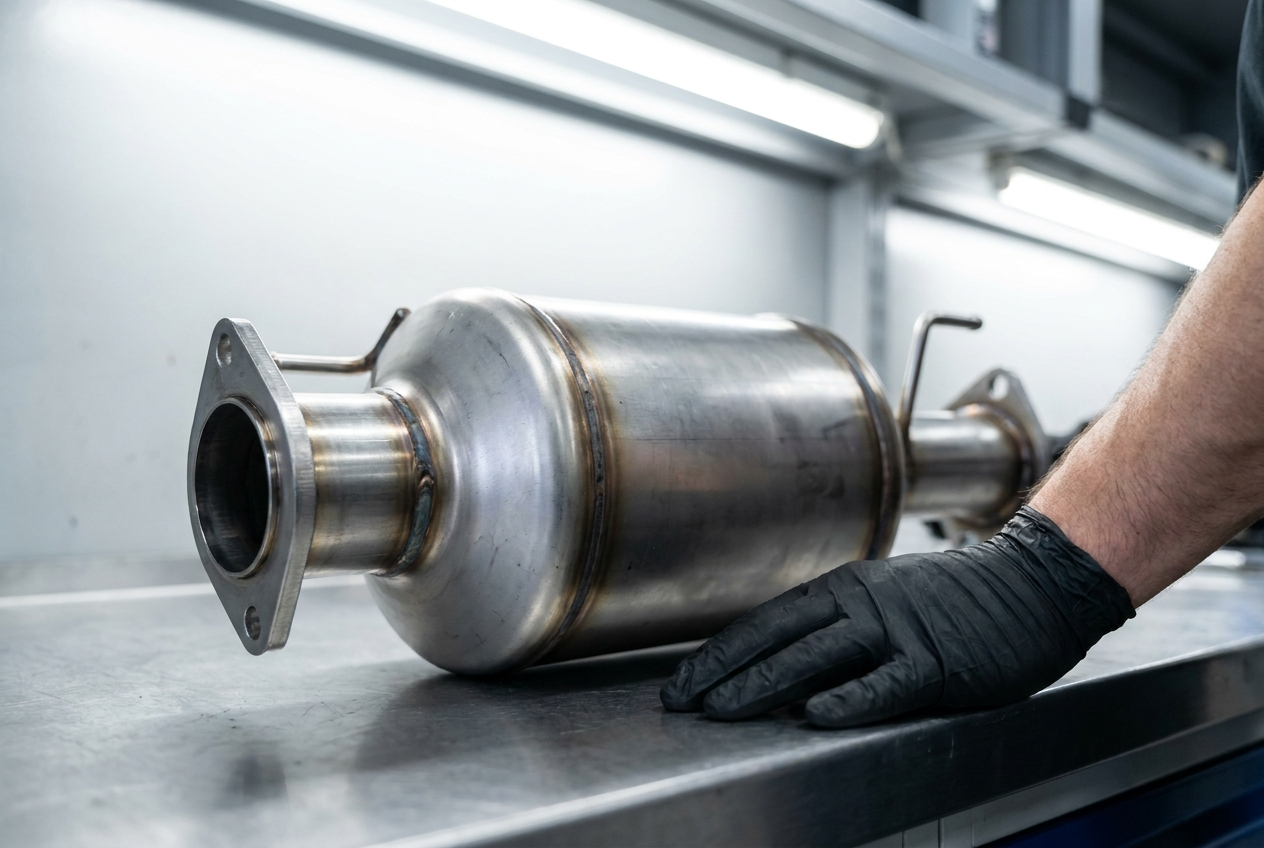
Emissions: Both fuel types produce CO2 as a byproduct of combustion, diesel typically produces slightly less CO2 per kilometre than petrol due to its higher efficiency. However, diesel combustion produces more nitrogen oxides (NOx) and particulate matter than petrol, which is why modern diesel vehicles require DPFs and EGR systems, and why diesel vehicles face increasing regulatory scrutiny in urban areas globally.
The New Zealand context in 2026
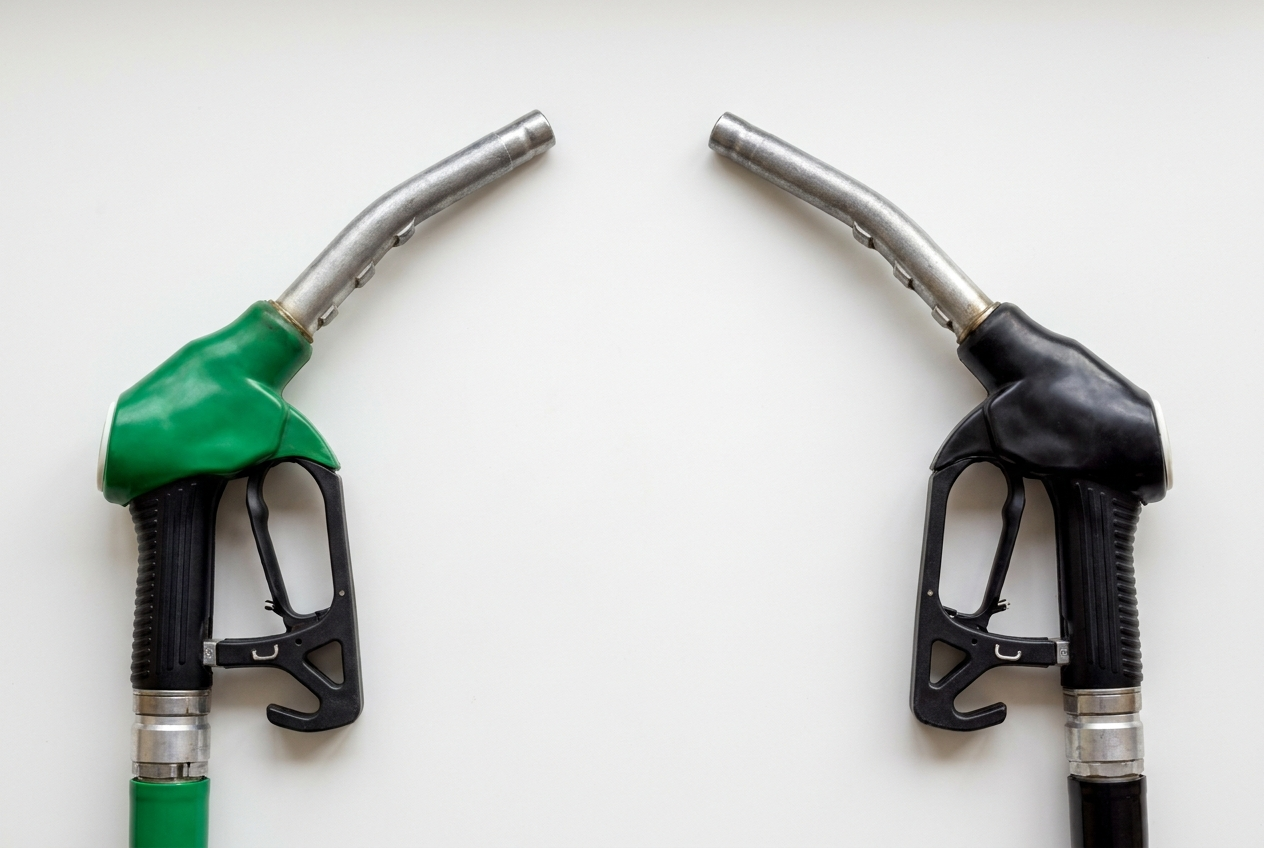
New Zealand's vehicle fleet reflects these trade-offs clearly. Diesel dominates the ute, van, and heavy SUV segments, Toyota Hilux, Ford Ranger, Mitsubishi Triton, and Toyota Land Cruiser all sell overwhelmingly in diesel specification. Diesel makes clear sense for the work use and towing capability these vehicles are bought for.
Passenger cars and smaller SUVs increasingly lean petrol, particularly with the growth of petrol-hybrid options that close much of the fuel economy gap that previously made diesel attractive for high-mileage commuters. The Toyota Corolla Hybrid, RAV4 Hybrid, and Mazda CX-5 (petrol, non-hybrid) are among the most popular choices for family car buyers who would previously have considered diesel.
The growing availability of used EVs also means that buyers who previously chose diesel for fuel economy reasons, particularly high-mileage daily drivers, now have a third option that often undercuts both on running costs.
Quick reference summary
| |
Petrol |
Diesel |
| Ignition method |
Spark plug |
Compression ignition |
| Compression ratio |
10:1 – 13:1 |
14:1 – 25:1 |
| Peak torque |
Higher RPM |
Low RPM |
| Fuel economy |
Lower |
Higher |
| Best suited to |
Urban, spirited driving, shorter trips |
Towing, payload, long distance |
| Servicing complexity |
Lower |
Higher (DPF, injectors, EGR) |
| Engine longevity |
Good |
Generally excellent |
| Urban DPF risk |
Not applicable |
Relevant for short-trip only use |
The bottom line
Neither petrol nor diesel is universally better, the right choice depends on how you use the vehicle. For most New Zealand drivers doing mixed urban and motorway driving without towing, a modern petrol, or increasingly, a petrol hybrid, is the more practical choice. For tradespeople, farmers, towers, and high-mileage drivers covering long daily distances, diesel's torque advantage and fuel economy remain genuinely compelling.
And of course, for any driver who can charge at home, an EV sidesteps the petrol vs diesel question entirely, delivering running costs and driving characteristics that both combustion types can't match for day-to-day use.
Disclaimer
The content in this post is based on our own research, experience, and opinion and is intended for general informational purposes only. It does not constitute professional mechanical or technical advice. While we strive for accuracy, specific figures including fuel economy, compression ratios, and servicing costs vary significantly between makes, models, and individual vehicle condition. We encourage readers to conduct their own research and consult qualified professionals before making any purchasing decisions.
Target keywords: petrol vs diesel engine NZ, how does a diesel engine work, petrol vs diesel which is better NZ, petrol diesel difference explained
Last updated: June 2026