Ice, black ice, rain and snow make NZ winter roads genuinely hazardous. Here are the 5 most important winter driving tips to keep you safe, based on NZTA, AA and MTA guidance.
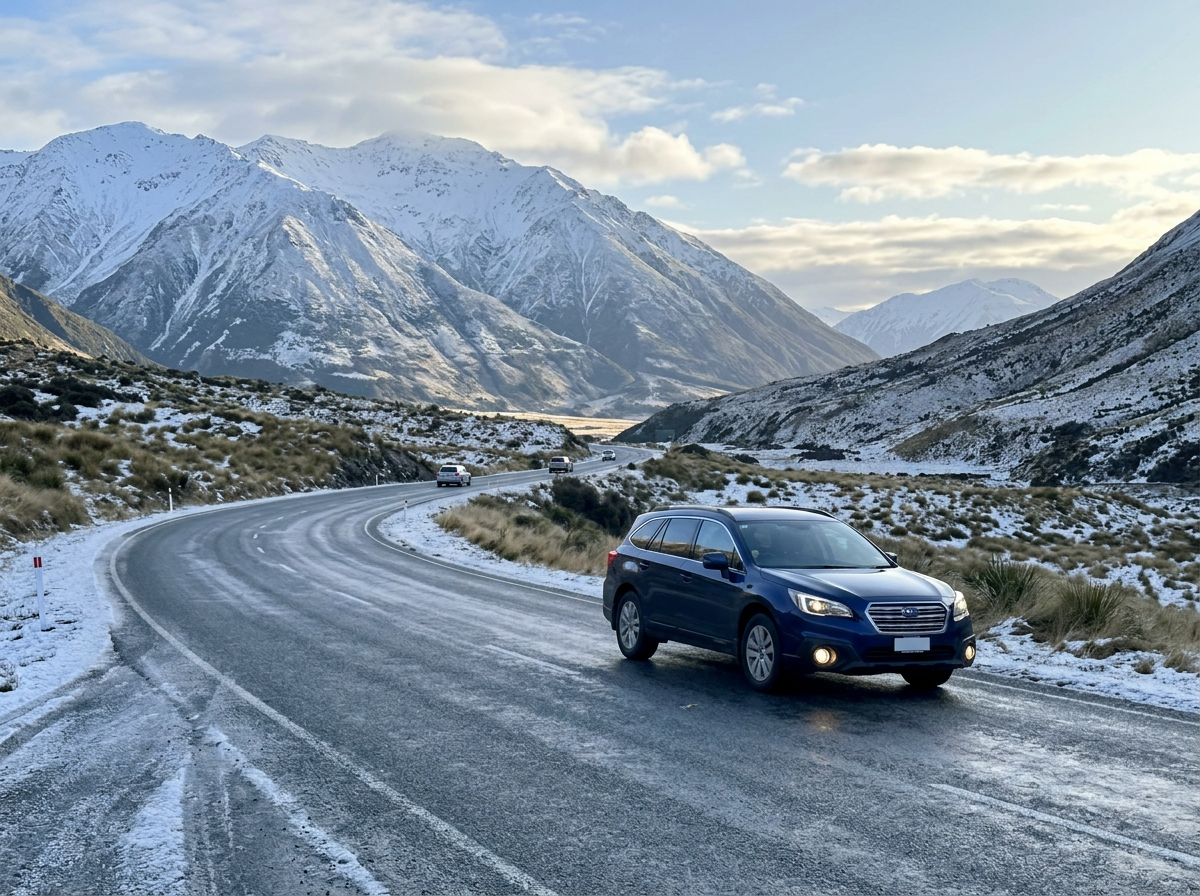
New Zealand winters bring a bit of everything, driving rain on the coasts, heavy frosts inland, black ice in the shady spots, and genuine snow across the alpine passes and much of the South Island. Conditions can change fast, and a road that's fine in the morning sun can be treacherous in the shade an hour later.
The good news is that safe winter driving comes down to a handful of well-established habits. Here are the five most important, drawn from the guidance of NZTA, the AA, and the MTA, the organisations that know New Zealand roads best.
1. Slow down and increase your following distance, dramatically
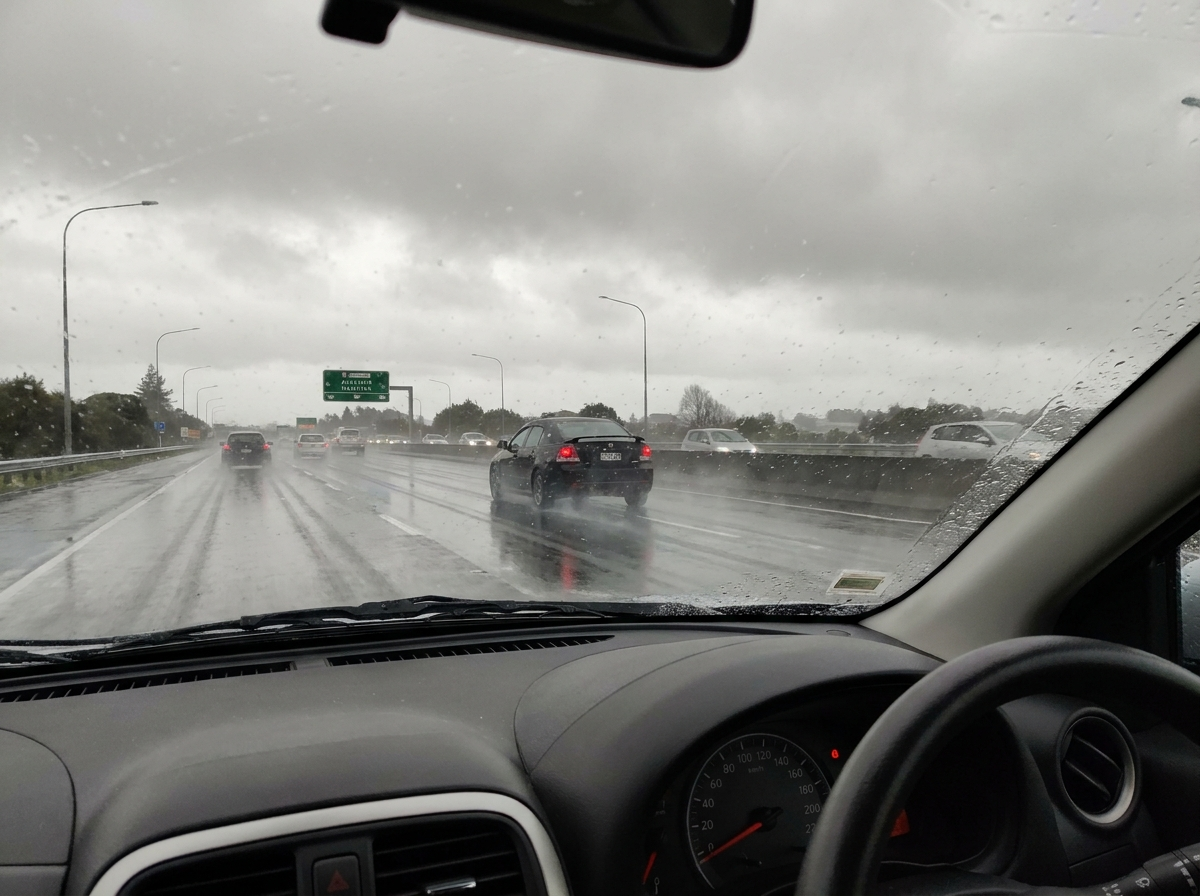
This is the single most important winter driving habit, and it's the one most people underdo.
Wet, icy, and snowy roads dramatically reduce the grip between your tyres and the road, which means your stopping distance increases enormously. Your stopping distance can increase ten-fold on a wet or icy road, which means you should leave ten times the gap between you and the car in front.
That's not a typo, ten times. The comfortable two-second gap you'd leave in the dry becomes dangerously inadequate in winter conditions. NZTA's guidance is consistent: adjust your speed to suit the conditions. If you're driving in ice or snow, drive slower than you usually would to avoid skidding or losing control.
Slowing down and leaving a big gap does two things: it gives you far more time to react to hazards, and it means any braking you do need to do can be gentle and progressive rather than sudden, which is exactly what keeps you from skidding.
2. Be smooth with everything, steering, braking, and acceleration
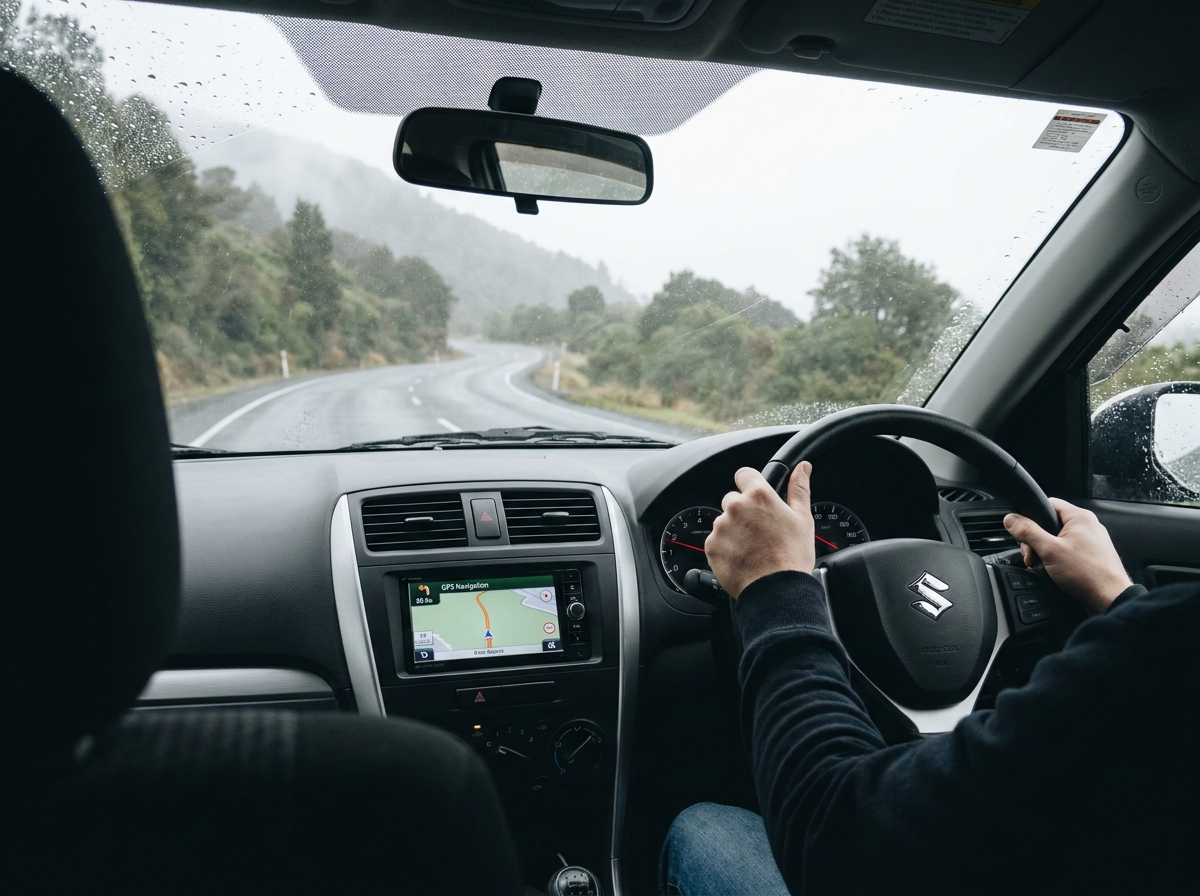
Winter is not the time for sudden inputs. When grip is limited, any abrupt action, a hard brake, a sharp turn, a burst of acceleration, can break traction and send you into a skid.
The AA's guidance is clear: avoid sharp cornering, harsh acceleration or jabbing the brakes in order to reduce the risk of skidding. Everything you do should be gentle and progressive.
This applies especially around corners, where braking and accelerating are most likely to unsettle the car. Brake gently before the corner while travelling in a straight line, then ease through it smoothly. On hills, the same principle applies, brake gently and progressively rather than just stamping on the pedal, and climb hills in the highest possible gear to reduce the chance of wheelspin.
If you drive an automatic and it has a manual or low-gear mode, use it on descents. Using low gears, especially on the way down slopes, gives you better control and lets the engine do the braking work for you, reducing reliance on the brakes, which is where skids often begin.
3. Watch for black ice, the hazard you can't see
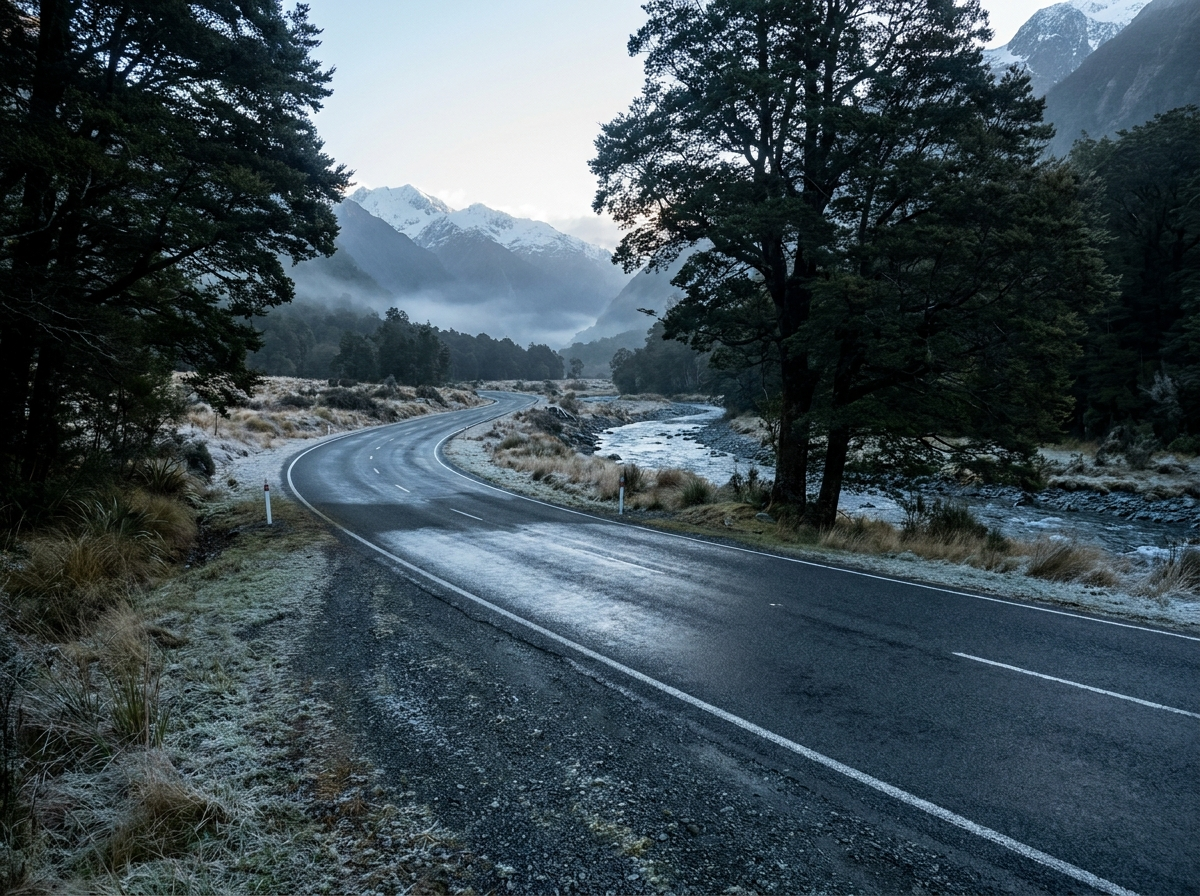
Black ice is the most dangerous winter hazard precisely because it's nearly invisible.
Black ice is a thin sheet of ice on the road that is dark in appearance, making it extremely hard for drivers to see. It is commonly found around waterways and lakes, more often in shady or cooler areas, and can cause drivers to lose control.
The key to managing black ice is anticipation rather than reaction, by the time you're on it, your options are very limited. Be especially alert in the conditions and locations where it forms: shaded stretches of road that don't get sun, bridges and overpasses (which freeze first), areas near water, and early mornings or late evenings when temperatures are lowest.
NZTA specifically warns that the danger isn't only visible snow: it's not just snow on the ground that is a potential hazard, it's heavy frosts and ice where the danger may not be as visible.
If you do hit black ice, the golden rule is to avoid sudden movements. Ease off the accelerator, keep the steering straight, and don't brake hard, let the car slow naturally until you're back on grippy road.
4. Make sure you can see, and be seen
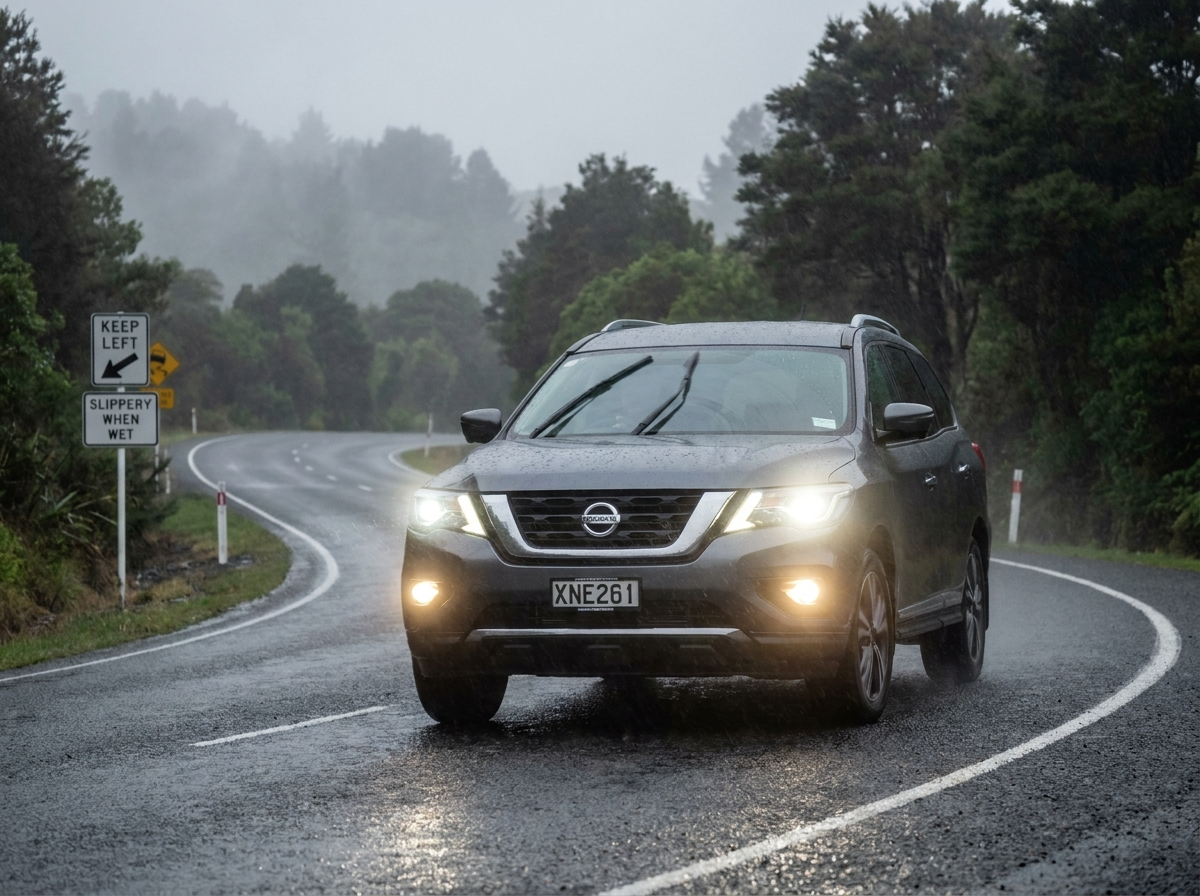
Visibility works both ways in winter, you need to see the road clearly, and other drivers need to be able to see you.
For your own visibility, start with clean glass. Good visibility is critical for safety. Prepare for winter driving by cleaning your windscreen and all interior glass thoroughly and removing any grease with detergent, spirits, or a household glass cleaner. A greasy, smeared windscreen is dramatically worse in the low winter sun and at night, and sunstrike from a low winter sun on a dirty screen can blind you completely for crucial seconds.
For being seen, use your headlights whenever conditions are poor. NZTA advises: make sure other people can see yo, switch on your headlights if it's raining, icy, snowing, or dark. If headlights switch on automatically when it's dark, you might need to turn them on manually during the day, as in some vehicles the automatic function doesn't work in daylight even when visibility is low.
That last point catches a lot of people out, daytime running lights aren't always the same as headlights, and many automatic systems won't turn your lights on in gloomy daytime conditions. When in doubt, switch them on manually.
5. Plan ahead, check conditions, and carry chains if heading to the snow
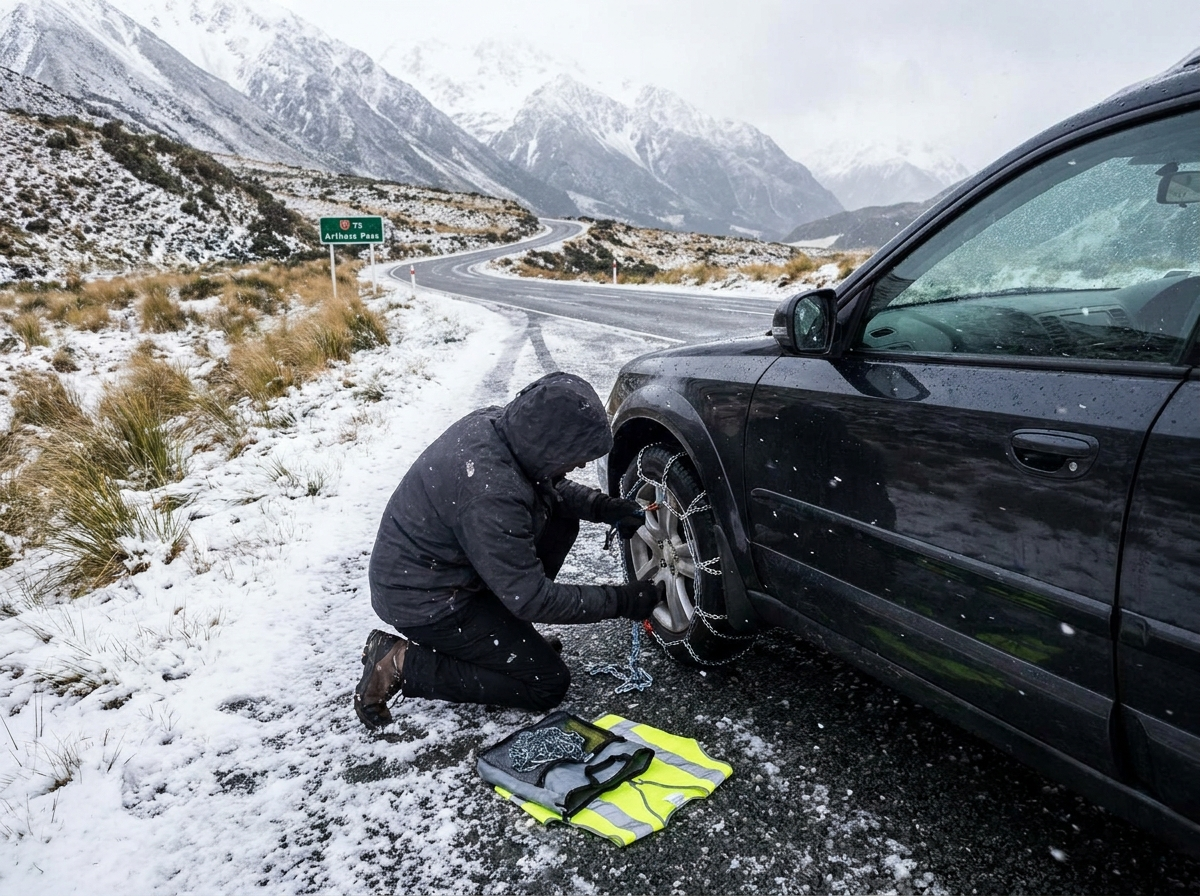
The safest winter driving decisions are often made before you leave the house.
Always check the weather and road conditions before you leave, especially as it gets darker and if conditions get worse. Check for traffic and travel updates on NZTA's regional Facebook pages or Journey Planner. If conditions are genuinely bad, the safest choice may be to delay your trip, if you can avoid or delay travel on roads while there is elevated risk, that's sensible.
If you do travel in snowy or icy conditions, timing matters: travel in the middle of the day when you can see better, and if you need to stop, pull over somewhere safe.
Heading to the ski fields or across an alpine pass? Chains are essential, and often legally required. When travelling on snow and ice, make sure you have chains available. When using chains, fit them to the driving wheels, for a front-wheel-drive car, chains go on the front. Critically, don't wait until you're stuck in a blizzard to learn how to fit them, make sure you have a set and have practised fitting them before your trip. Fitting chains for the first time, in the cold, on the side of a mountain road, is nobody's idea of fun.
It's also worth carrying a few winter essentials on longer or remote trips: warm clothing, snacks, water, and a fully charged phone, in case you're delayed or need to wait out a road closure.
One honest note on snow: if your vehicle isn't well-suited to snow and you're not confident, the AA's advice is refreshingly direct, if your vehicle isn't 4WD, it's best to avoid driving in snow at all. Many ski areas offer shuttles from lower car parks, and there's no shame in letting someone with the right vehicle and experience do the driving.
The bottom line
Winter driving in New Zealand doesn't need to be daunting, it needs to be respected. Slow down, leave a big gap, be smooth with every input, stay alert for the ice you can't see, keep your visibility clear, and plan ahead before you travel. Get these five habits right and you'll handle whatever a New Zealand winter throws at the road.
Before the cold really sets in, it's also well worth making sure your vehicle itself is ready, check out our companion guide, the 5-point winter safety checklist for your car, to make sure your tyres, battery, wipers, and lights are up to the job.
Disclaimer
The content in this post is based on our own research and guidance published by NZTA, the AA, and the MTA, and is intended for general informational purposes only. It does not constitute professional driving or safety advice. Road and weather conditions vary enormously across New Zealand and change rapidly. Always check current conditions via NZTA's Journey Planner before travelling, follow official guidance and road closures, and drive to the conditions on the day.
Target keywords: winter driving tips New Zealand, driving in snow NZ, black ice driving NZ, safe winter driving tips NZ