Do EVs catch fire more than petrol cars? Are they safe in a crash? Here's what the data actually shows about EV fire risk, thermal runaway, and crash protection, calmly and factually.
Few topics generate more anxiety, or more misleading headlines, than EV safety, and fire risk in particular. A single dramatic video of a burning electric car can travel further online than the statistics that put it in context. So let's set the emotion aside and look calmly at what the data actually shows about how safe electric vehicles really are.
The short version: EVs are, on the evidence, among the safest vehicles on the road, including when it comes to fire. Here's the full picture, honestly presented, including the areas where EV fires genuinely are different.
The fire question: what the data actually shows
Let's start with the concern that dominates the conversation, because the numbers are striking and consistent across multiple independent sources.
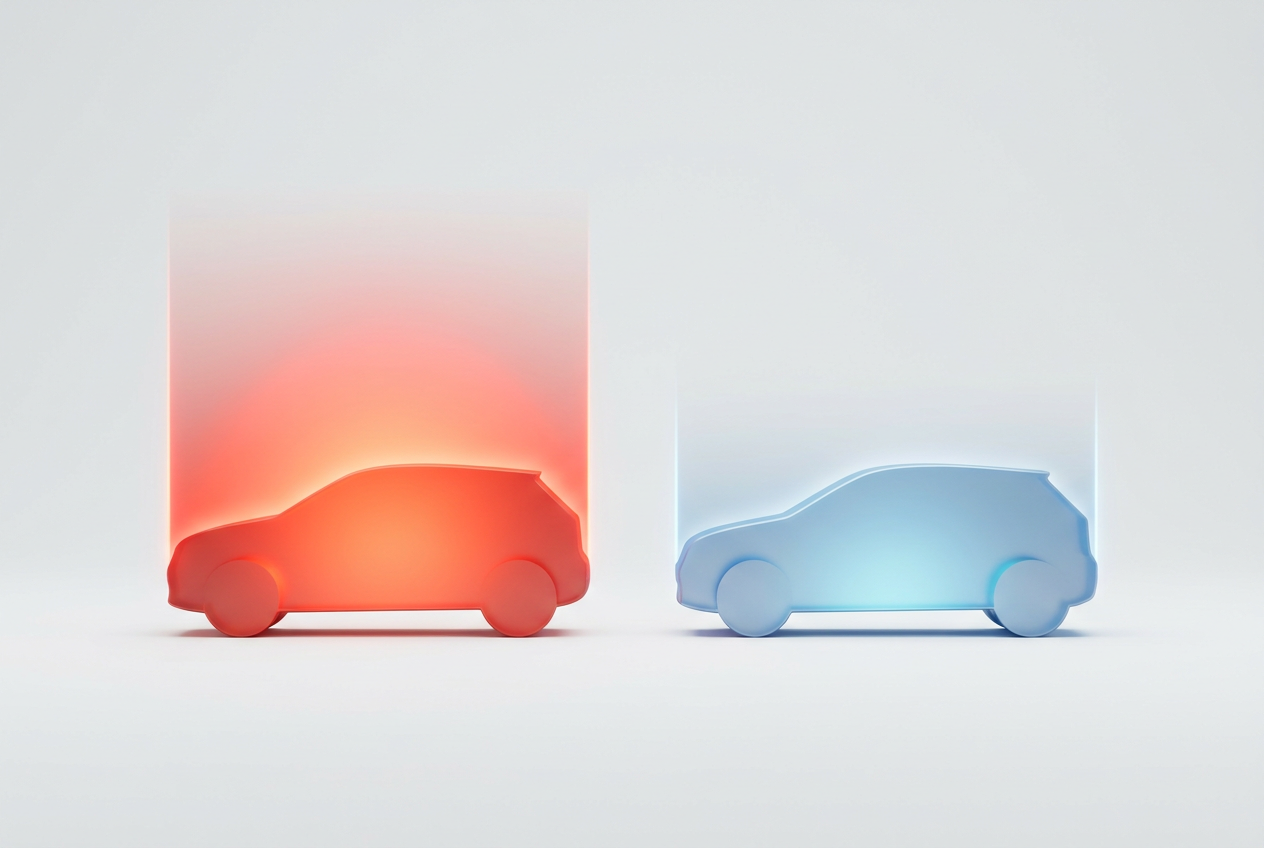
Recent global analyses put battery-electric vehicles at roughly 25 fires per 100,000 vehicles, about 0.025%. Petrol and diesel vehicles are around 1,500+ fires per 100,000, roughly 1.5% of vehicles per year.
That's not a small difference, it's a gap of around 60 times. EVs are statistically 20 to 61 times less likely to catch fire than conventional petrol vehicles, according to data from multiple international studies.
The pattern holds across countries with different fleets and reporting methods:
- Australia's EV FireSafe, which maintains a verified global database of EV fire incidents, reports an estimated EV fire risk of 0.001-0.002%, compared with approximately 0.1% for petrol and diesel vehicles.
- Between 2020 and 2025, Poland recorded 51,142 vehicle fires, of which 50,833 involved petrol or diesel vehicles, 222 involved hybrids, and just 87 involved electric vehicles.
- In Sweden, authorities recorded just 23 fires among about 611,000 electric vehicles in 2022 — a fire incidence of 0.004%.
The reason petrol vehicles catch fire more often isn't complicated: petrol vehicle fires are overwhelmingly linked to fuel leaks, ruptured tanks, overheated engines, or electrical faults igniting flammable vapours. The presence of liquid fuel under pressure means combustion vehicles inherently carry a continuous ignition risk, especially in older cars. An EV has no tank of flammable liquid and no hot exhaust system.
Why the perception is so different from the reality
If EVs catch fire far less often, why does it feel like the opposite? The answer is human psychology and media dynamics.
Researchers refer to this as the availability heuristic, people estimate risk based on how easily examples come to mind. One highly publicised EV fire can receive more media coverage than hundreds of conventional vehicle fires occurring during the same period.
There's a simple reason EV fires get filmed and shared while petrol fires don't: novelty. A burning petrol car is unremarkable, it happens hundreds of times a day globally and rarely makes the news beyond local reporting. A burning EV is still unusual enough to be newsworthy, and lithium-ion fires look dramatic on camera. When you see an EV fire story, remember: in the same 24 hours, there were likely hundreds of petrol vehicle fires that no one filmed.
The result is a badly skewed perception. The fires you see reported are the rare ones; the far more common petrol fires are invisible because they're not interesting.
EV fires are rarer, but they are different
Honesty requires acknowledging that while EV fires are much less frequent, they do behave differently, and this is a legitimate point rather than a myth.
Lithium-ion cells don't behave like petrol. When they fail catastrophically, usually after a severe crash or major abuse, you see what firefighters call thermal runaway: rapid heat buildup inside the cells, venting flammable gas, and self-sustaining combustion until the energy is spent.
The practical differences for fire services:
- Slower to ignite: Cells usually need significant abuse, crash damage, manufacturing defect, severe overheating, to enter thermal runaway. EV fires rarely start spontaneously.
- Harder to extinguish: Suppression time for EV fires averages 3-5 hours versus 30-60 minutes for petrol, and they can require significantly more water, because the goal is cooling the battery pack below thermal runaway temperature rather than smothering flames.
- Potential for re-ignition: Damaged cells can smoulder and flare up again hours or days later if not properly monitored.
So the honest framing is this: EV fires are much rarer, but when they do occur they're more complex for emergency services to manage. This is a genuine consideration for fire services and their training, but for you as a driver, the number that matters most is how likely a fire is to happen at all, and there the EV advantage is overwhelming.
What actually causes EV fires
Understanding the causes helps put the risk in perspective. Thermal runaway is the dominant mechanism: a single battery cell short-circuits and heats uncontrollably, triggering a chain reaction across neighbouring cells. Documented triggers include physical damage from collision or road debris, manufacturing defects in battery cells, and faults in charging equipment.
The primary causes are mechanical damage from crashes, manufacturing defects, electrical abuse from faulty charging, and exposure to external heat sources. Notably, spontaneous ignition without a trigger remains statistically exceptional. The "EV bursting into flames while parked for no reason" scenario that features in people's fears is, in reality, extraordinarily rare.
It's also worth noting that external fires, such as an adjacent petrol vehicle fire, frequently ignite EV battery packs secondarily, meaning some recorded "EV fires" were actually started by something else entirely.
How EV battery packs are protected
Modern EVs aren't just statistically less fire-prone by accident, they're engineered specifically to prevent battery incidents.
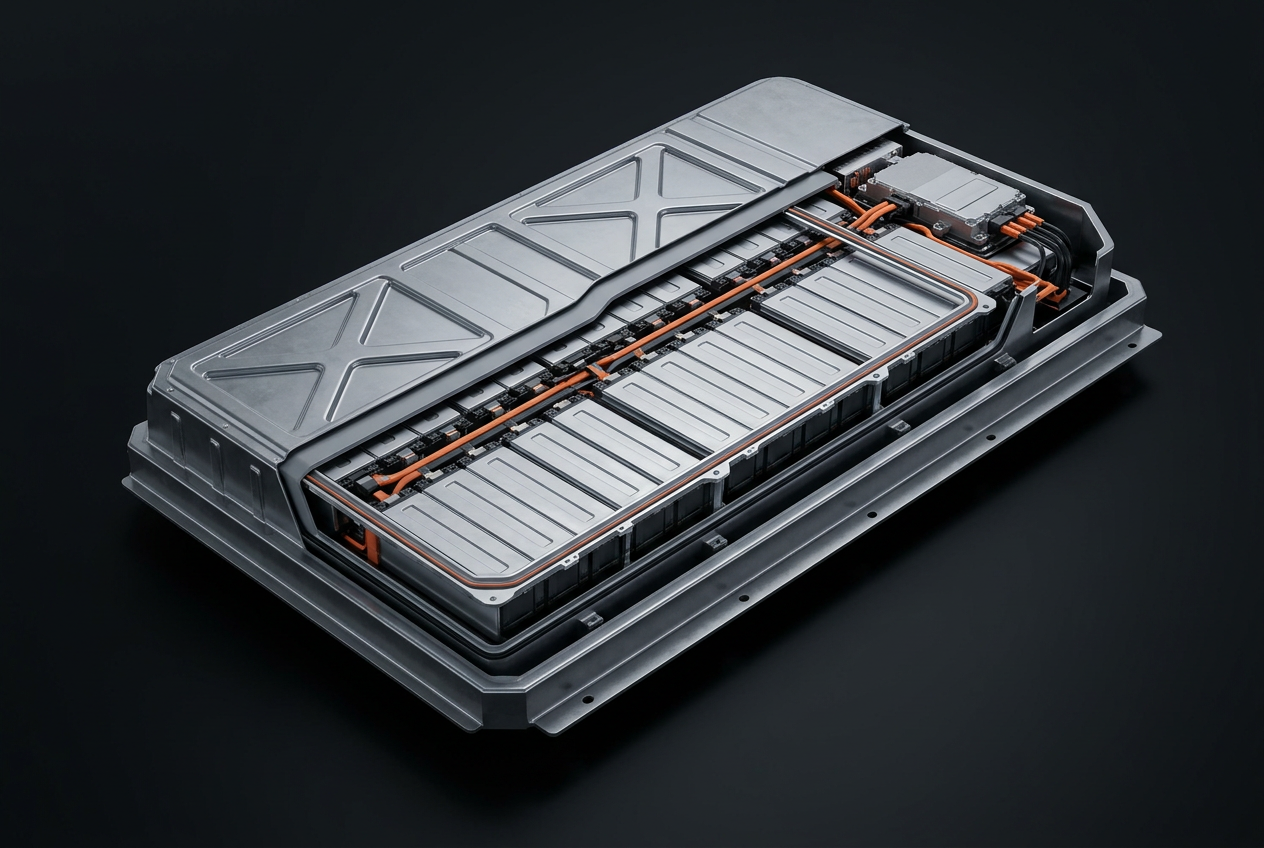
Modern battery packs include cooling systems, monitoring technology, and protective barriers specifically designed to minimise the risk of thermal runaway. The layers of protection typically include:
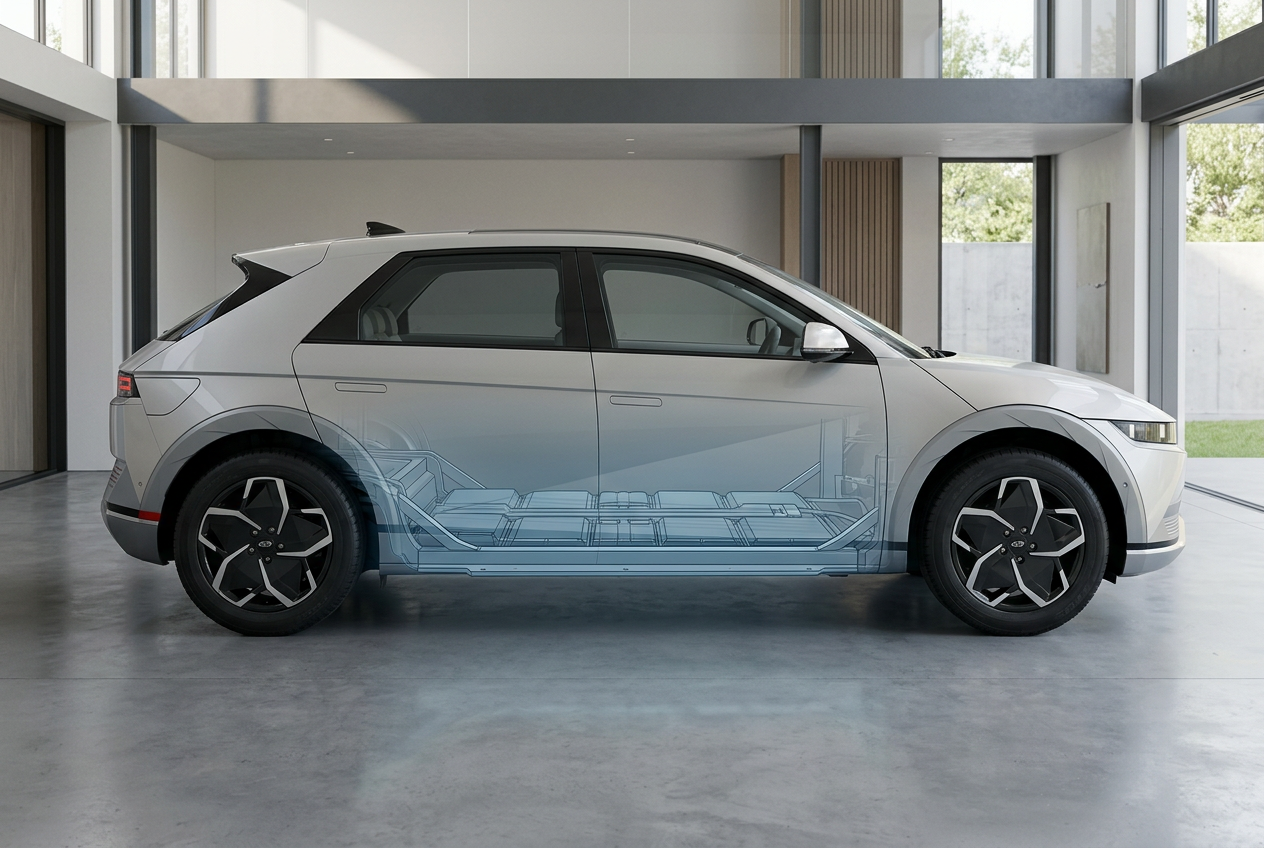
- Crash-resistant enclosures: The battery pack sits in a sealed, reinforced structure, often forming part of the car's floor, designed to survive impacts without being punctured.
- Battery management systems: Continuously monitor every cell's voltage and temperature, shutting things down at the first sign of a problem.
- Thermal management: Liquid cooling keeps cells within safe temperature ranges during driving and charging.
- Automatic crash disconnection: Regulations require EV battery cut-off activation within seconds of a crash, the high-voltage system electrically isolates itself the moment a serious impact is detected.
- Cell-to-cell barriers: Physical separation between cells is increasingly designed to slow or stop thermal propagation if one cell does fail.
Crash safety: where EVs genuinely excel
Fire aside, EVs have some inherent crash-safety advantages that come directly from their design.
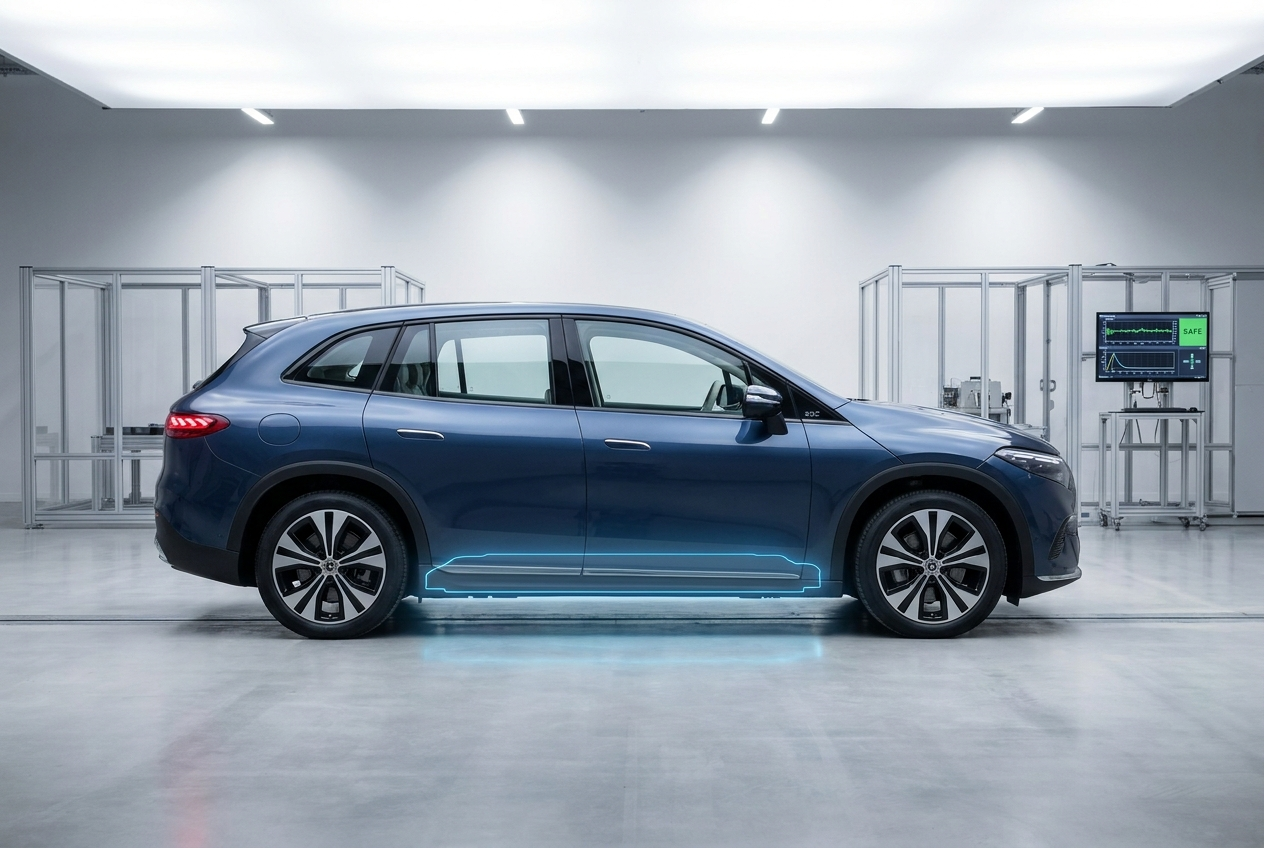
A low centre of gravity. The heavy battery pack sits low in the floor, giving EVs a much lower centre of gravity than equivalent petrol vehicles. This dramatically reduces the risk of rollover, one of the most dangerous types of crash, and improves handling and stability, which helps avoid crashes in the first place.
No engine to intrude. In a frontal crash, a conventional car's engine can be pushed back into the cabin. EVs have no large engine block up front, freeing up that space to be engineered as a dedicated crumple zone that absorbs impact energy before it reaches occupants.
A rigid battery structure. The reinforced battery enclosure adds significant structural rigidity to the vehicle floor, contributing to overall crash strength.
These advantages show up in independent crash testing. Many EVs achieve top safety ratings from ANCAP (the Australasian New Car Assessment Program, which applies in New Zealand), with several EVs recording some of the highest scores the programme has awarded. When you're shopping for a used EV in New Zealand, the ANCAP rating is a useful, independent cross-check on a specific model's crash performance.
Charging safety at home
A common practical question: is it safe to charge an EV at home? The answer is yes, with the same common-sense caveats that apply to any high-power electrical appliance.
- Have your home charger (wallbox) installed by a registered electrician, this is a requirement in New Zealand, not just a recommendation.
- Avoid running an EV continuously from an old or unmodified household circuit for regular charging; a proper wallbox installation includes appropriate circuit protection.
- Use manufacturer-approved charging equipment and cables.
Faults in charging equipment are one of the documented fire causes, which is precisely why professional installation and quality equipment matter. Done properly, as the vast majority of installations are, home charging is safe and routine.
The honest bottom line
Are EVs safe? On the evidence, yes, and in several respects safer than the petrol cars they're replacing.
The fair summary:
- EVs catch fire far less often than petrol vehicles, by a factor of roughly 20 to 60 times across multiple independent international datasets.
- When EV fires do happen, they're more complex and time-consuming for fire services to extinguish, a genuine difference, but one that matters more to emergency services than to the statistical likelihood of you experiencing a fire.
- Spontaneous EV fires with no trigger are extraordinarily rare; almost all involve severe crash damage, manufacturing defects, or charging faults.
- EVs have real crash-safety advantages, low centre of gravity, generous crumple zones, and rigid battery structures, reflected in strong independent safety ratings.
- Home charging is safe when equipment is properly installed by a registered electrician.
The perception that EVs are dangerous fire risks is a case study in how a rare but dramatic event, amplified by media and social sharing, can overwhelm the far less exciting statistical reality. The data, consistent across countries, fleets, and years, tells a clear and reassuring story.
Disclaimer
The content in this post is based on our own research and publicly available fire and safety statistics current as of 2026 and is intended for general informational purposes only. It does not constitute professional safety advice. Fire statistics vary between studies, countries, and reporting methods, and data collection in this area continues to develop. Always follow manufacturer guidance for charging and have any home charging equipment installed by a registered electrician. For crash safety, consult ANCAP ratings for specific models.
Target keywords: are EVs safe, do EVs catch fire more than petrol cars, EV fire risk statistics, EV crash safety NZ
Sources & further reading
- Recharged — EV Fire Risk Statistics vs Gas Cars (2025/2026 Data) https://recharged.com/articles/ev-fire-risk-statistics-vs-gas-car/ (EV vs petrol fire rates per 100,000 vehicles; thermal runaway behaviour; media/availability bias; suppression differences)
- Interesting Engineering — Do EVs catch fire more than gas cars? A data-driven safety comparison https://interestingengineering.com/transportation/do-electric-vehicles-really-catch-fire-more (Australia EV FireSafe global database figures; Poland State Fire Service 2020–2025 data; causes of EV vs ICE fires)
- EV Energy Hub — EV Fires vs ICE Fires: Data Shows EVs Safer (2026) https://evenergyhub.com/ev-fires-vs-ice-fires/ (25 vs 1,530 fires per 100,000 comparison; primary causes breakdown; crash disconnect regulations)
- Commercial Vehicle Contracts — EV Fire Risk vs Petrol & Diesel (2026 Update) https://commercialvehiclecontracts.co.uk/ev-fire-risk-vs-petrol-diesel/ (Age-adjusted fire incidence; availability heuristic and risk perception; battery pack protective systems)
- Gitnux — Electric Vehicle Fire Statistics: Market Report & Data (2026) https://gitnux.org/electric-vehicle-fire-statistics/ (NHTSA miles-per-fire figures; suppression time and water usage; international per-100k comparisons; crash cut-off mandates)
- EVFY — Do Electric Vehicles Catch Fire More Than Petrol Cars? (2026) https://www.evfy.in/news/do-electric-vehicles-catch-fire-more-than-petrol-cars (Sweden 2022 EV fire incidence; cross-market fire frequency comparisons)
- Blazestack — EV Fire Statistics 2025–2026: How Many Fires, Causes & Trends https://www.blazestack.com/blog/how-many-ev-fires-in-2023-2024 (Thermal runaway mechanism and triggers; spontaneous ignition rarity; secondary ignition from external fires; NFPA data-limitation note)
- DM News — Electric Vehicle Fires: The Facts vs The Friction (2026) https://dmnews.co.uk/electric-vehicle-fires-the-facts-vs-the-friction/ (Fire frequency gap between fuel types; thermal runaway extinguishing difficulty)