CVT transmissions have a complicated reputation, but modern versions are significantly more reliable and refined than early ones. Here's how a CVT works, what improved, and whether it's right for you
CVT stands for Continuously Variable Transmission, and if you've driven a newer Nissan, Toyota hybrid, Subaru, or a range of other modern vehicles, you've almost certainly driven one without necessarily knowing it. CVTs have become one of the most widely used transmission types in new vehicles globally, yet they still carry a mixed reputation that's largely a holdover from a less reliable era of the technology.
Here's how a CVT actually works, why it earned its early bad name, and what's genuinely changed in modern versions.
What is a CVT?
A traditional automatic transmission has a fixed number of gears, typically six, eight, or ten, and shifts between them as the vehicle accelerates or decelerates. You've likely felt this: a slight pause or kick during gear changes, particularly under hard acceleration.
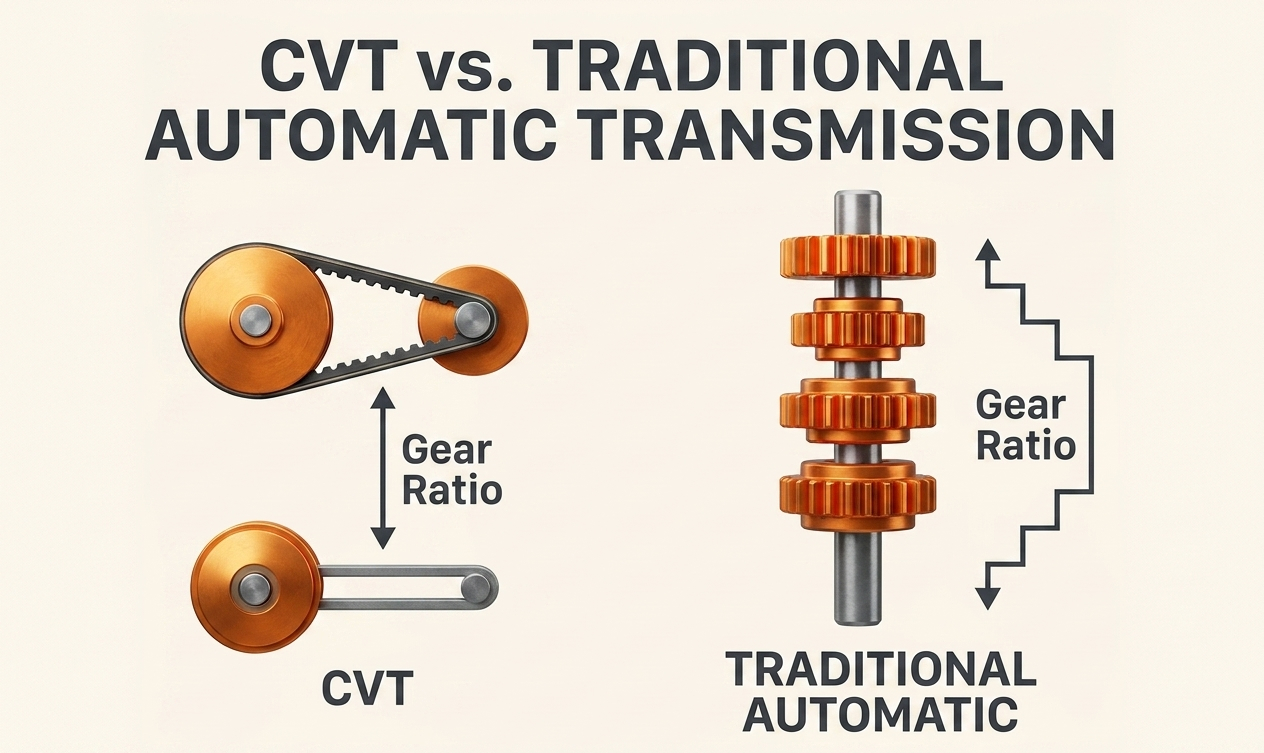
A CVT throws out the concept of fixed gears entirely. Instead of a set of discrete gear ratios, a CVT has an infinite range of ratios between its lowest and highest points, it can always find exactly the right ratio for any given speed and engine load, without any discrete shifts at all. The result is completely seamless, smooth acceleration with no perceptible gear changes.
How it actually works: the belt and pulley system
Most CVTs use a relatively simple mechanical concept: two cone-shaped pulleys connected by a steel belt or chain.
The drive pulley connects to the engine. The driven pulley connects to the wheels. The steel belt or chain runs between the two.
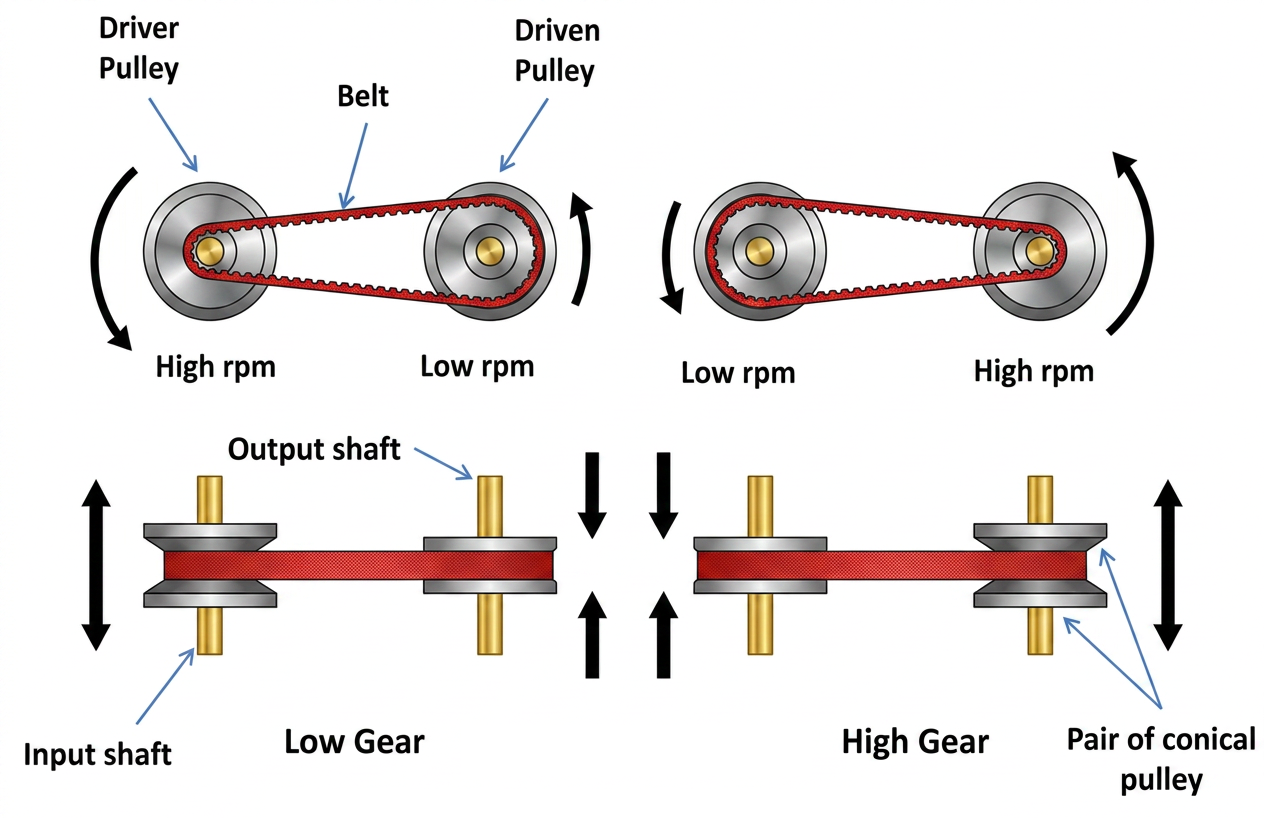
Here's the clever part: each pulley is made of two cone-shaped halves that can move toward or away from each other. When the two halves of a pulley are pushed together, the belt rides higher (at a larger effective diameter). When they're pulled apart, the belt drops lower (at a smaller effective diameter).
By adjusting the diameter of both pulleys simultaneously, one getting larger as the other gets smaller, the transmission continuously changes the ratio between input and output speed. When you need to pull away from a standstill, the drive pulley is narrow (small diameter) and the driven pulley is wide (large diameter), like being in low gear. As you speed up, the drive pulley widens and the driven pulley narrows, like progressively higher gears, but with no discrete steps between them.
The engine control unit manages this process in real time, thousands of times per second, keeping the engine operating at its optimal RPM for any given speed and driver demand.
Why CVTs improve fuel economy
Because a CVT can always find the precise ratio that keeps the engine running at its most efficient RPM, rather than forcing it through a series of fixed gears that may not be optimal, it consistently extracts more efficiency from the engine than a conventional automatic.
A CVT typically improves engine efficiency by approximately 8% compared to a conventional automatic, and can improve fuel economy by up to 10% over older automatic or manual transmissions. This is why hybrids and fuel-efficient vehicles have adopted CVTs so widely, the efficiency gains are genuine and consistent.
The e-CVT used in hybrids
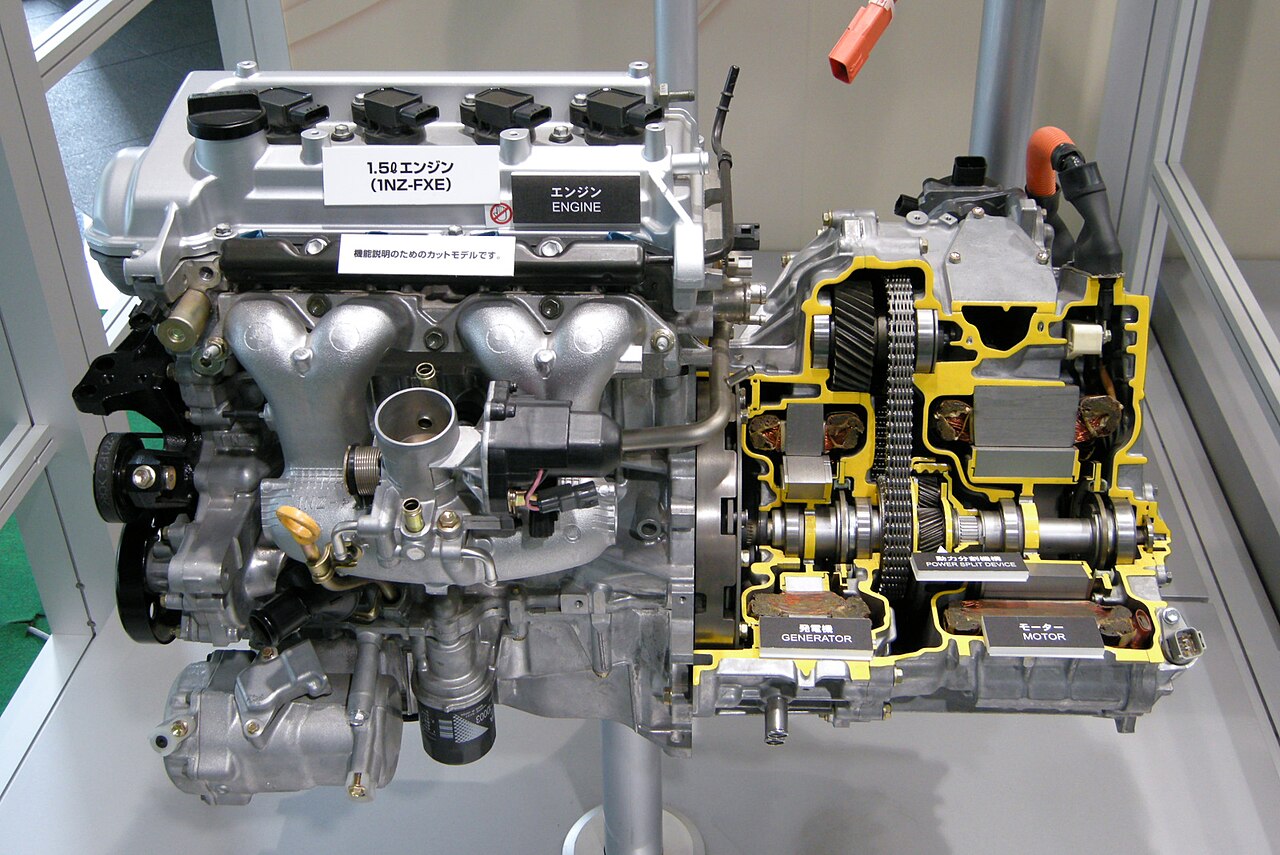
Photo by Hatsukari715 - Own work, Public Domain, https://commons.wikimedia.org/w/index.php?curid=4604070
Toyota's hybrid system uses a variation called an electronic CVT, or e-CVT, which is mechanically quite different from the belt-and-pulley CVT. Rather than a belt system, Toyota's e-CVT uses a planetary gear set combined with two electric motors to achieve a continuously variable power split between the petrol engine and the electric motor.
The result is the same from a driver's perspective, smooth, seamless acceleration with no discrete shifts, but the mechanism is fundamentally different. Toyota's e-CVT is also generally considered more reliable than early belt-and-pulley CVTs, since planetary gear sets are extremely durable. This system is used across the Toyota and Lexus hybrid range, including the Corolla Hybrid, RAV4 Hybrid, and Camry Hybrid, all very popular in the New Zealand market.
Why CVTs got a bad reputation, and whether it's still deserved
The reputation issue is real, but it has a specific historical origin. Early belt-and-pulley CVTs, particularly those from certain manufacturers in the late 1990s and early 2000s, had genuine reliability problems. The belts or chains were prone to wear and slip under sustained load, particularly on vehicles that were driven hard or used for towing. Some earlier Nissan CVT models were especially problematic, leading to class-action lawsuits and significant warranty claims.
Two other criticisms also stuck:
The "rubber band" sensation: Under hard acceleration, a traditional CVT holds the engine at high RPM while the transmission adjusts the ratio, which means the engine note rises and stays elevated while the car accelerates more gradually. Some drivers find this disconnect between engine sound and felt acceleration disconcerting.
Droning under load: Related to the above, on steep hills or during sustained hard acceleration, the engine holds a constant RPM and "drones" rather than rising and falling as it would in a conventional gear-shifting transmission.
What's actually changed in modern CVTs
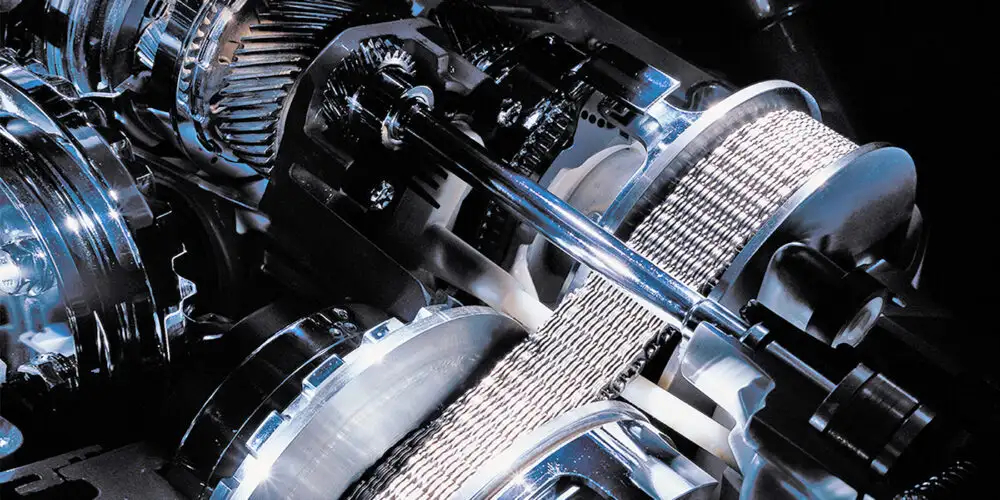
The CVTs fitted to vehicles from 2019 onwards are substantially different from those that earned the bad reputation:
Stronger, more durable hardware: Modern push belts use significantly more steel elements per belt and have improved metallurgy that handles sustained loads far better than earlier designs. Chains in some premium CVTs offer even greater durability.
Improved fluid technology: CVT-specific transmission fluids now contain precisely calibrated friction modifiers essential to the belt's operation. Using incorrect fluid, or neglecting fluid changes, remains one of the most common causes of CVT failure. Modern servicing standards account for this.
Launch gears: Several manufacturers, including Subaru and more recent Nissan designs, have added a physical launch gear to their CVTs specifically for initial acceleration from a standstill. This removes the most demanding load condition from the belt and addresses one of the scenarios most associated with earlier CVT failures. It also largely eliminates the rubber-band sensation during initial pull-away.
Simulated shift points: Honda and others now offer CVTs with optional simulated gear steps, the belt-and-pulley system is adjusted to replicate the feel of fixed gear changes, giving drivers the option of a more conventional feel while still retaining the underlying efficiency benefits of a CVT.
Software refinement: Electronic control of modern CVTs is dramatically more sophisticated than early versions, continuously monitoring temperature, load, and driver input to optimise both performance and longevity.
Nissan specifically — historically the manufacturer most associated with CVT problems, undertook a major overhaul of its CVT in 2017 and launched an all-new CVT-Xs series in 2023. Post-2019 Nissan vehicles report considerably fewer CVT issues, and driver satisfaction with recent Nissan CVTs has improved substantially. Nissan also shifted the 2025 Murano back to a traditional hydraulic automatic, acknowledging that some buyers simply prefer conventional transmissions for performance-oriented applications.
CVT vs traditional automatic: which is better?
The honest answer depends on what matters to you:
Choose a CVT vehicle if:
- Fuel economy is a priority in everyday driving
- Smooth, seamless acceleration matters to you
- Most of your driving is urban and suburban
- You're buying a hybrid (e-CVT is genuinely excellent)
Consider a traditional automatic if:
- You regularly tow or carry heavy loads
- You prefer a more conventional driving feel and engine-sound response
- You're buying a higher-performance vehicle where shift response matters
- The specific model you're considering has a CVT with a less-than-stellar reliability record for that generation
CVT maintenance: the one thing you must do
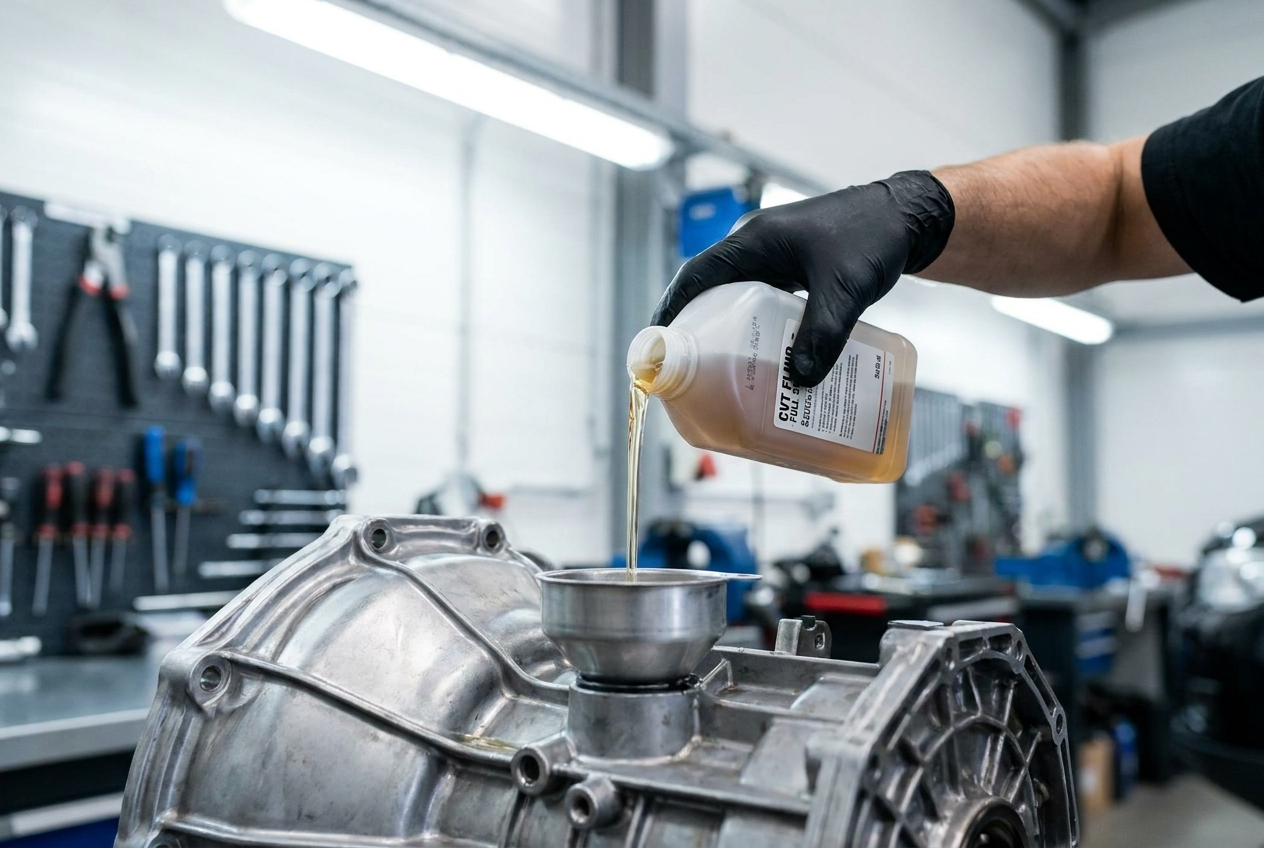
If you own or are buying a used vehicle with a CVT, the single most important maintenance item is the CVT fluid. Unlike engine oil, which most people know needs regular changing, CVT fluid is often overlooked, and some manufacturers listed it as "lifetime fill" in earlier service schedules, which proved optimistic.
Most independent transmission specialists recommend changing CVT fluid every 60,000–80,000km, regardless of what the manufacturer's schedule says. Using the correct, manufacturer-approved CVT fluid is equally important, substituting with incorrect fluid is one of the fastest ways to cause premature CVT wear.
When assessing a used vehicle with a CVT, ask for evidence that CVT fluid changes have been carried out, and budget for one if the history is unclear.
The bottom line
CVTs have a complicated legacy, genuinely problematic in their earlier iterations, considerably more reliable in modern form. If you're considering a vehicle built from 2019 onwards with a current-generation CVT, the reliability concerns that defined the technology's early reputation are largely historical. The fuel economy benefits are real, the driving experience is smooth, and regular fluid maintenance is all that's typically required to keep them running well for high mileage.
For hybrid vehicles specifically, the e-CVT used by Toyota and Lexus is among the most reliable transmission types in the industry, the CVT concerns that apply to belt-and-pulley systems simply don't apply to the planetary gear designs used in hybrids.
Have questions about the transmission in a specific vehicle you're considering? Our team is happy to help, or browse our current stock to explore what's available.
Disclaimer
The content in this post is based on our own research, experience, and opinion and is intended for general informational purposes only. It does not constitute professional mechanical or technical advice. While we strive for accuracy, specific reliability figures, service intervals, and transmission characteristics vary significantly between vehicle makes, models, and years. We encourage readers to consult their vehicle's manufacturer documentation and a qualified transmission specialist for model-specific guidance.
Target keywords: CVT transmission explained, how does CVT work, CVT vs automatic transmission, is CVT reliable
Last updated: June 2026