Curious whether solar panels can charge your EV in New Zealand? Here's how solar actually works, what it costs, and exactly how the two technologies fit together
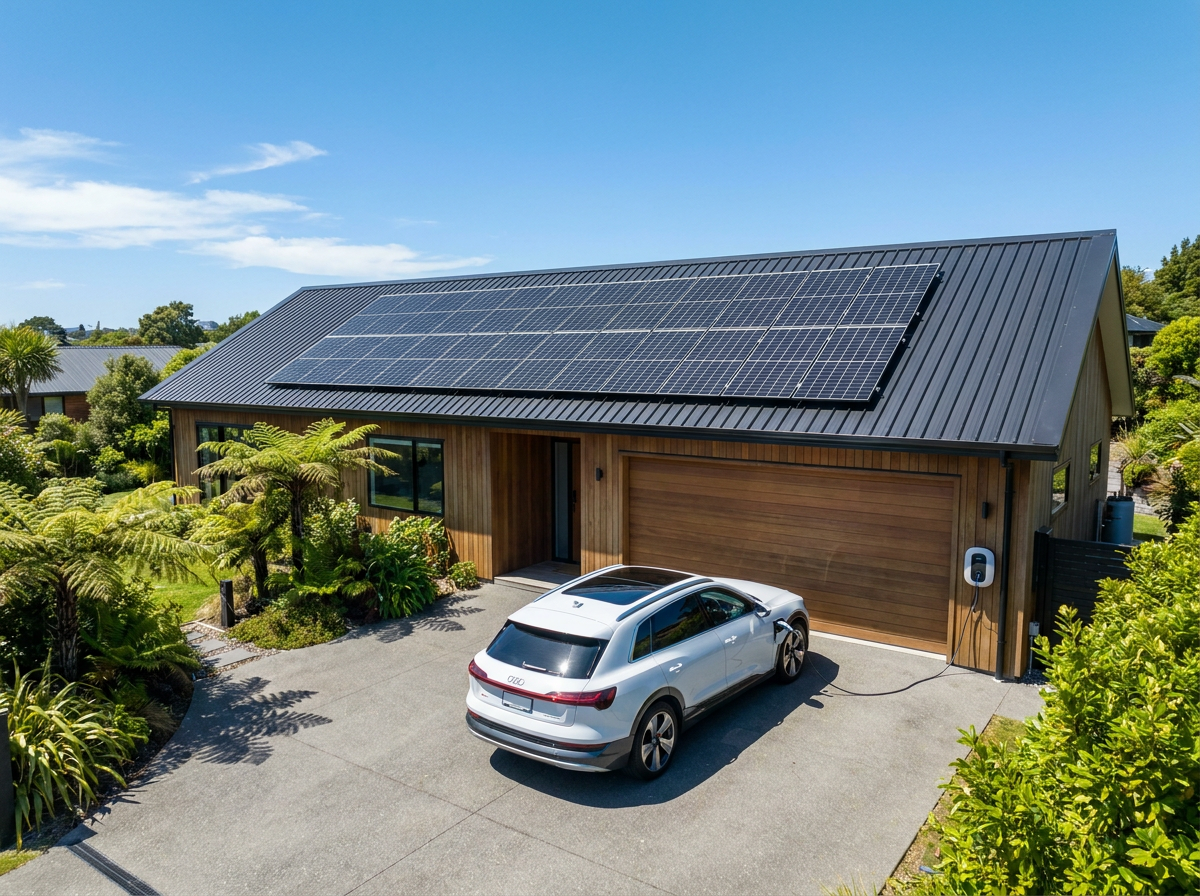
| If you're already considering an EV, or you already own one, it's a natural next question: could solar panels on your roof actually power your car? The short answer is yes, and for many New Zealand homes, it works surprisingly well. Here's how solar panels actually generate electricity, how that connects to charging your EV, and what it realistically costs to set up. |
 |
How solar panels actually work
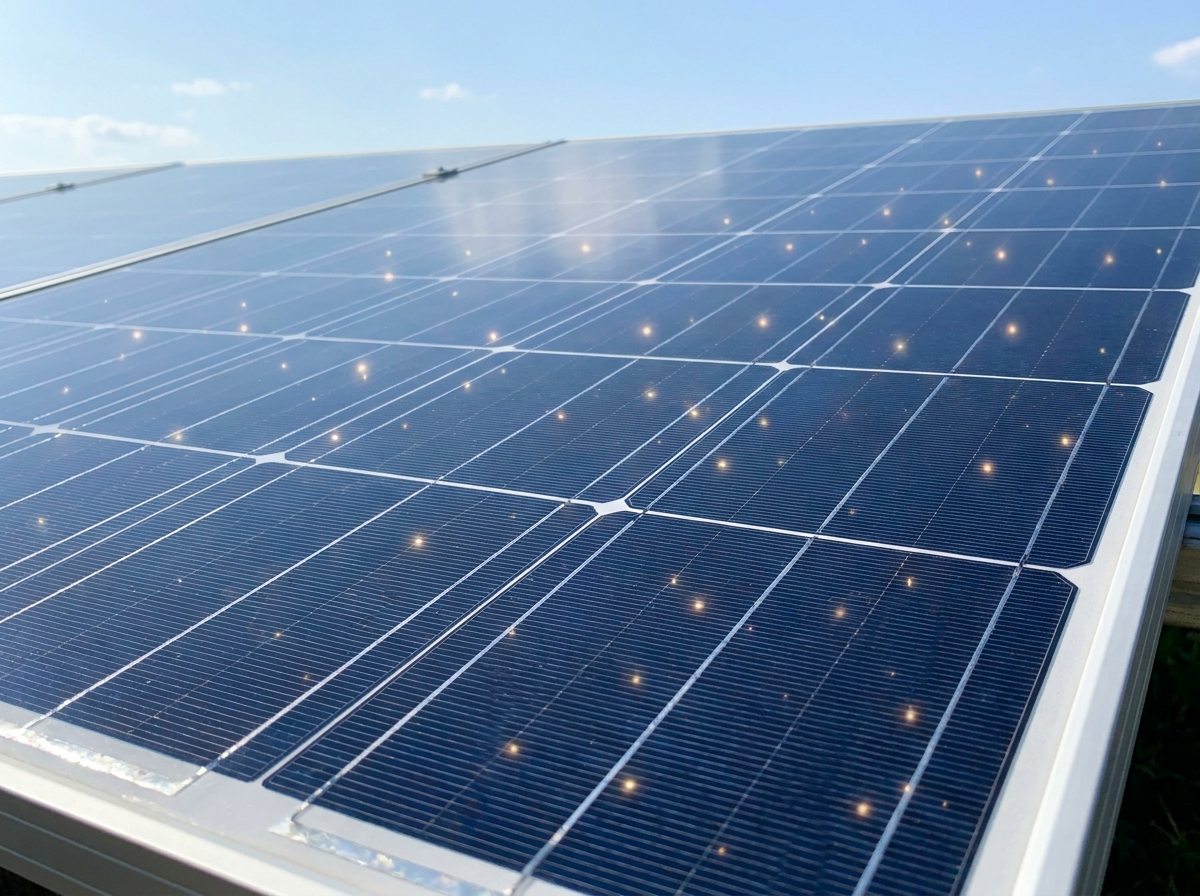
Solar panels are made up of photovoltaic (PV) cells, typically silicon-based, that convert sunlight directly into electricity. When sunlight hits these cells, it knocks electrons loose, creating a flow of electrical current. This current is direct current (DC), the same form of electricity your EV's battery stores.
That DC electricity flows from your panels into an inverter, which converts it into alternating current (AC), the form of electricity your home actually uses, and the same form delivered by the grid. From there, that AC electricity can power your lights, your appliances, your hot water cylinder, and, just as easily, your EV charger.
| The key thing to understand: your solar panels don't generate electricity specifically "for" any one appliance. They simply feed electricity into your home's system, and whatever is drawing power at that moment, your fridge, your washing machine, your EV charger, draws from that pool. If your panels are generating more than your home is using at any given moment, the surplus either gets exported to the grid (earning you a credit) or, if you have one, stored in a home battery. |
 |
So can solar panels actually charge an EV?
Yes, directly and straightforwardly, and you don't need a home battery to do it. This is one of the most common misconceptions: a battery can improve how much of your solar generation you can use at night, but it isn't required for solar to power your EV charging during the day.
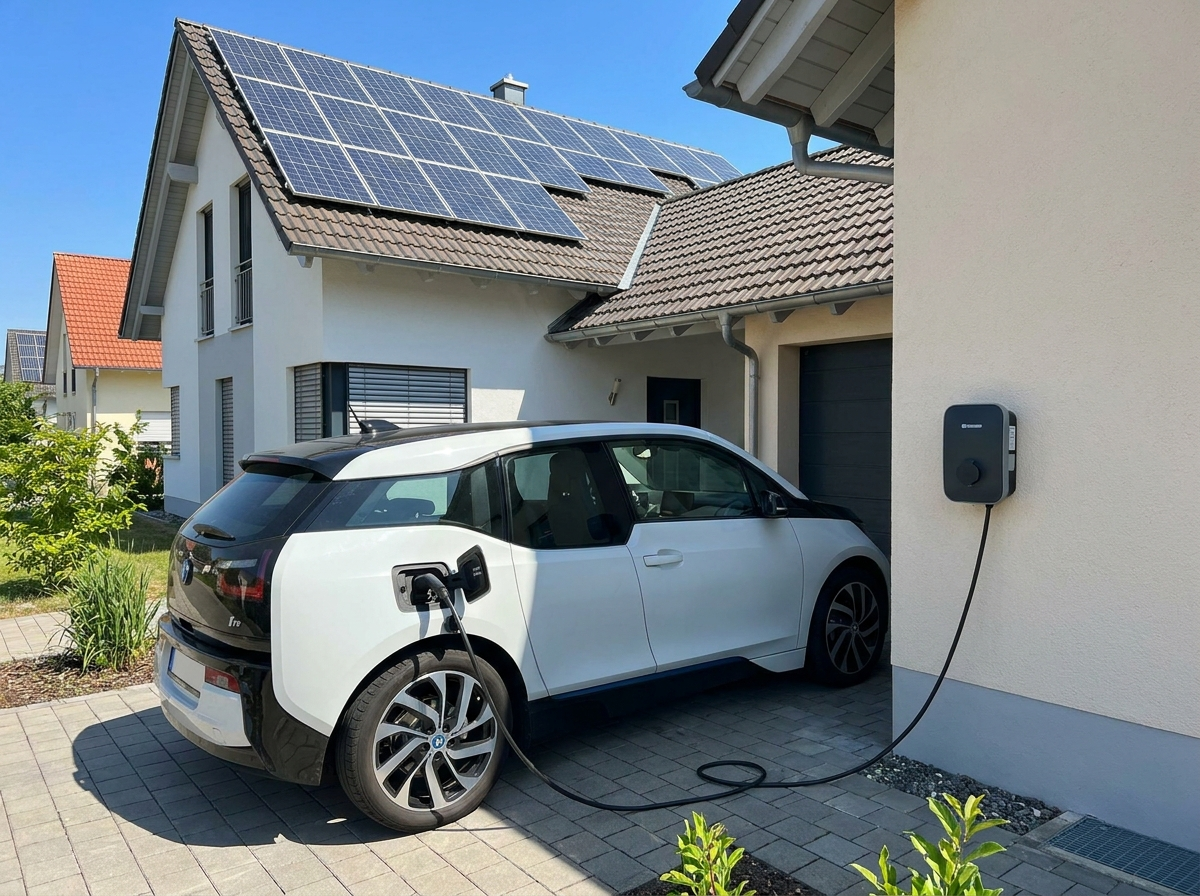
Here's the practical version of how it works: your solar panels generate electricity during daylight hours, and if your EV is plugged in to a home charger during that time, the car can draw on that solar generation directly, just like any other appliance in your home would.
The simplest version of solar EV charging is to plug your car in whenever it's home during the day, weekends, days off, or if you work from home, and let the system do the rest.
Why this combination makes particular financial sense in NZ
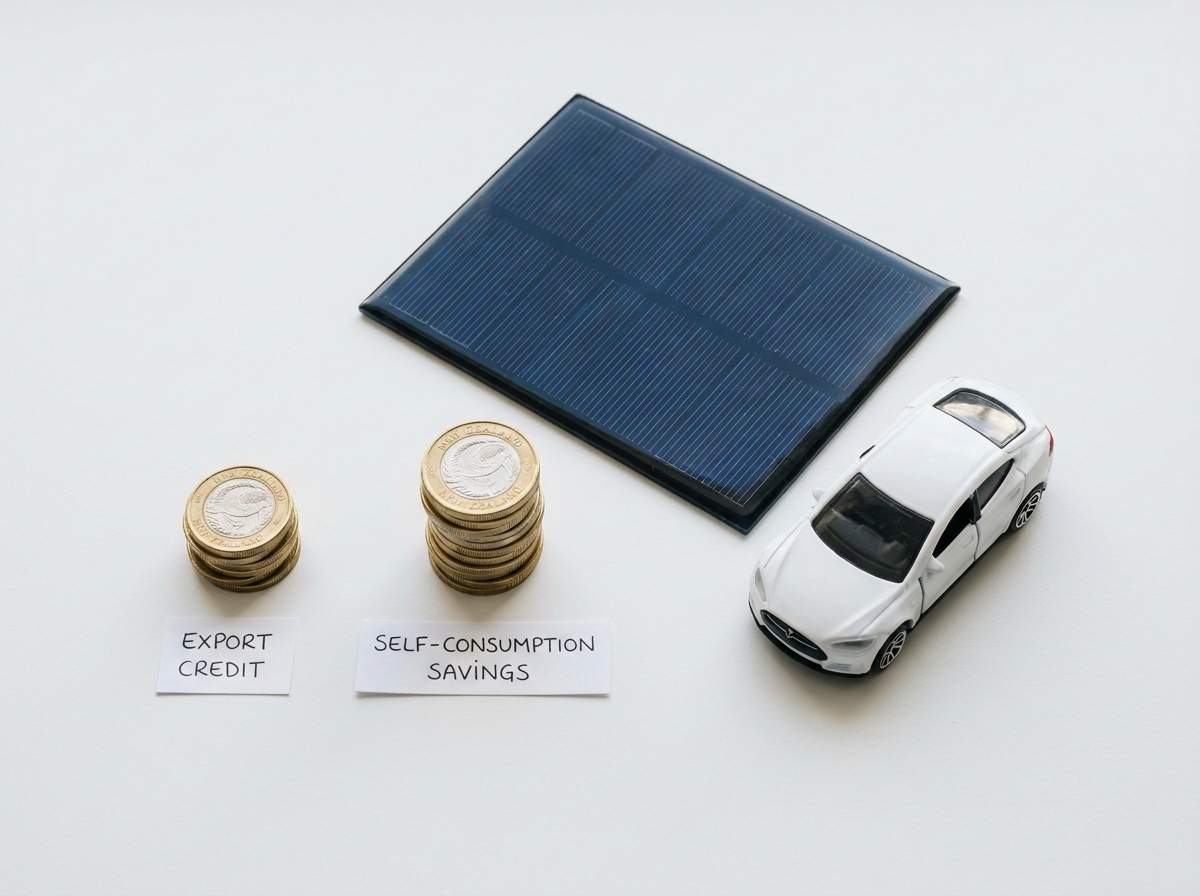
Here's the financial logic that makes solar-and-EV such a natural pairing: on a sunny day, your panels often generate more electricity than your house can use in that moment. Without an EV, that surplus simply gets exported to the grid at your retailer's buy-back rate, typically only 7 to 17 cents per kWh in New Zealand in 2026. Not terrible, but a fairly low return.
Compare that to what you save by using that same electricity yourself rather than exporting it: with average New Zealand retail electricity prices sitting around 28 to 38 cents per kWh in 2026, every kilowatt-hour you self-consume rather than export is worth roughly two to four times more to you than the export credit would have been.
| When you plug in an EV, that surplus solar generation suddenly has somewhere genuinely useful to go, and the maths shifts considerably in your favour. Charging your EV during daylight hours, rather than overnight off-peak, is one of the most effective ways to lift your self-consumption rate and get a much stronger return on your solar investment. |
 |
What size solar system do you actually need?
This depends on your household's existing electricity use, your roof space, and how much of your driving you want to cover with solar specifically, but here's a practical guide based on 2026 New Zealand pricing:
A 4kW system (around 10 panels) costs roughly $8,000–$12,000 installed and generates approximately 4,800–6,000 kWh per year in good conditions, enough to offset 40–60% of a typical household's annual usage, with some contribution toward EV charging if you're a moderate driver.
A 6kW system (around 15 panels) costs roughly $11,000–$16,000 installed and is considered the sweet spot for larger households or anyone specifically planning for EV charging. It generates approximately 7,200–9,000 kWh per year, a genuinely meaningful contribution toward an average EV's annual charging needs.
A 10kW system (around 25 panels) costs roughly $17,000–$24,000 installed and suits high-consumption homes, those with heat pumps, larger families, or multiple EVs to charge.
Where you live in New Zealand changes the maths by roughly 30%. Northland and Auckland enjoy the best solar resource in the country, with strong year-round generation. The South Island sees longer payback periods, though interestingly, the cooler temperatures actually improve panel efficiency on the days the sun is out.
Smart chargers: the piece that ties it together
|
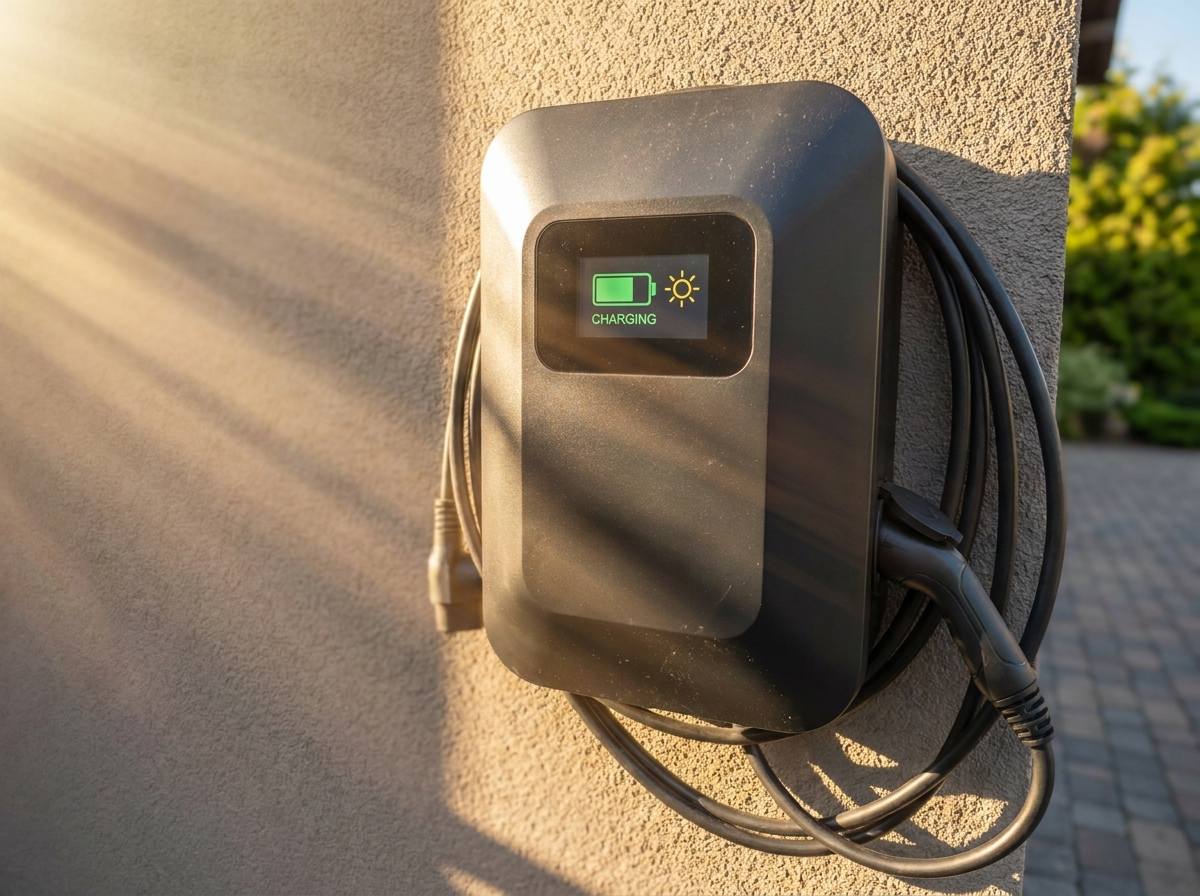
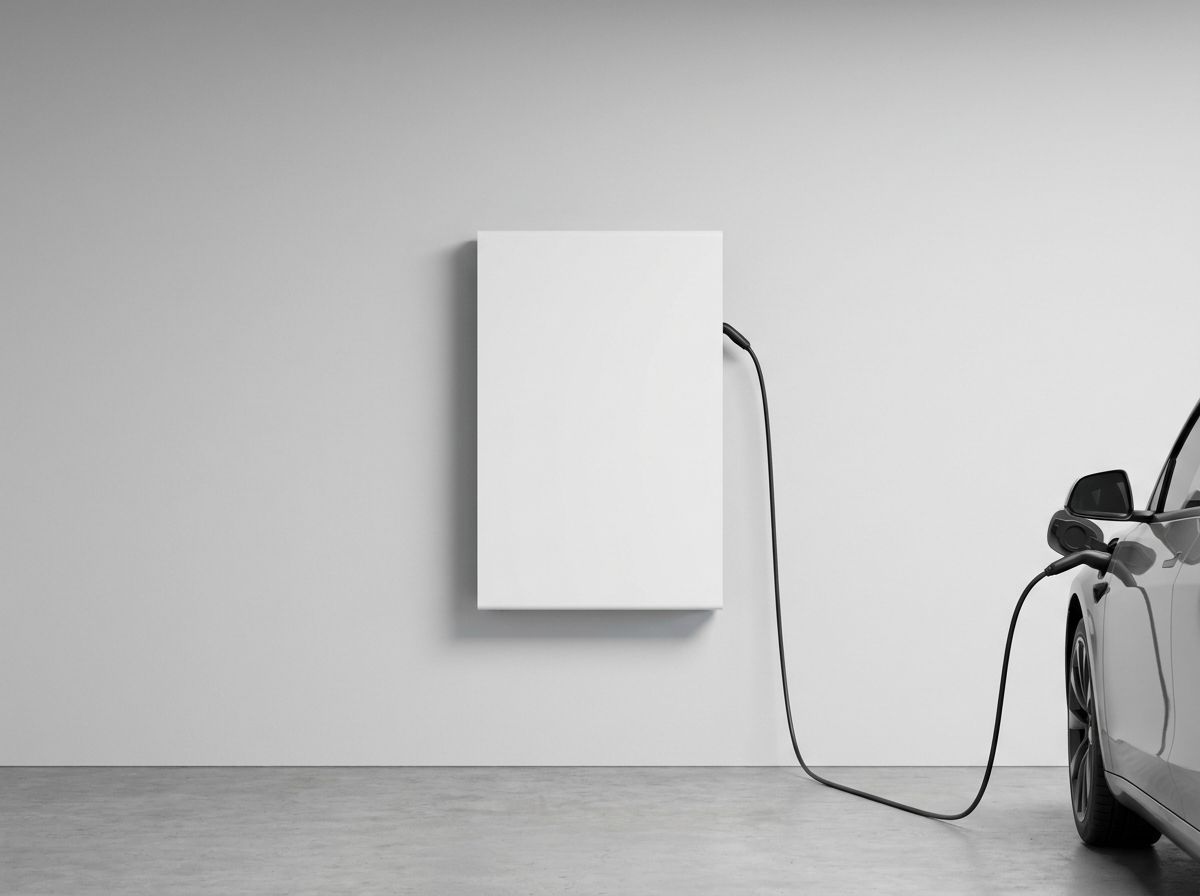
A smart EV charger makes the solar-charging connection far more seamless. Rather than charging at a fixed rate regardless of what your panels are generating, a smart charger can detect how much surplus solar power is available at any given moment and automatically adjust your EV's charging rate to match it, drawing more from solar when it's abundant, and tapering off or pausing if a cloud passes over or your household's other usage spikes.
Some smart chargers can be configured to charge exclusively from solar surplus, meaning your EV genuinely costs nothing to run on sunny days, your cost per kilometre effectively drops to zero, compared to roughly $0.05–$0.07 per km when drawing from the grid.
|
 |
Do you need a home battery as well?
Not necessarily, and it's worth being clear-eyed about this. A home battery (such as a Tesla Powerwall) stores excess solar generation so you can use it after dark, which is useful for general household electricity, but isn't a requirement for solar EV charging specifically, since most EV charging that's timed to daylight hours doesn't need that stored backup at all.
That said, there's an emerging and genuinely interesting technology worth knowing about: Vehicle-to-Home (V2H), which essentially turns your EV's own battery into a giant home battery. A typical EV battery holds 40 to 75kWh of energy, for context, even using just 20% of that for home backup is comparable to the capacity of a dedicated Tesla Powerwall, and most New Zealand households only use around 6–8kWh overnight. In theory, your car could power your home through the night using energy it stored from your own solar panels during the day.
| V2H is still early days in New Zealand. The Wallbox Quasar is currently the most established bidirectional charger available here, and it works with CHAdeMO-equipped vehicles, including the Nissan Leaf and Mitsubishi Outlander PHEV. Support for the CCS connector standard, which would open V2H up to Tesla, Hyundai, Kia, and most modern EVs, is expected to arrive in the coming years. The hardware remains expensive for now, but it's a technology genuinely worth watching if you're planning a long-term solar and EV setup. |
 |
What it actually looks like in practice
For most households, the practical setup is straightforward: solar panels feed your home during the day, a smart EV charger draws from that surplus generation whenever your car is plugged in and the sun is out, and anything you don't use is exported to the grid for a credit. Overnight, if you need to charge and the sun isn't shining, your EV simply draws from the grid as normal, ideally on an off-peak electricity plan for the cheapest possible rate.
A few practical habits help maximise the benefit: charging primarily on weekends or days you're working from home, scheduling your EV charger to run during typical midday peak solar generation hours, and choosing a smart charger that can automatically respond to your solar output rather than charging at a flat rate regardless of conditions.
The bottom line
| Solar panels and EVs are a genuinely strong financial match in New Zealand, not because you need solar to run an EV (the grid works perfectly well on its own, and New Zealand's electricity is already around 85% renewable), but because an EV gives your solar surplus somewhere far more valuable to go than a low grid export credit. If you're already considering solar, having an EV, or planning to get one, makes the investment case noticeably stronger. And if you already have an EV, solar can meaningfully reduce your day-to-day running costs even further, sometimes down to effectively nothing on sunny days. |
 |
Curious about home charging setups generally, or want to know more about getting the most range from your EV? Check out our other guides, or get in touch with our team for advice tailored to your situation.
Disclaimer
The content in this post is based on our own research, experience, and opinion and is intended for general informational purposes only. It does not constitute professional financial, technical, or electrical advice. While we strive for accuracy, figures relating to solar system costs, electricity pricing, buy-back rates, and payback periods are subject to change and vary by location, provider, and household circumstances. We encourage readers to obtain quotes from SEANZ-accredited installers and consult qualified professionals before making any solar or home electrification decisions.
keywords: solar panels charge EV New Zealand, can solar charge my electric car NZ, solar EV charging guide NZ, home solar EV setup 2026
Last updated: June 2026