The clutch is one of the most used components in any manual vehicle. Here's exactly how it works, what causes it to wear out, and the signs that yours is on its way out
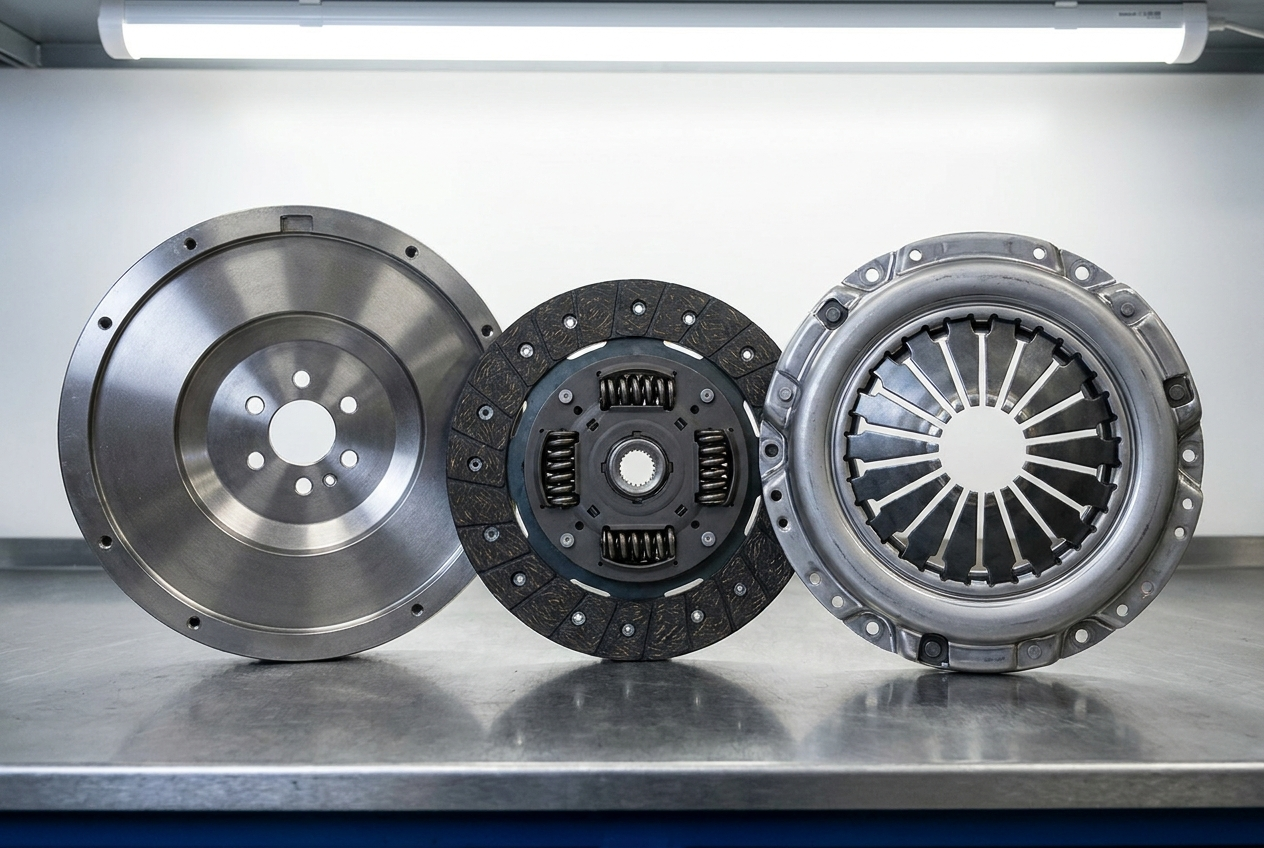
The clutch is one of those components that most manual car drivers use hundreds of times a day without really thinking about how it works, until it starts slipping, shuddering, or eventually fails. Understanding the mechanics behind the clutch not only satisfies natural curiosity about how your vehicle operates, it helps you recognise the warning signs of wear early and understand why certain driving habits wear clutches out faster than others.
The fundamental problem a clutch solves
Before diving into how a clutch works, it helps to understand why one is needed at all.
A petrol or diesel engine produces power continuously while running, it cannot stop and start instantly. The drivetrain (gearbox, driveshaft, wheels), on the other hand, needs to start from a complete stop and change its speed ratios constantly as the vehicle accelerates, decelerates, and changes gears.
Without a clutch, connecting a running engine directly to a stationary drivetrain would cause the engine to stall instantly, or the vehicle to lurch forward violently, because there's no way to gradually transfer the engine's rotating power to components that are standing still.
The clutch solves this by acting as a controllable mechanical link between the engine and the gearbox, one that can be smoothly engaged and disengaged by the driver as needed.
The core components
A clutch assembly consists of three main components working together:
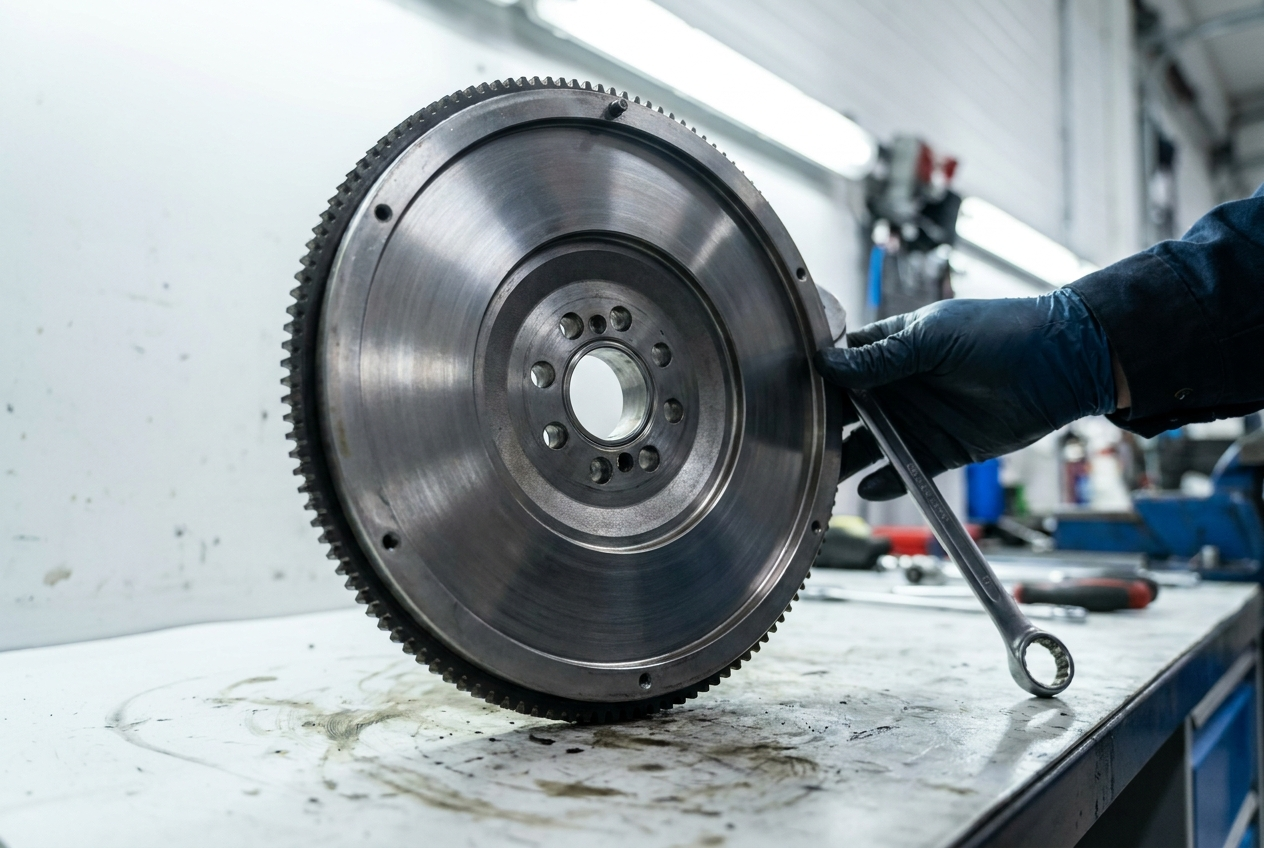
1. The flywheel The flywheel is a large, heavy disc bolted directly to the end of the engine's crankshaft, it rotates constantly whenever the engine is running. The flywheel serves two purposes: it smooths out the engine's power pulses (since a four-cylinder engine fires once every half rotation, the flywheel's inertia keeps rotation smooth between firings), and it provides one of the two friction surfaces the clutch uses.
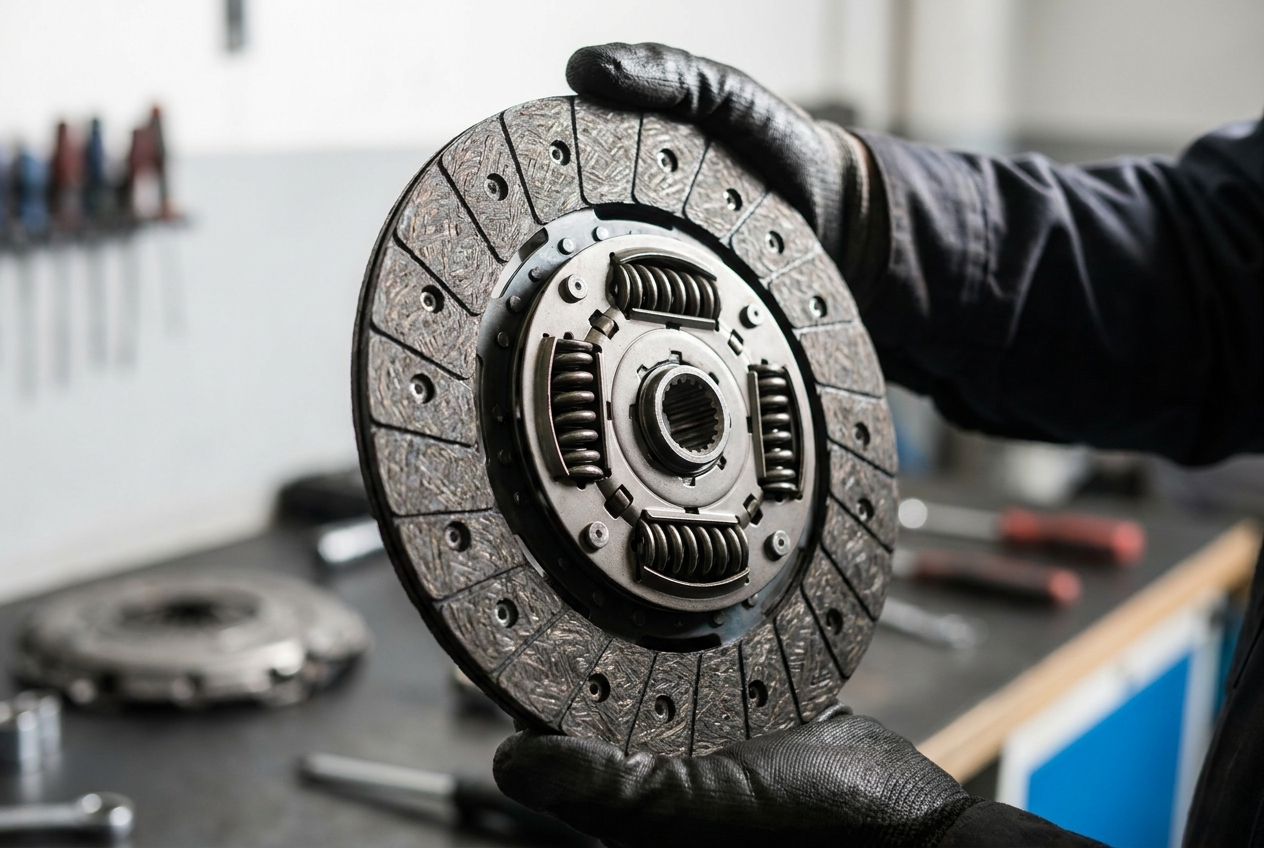
2. The clutch disc (friction disc) The clutch disc sits between the flywheel and the pressure plate. It has a splined central hub that connects to the gearbox input shaft, meaning when the clutch disc rotates, it directly drives the gearbox. Around the outside of this hub are friction facings, flat rings of friction material (historically asbestos, now ceramic, organic, or Kevlar-based compounds) that can grip against the flywheel and pressure plate when pressed together.
The clutch disc also incorporates torsional springs around the hub, which absorb the shock of sudden engagement and smooth out drivetrain vibration.
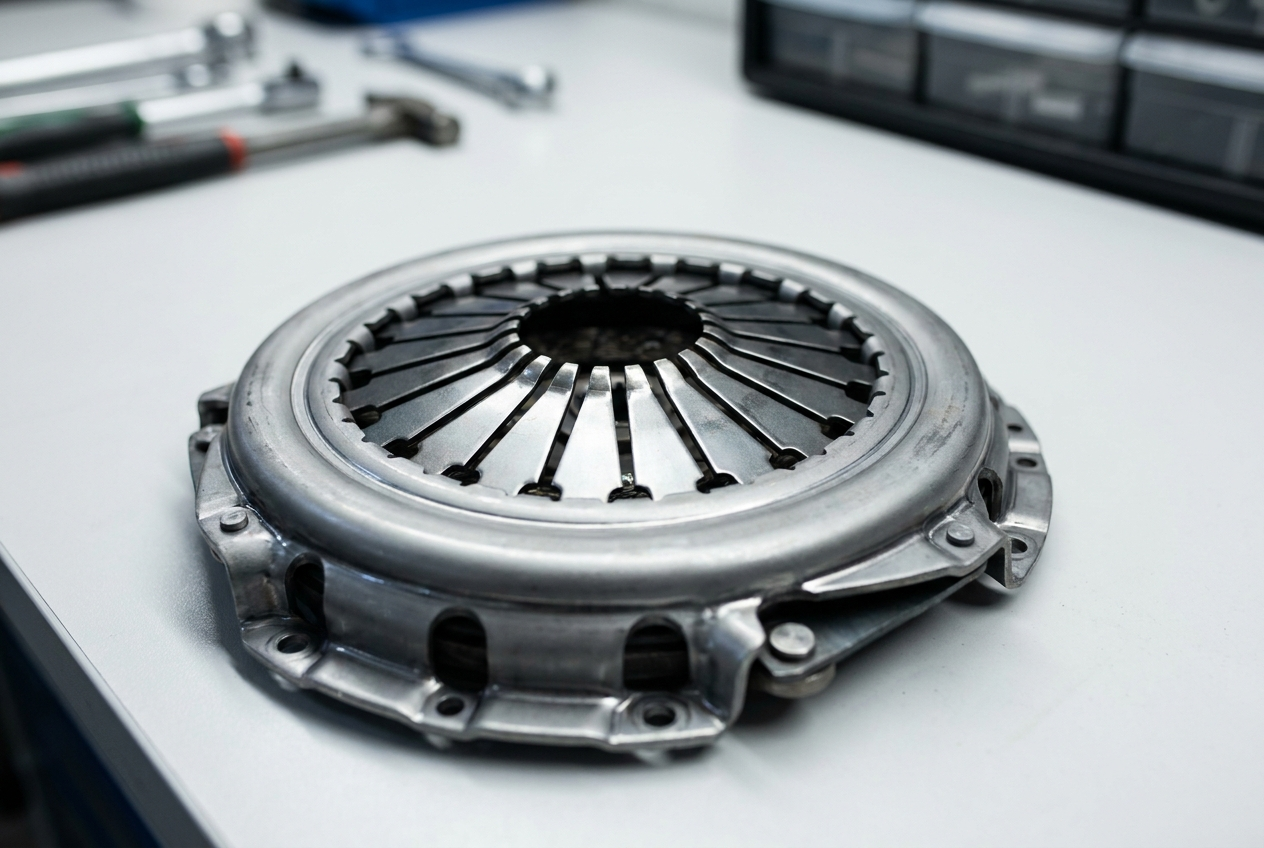
3. The pressure plate assembly The pressure plate is clamped against the clutch disc and flywheel by a diaphragm spring, a conical spring with fingers pointing inward. This spring exerts considerable clamping force, pressing the friction disc firmly against the flywheel when the clutch pedal is released, locking the two together for power transmission.
How engagement and disengagement work
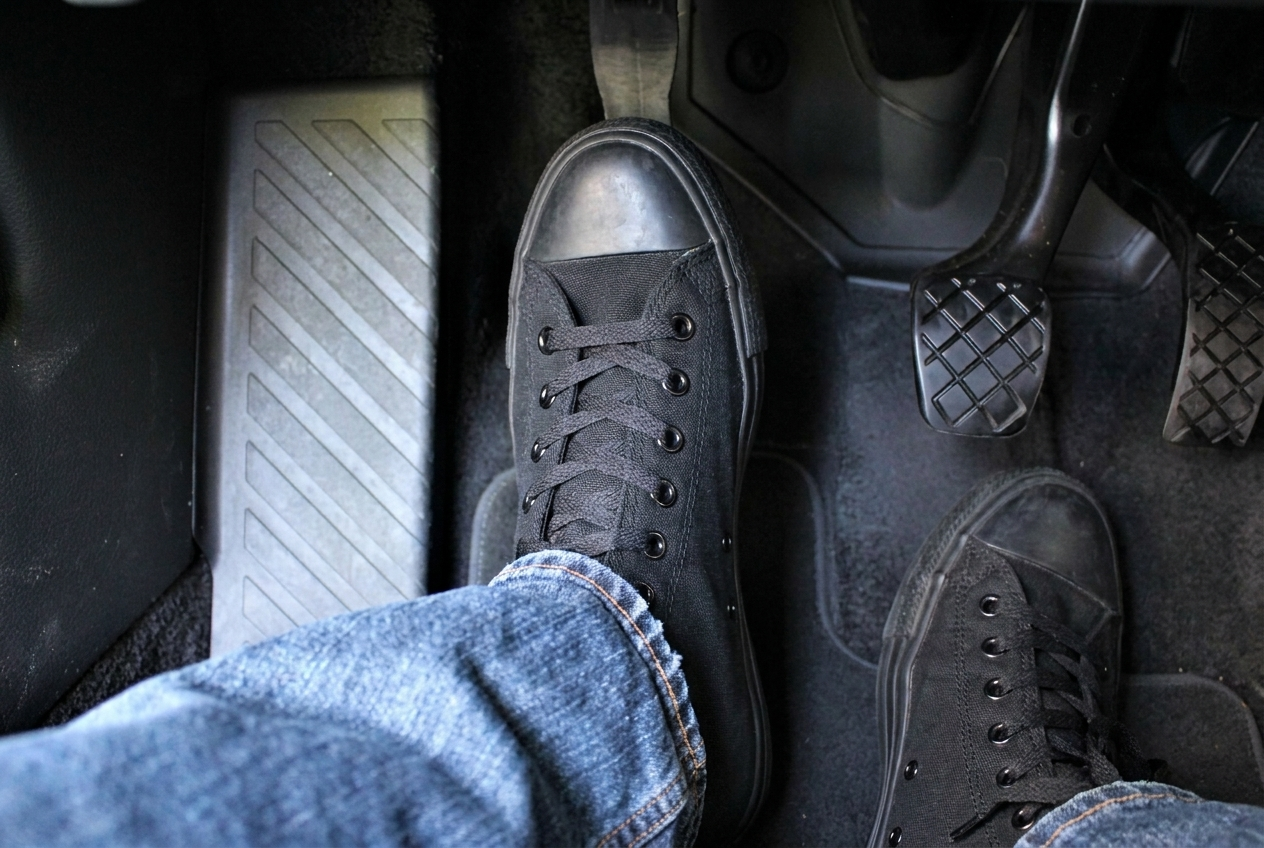
Clutch pedal released (clutch engaged, normal driving): The diaphragm spring presses the pressure plate firmly against the clutch disc, which is sandwiched against the flywheel. Friction between these surfaces means they all rotate together, the engine's rotation is transmitted through the clutch disc directly to the gearbox input shaft. The vehicle drives normally.
Clutch pedal depressed (clutch disengaged): Pressing the pedal operates a release bearing (also called a throw-out bearing) that presses against the centre fingers of the diaphragm spring. This reverses the spring's action, the outer edge of the diaphragm spring lifts away from the pressure plate, releasing the clamping force. The clutch disc is now free to spin independently of the flywheel, the engine is disconnected from the drivetrain. You can now change gears or bring the vehicle to a stop without stalling the engine.
Smooth engagement (pulling away from a stop): As you slowly release the clutch pedal from fully depressed, the pressure plate gradually increases its clamping force on the clutch disc. At a certain point, the "bite point" or "friction point", the surfaces begin to make contact but are still slipping against each other. In this slip phase, engine power is partially transmitted to the drivetrain, allowing smooth, gradual take-off from a standstill. As the pedal is released further, slipping reduces until the surfaces lock together completely and full power is transmitted.
Why clutches wear out
The friction material on the clutch disc is a sacrificial component, it wears away gradually through use, just like brake pads. The amount of wear depends heavily on how the clutch is used.
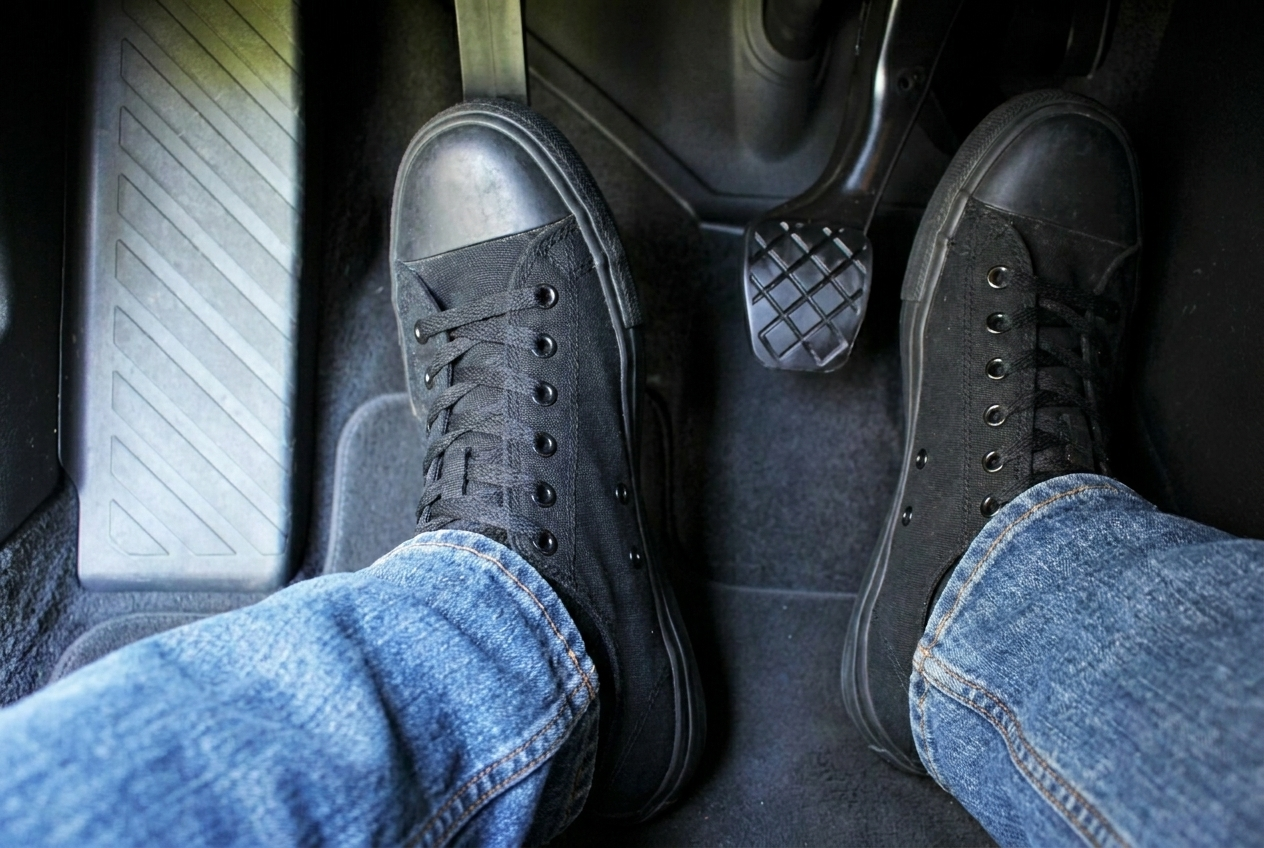
Riding the clutch: The most common cause of premature clutch wear. "Riding" the clutch means keeping the pedal partially depressed during normal driving, for example, resting your foot on the clutch pedal while driving, or holding the vehicle stationary on a hill using the friction point rather than the brakes. In this state, the clutch surfaces are partially engaged and slipping continuously against each other, generating heat and wearing the friction material rapidly.
Excessive slip during take-off: Taking off aggressively from a standstill, particularly on hills, when towing, or when starting at high engine RPM, forces the clutch surfaces to transmit high torque while still slipping. Short bursts of this are normal; repeated aggressive starts significantly accelerate wear.
Hill starts: Using the clutch to hold a vehicle stationary on a hill (rather than using the handbrake or brake pedal) keeps the clutch in the slip zone under load, one of the hardest conditions for clutch friction material. Using the handbrake or footbrake to hold position on a hill, then using a clean clutch engagement to pull away, dramatically extends clutch life.
Towing and heavy loads: More torque through the clutch during take-off means more heat and more wear during the slip phase. Vehicles used regularly for towing or carrying heavy payloads typically require earlier clutch replacement than lightly used private cars.
The hydraulic vs cable clutch
The connection between the clutch pedal and the release bearing can be either mechanical or hydraulic:
Cable clutch: A steel cable runs directly from the pedal to the release fork on the gearbox. Simple, reliable, and easily adjustable. Common on older vehicles and some modern budget vehicles. The cable stretches gradually over time and needs periodic adjustment to maintain the correct pedal feel and bite point.
Hydraulic clutch: A master cylinder at the pedal end and a slave cylinder at the gearbox end work together using hydraulic fluid, the same principle as hydraulic brakes. Provides a more consistent pedal feel that doesn't require adjustment as the clutch wears. More expensive to replace when components fail, but requires minimal maintenance otherwise. Standard on most modern vehicles.
Signs your clutch is wearing out
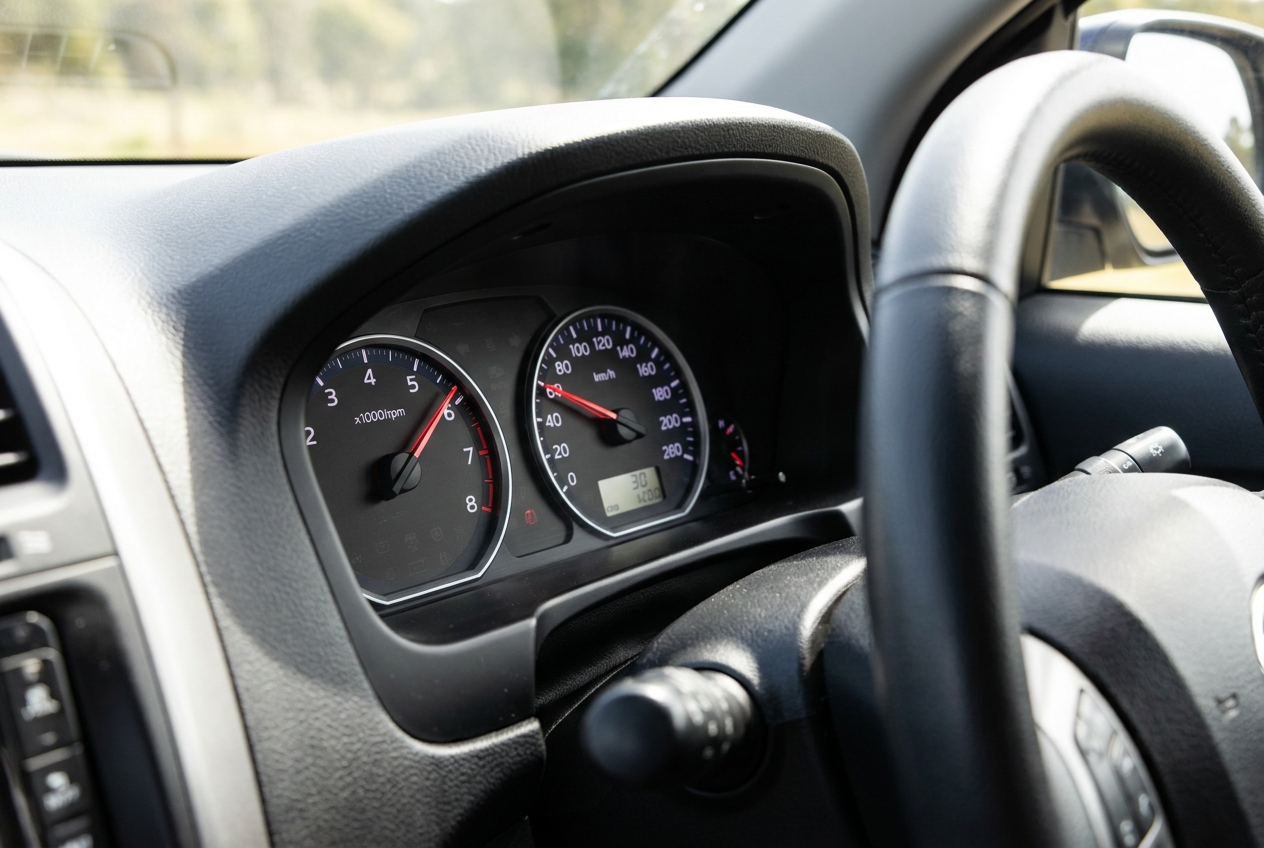
Slipping: The most definitive sign of a worn clutch. A slipping clutch fails to transmit full engine power to the drivetrain, the engine revs rise but the vehicle doesn't accelerate proportionally. Most noticeable under hard acceleration or when climbing a steep hill. If your engine revs climb independently of vehicle speed, your clutch is slipping.
High bite point: A worn clutch disc often has a bite point that moves progressively higher toward the top of the pedal travel, because there's less friction material remaining and full clamping force is needed sooner. If your bite point is near the top of the pedal and has moved noticeably from where it used to be, wear is advanced.
Shuddering on engagement: A shuddering or juddering sensation when releasing the clutch, particularly during slow take-off, can indicate a contaminated clutch disc (oil or fluid on the friction surfaces), uneven wear, or a failing pressure plate. Can also indicate worn engine or gearbox mounts. Worth investigating promptly.
Burning smell: A sharp, acrid burning smell, similar to burning rubber or hot friction material, particularly after hill starts, towing, or traffic, is clutch friction material overheating. Occasional faint burning during difficult manoeuvres isn't unusual; persistent or strong burning smell suggests something is wrong.
Difficulty selecting gears: If the clutch isn't fully disengaging when the pedal is depressed, due to a failing release bearing, hydraulic fault, or cable issue, gear selection becomes difficult or grinding occurs. Not a clutch disc wear issue, but a clutch system fault worth addressing promptly.
Noisy release bearing: A squealing, chirping, or rumbling noise when the clutch pedal is depressed (but not when released) typically indicates a worn release bearing. The release bearing is not expensive as a component, but it requires partial gearbox removal to access, making it sensible to replace alongside the clutch disc and pressure plate when the gearbox is already out.
When to replace a clutch
Clutch life varies enormously, from as little as 50,000km on a vehicle used regularly for towing or driven aggressively in urban traffic, to over 200,000km on a vehicle driven smoothly by a single owner on open roads. There is no fixed replacement interval.
When a clutch is replaced, it is standard practice, and strongly recommended, to replace the clutch disc, pressure plate, and release bearing as a set. The flywheel should be inspected and resurfaced or replaced if scored. Accessing these components requires removing the gearbox, so the labour cost is essentially the same whether you replace all components or just one, cutting corners by replacing only the disc makes no economic sense.
Dual-mass flywheels: the modern complication
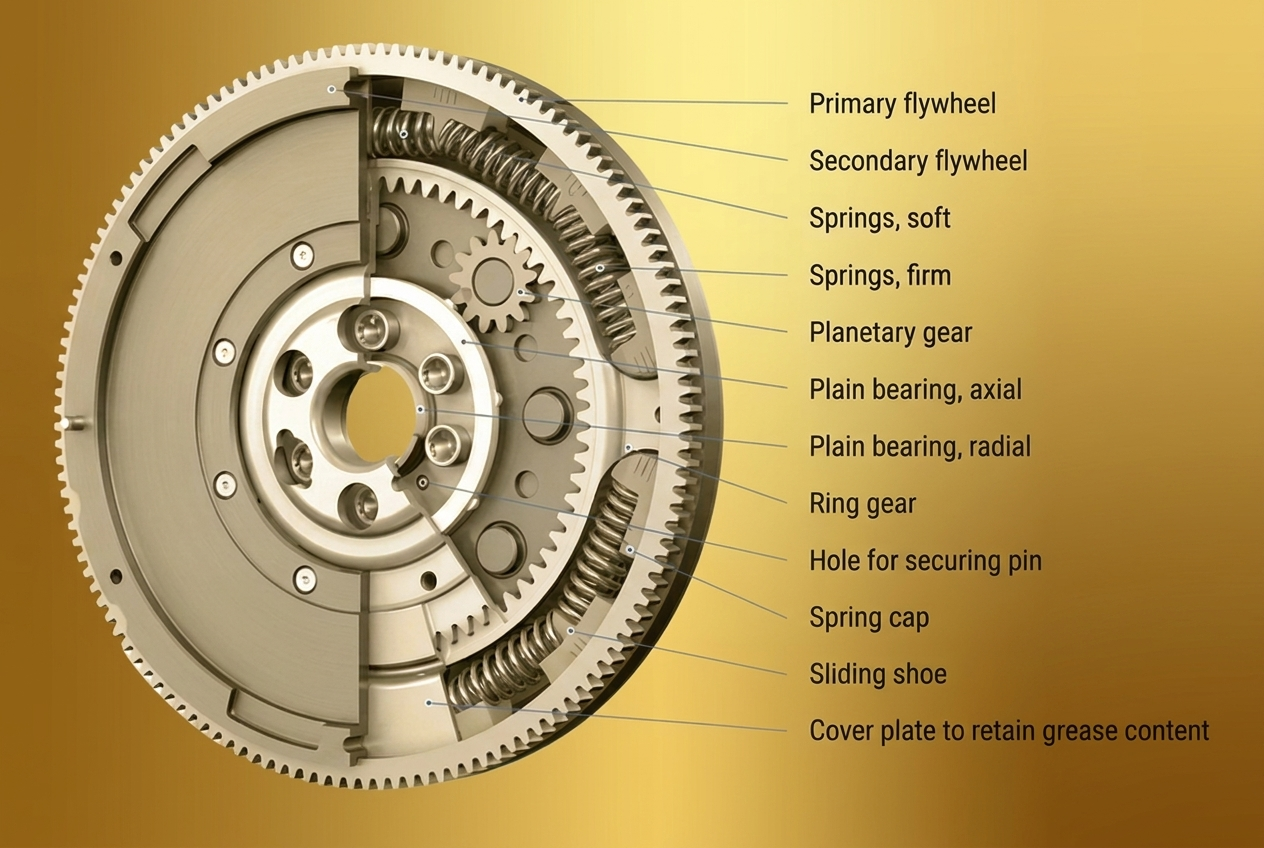
Many modern vehicles, particularly diesels and vehicles with large, torquey petrol engines, use a dual-mass flywheel (DMF) rather than a conventional solid flywheel. A DMF consists of two flywheel masses connected by springs, which absorbs vibration and smooths power delivery more effectively than a solid flywheel can.
DMFs work very well when new but can fail as they age, producing a characteristic rumbling or rattling sound from the clutch area, particularly at idle. When a DMF fails, it typically needs to be replaced alongside the clutch, at significantly higher cost than a conventional solid flywheel replacement. This is an important consideration when budgeting for clutch work on a modern diesel vehicle.
Clutches in EVs, or rather, the absence of one
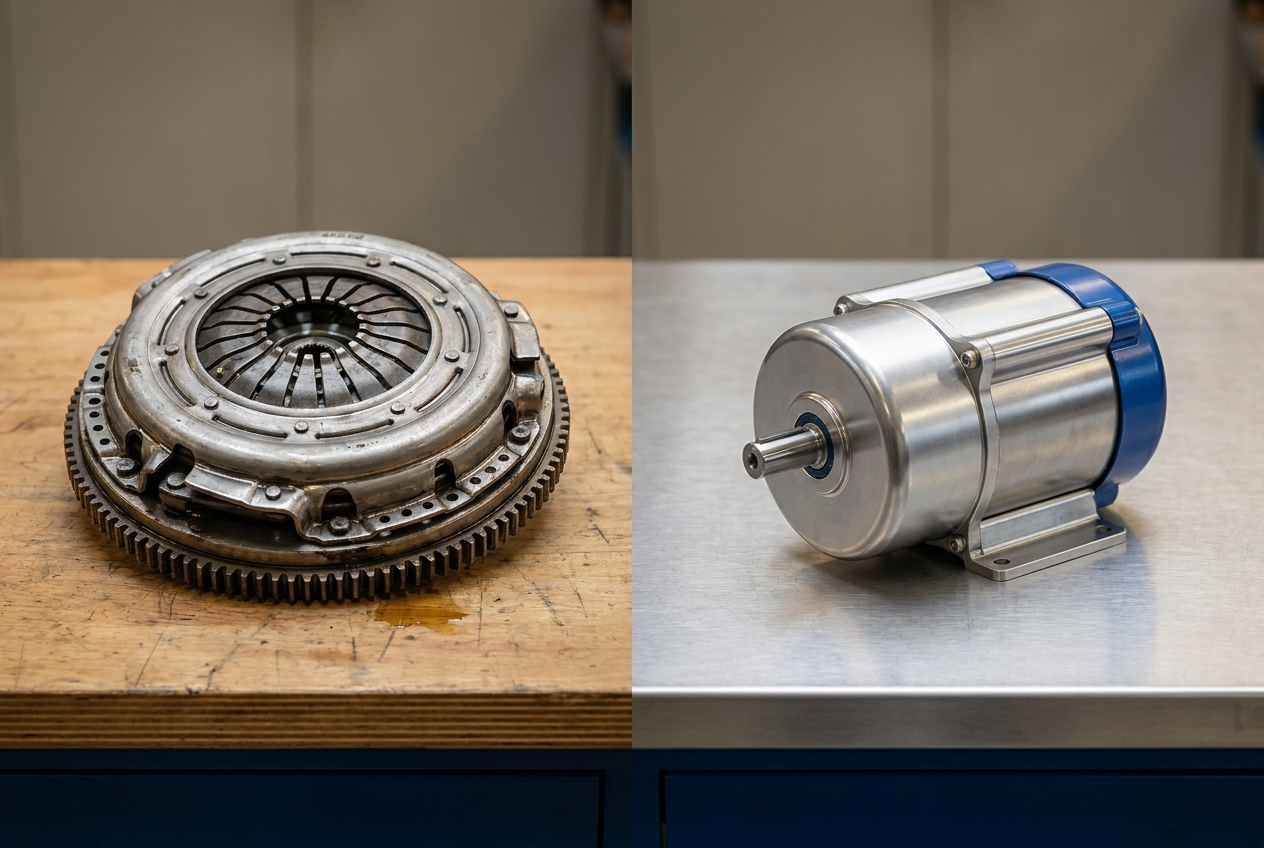
Worth noting for context: electric vehicles have no clutch. The electric motor produces usable torque from zero RPM and across a very wide speed range, which means a multi-speed gearbox, and therefore the mechanism to disconnect the drivetrain from the power source, simply isn't required. Most EVs use a single fixed-ratio reduction drive. No clutch to wear, no bite point to find, no hill-start anxiety. It's one of the many mechanical simplifications that make EVs fundamentally easier to maintain than petrol or diesel vehicles.
Disclaimer
The content in this post is based on our own research, experience, and opinion and is intended for general informational purposes only. It does not constitute professional mechanical advice. While we strive for accuracy, specific symptoms, replacement intervals, and costs vary significantly between vehicle makes, models, and individual condition. We encourage readers to consult a qualified mechanic for diagnosis and advice specific to their vehicle.
Target keywords: how does a clutch work, clutch explained simply, how clutch works manual car, clutch wear NZ
Last updated: June 2026