V2L, V2H, and V2G allow your EV to power appliances, your home, or the grid itself. Here's exactly what each one means, which vehicles support it in NZ, and where the technology is heading
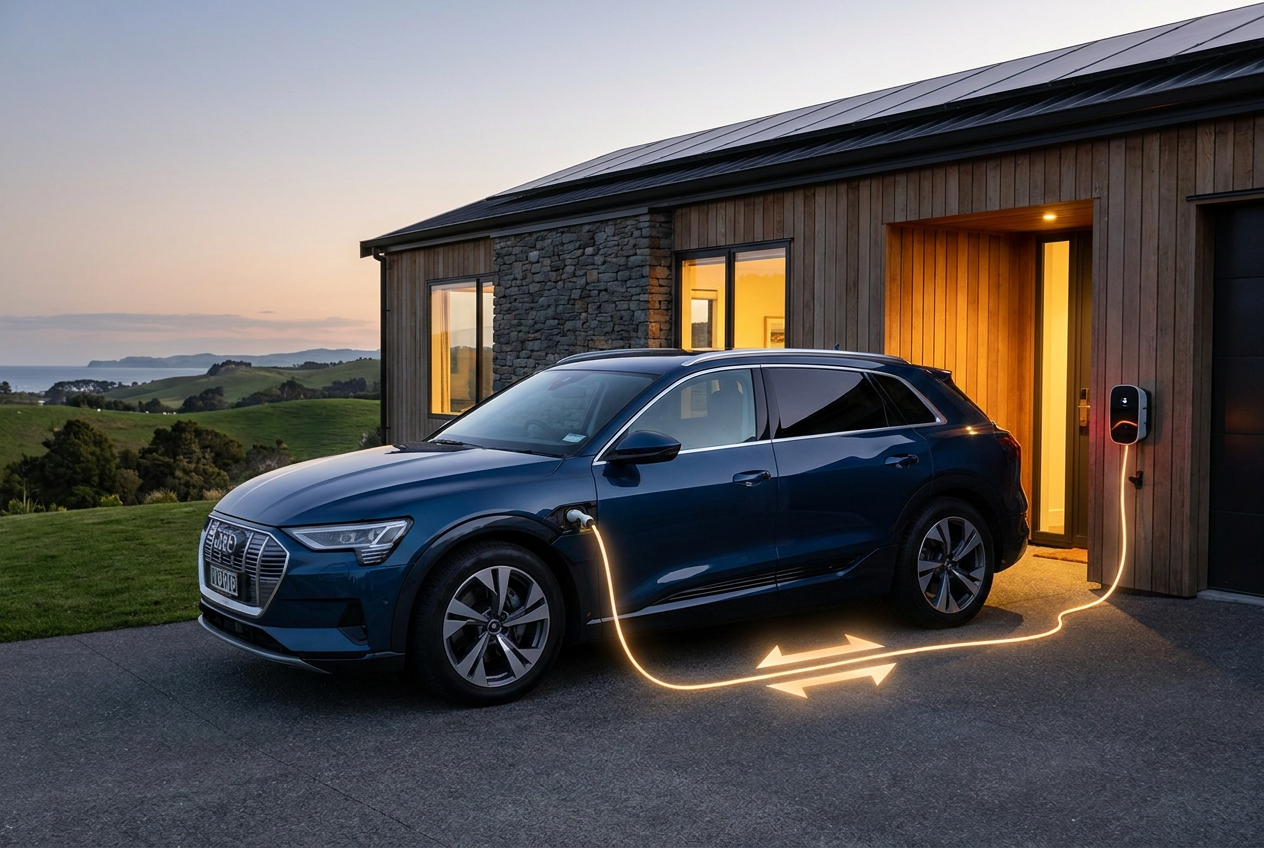
You may have heard the term "V2G" mentioned alongside a new electric vehicle, or seen "V2L" listed as a feature in a car spec sheet without any explanation of what it actually means. These acronyms describe a genuinely exciting shift in what electric vehicles can do, not just consuming energy, but giving it back. Here's exactly what each one means, how they differ, and where each technology stands in New Zealand right now.
The basics: your EV battery is a big energy store
A typical EV battery holds between 40 and 75 kilowatt-hours of energy. For context, the average New Zealand household uses around 15–25 kWh per day. That means a fully charged EV carries enough energy to run an entire home for one to three days, or power a campsite for a week, or run tools on a worksite all day without access to mains electricity.
V2L, V2H, and V2G are three different ways of using that stored energy for something other than simply driving. They sit under a broader umbrella sometimes called V2X, vehicle-to-everything.
V2L — Vehicle to Load
V2L is the simplest and most widely available of the three. It means your EV can power external devices or appliances directly, essentially acting as a large, mobile power bank on wheels.
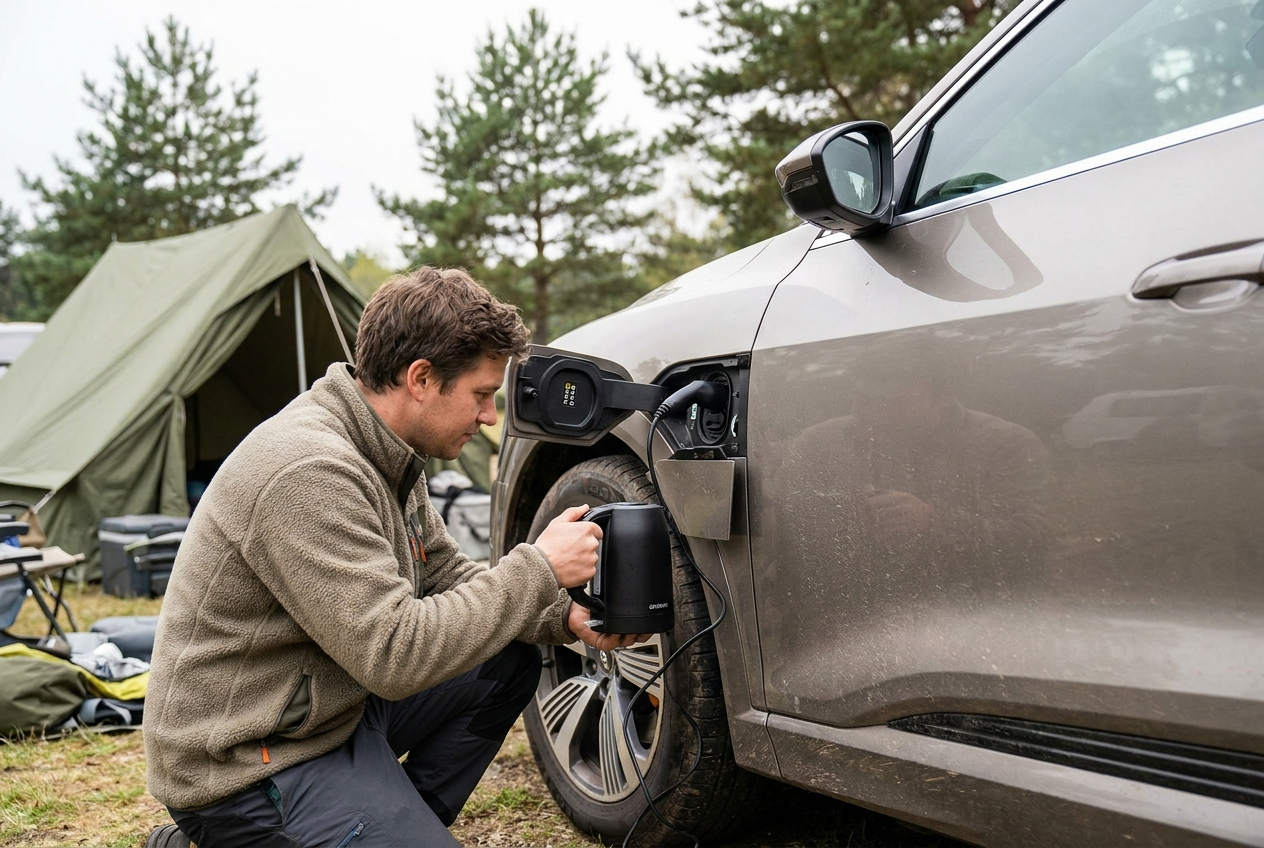
Vehicles with V2L capability have a standard power outlet (typically a 230V AC socket, either built into the exterior charge port or available via an adaptor) that you can plug ordinary household appliances into: a laptop, a coffee maker, power tools, a portable fridge, a camping light, or even a smaller appliance like a TV. As of 2026, the AA reports that 117 EV models available in New Zealand offer V2L capability.
Real-world uses in NZ:
- Camping and outdoor recreation — power a camp kitchen, lighting, or a small heater without a generator
- Worksites without mains power — run power tools from your vehicle
- Emergency backup — during Cyclone Gabrielle, some New Zealand EV owners used V2L to run fridges and water pumps when grid power was cut
V2L doesn't require any special charging equipment, just the adaptor that typically comes with the vehicle. It's available right now, in a wide range of current models, and works immediately out of the box.
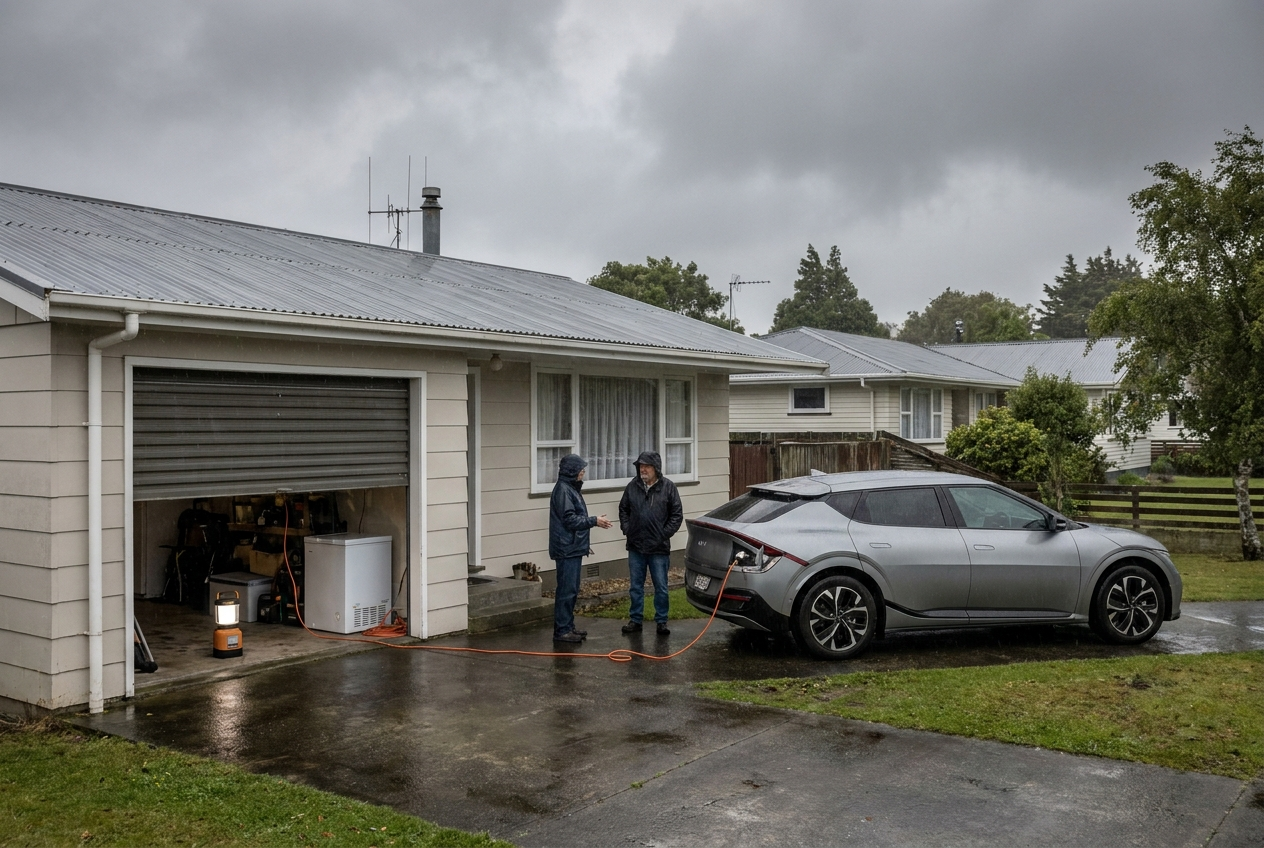
Models with V2L available in NZ (examples): Hyundai Ioniq 5, Hyundai Ioniq 6, Kia EV6, BYD Atto 3, BYD Seal, many 2023+ Chinese-brand EVs.
V2H — Vehicle to Home
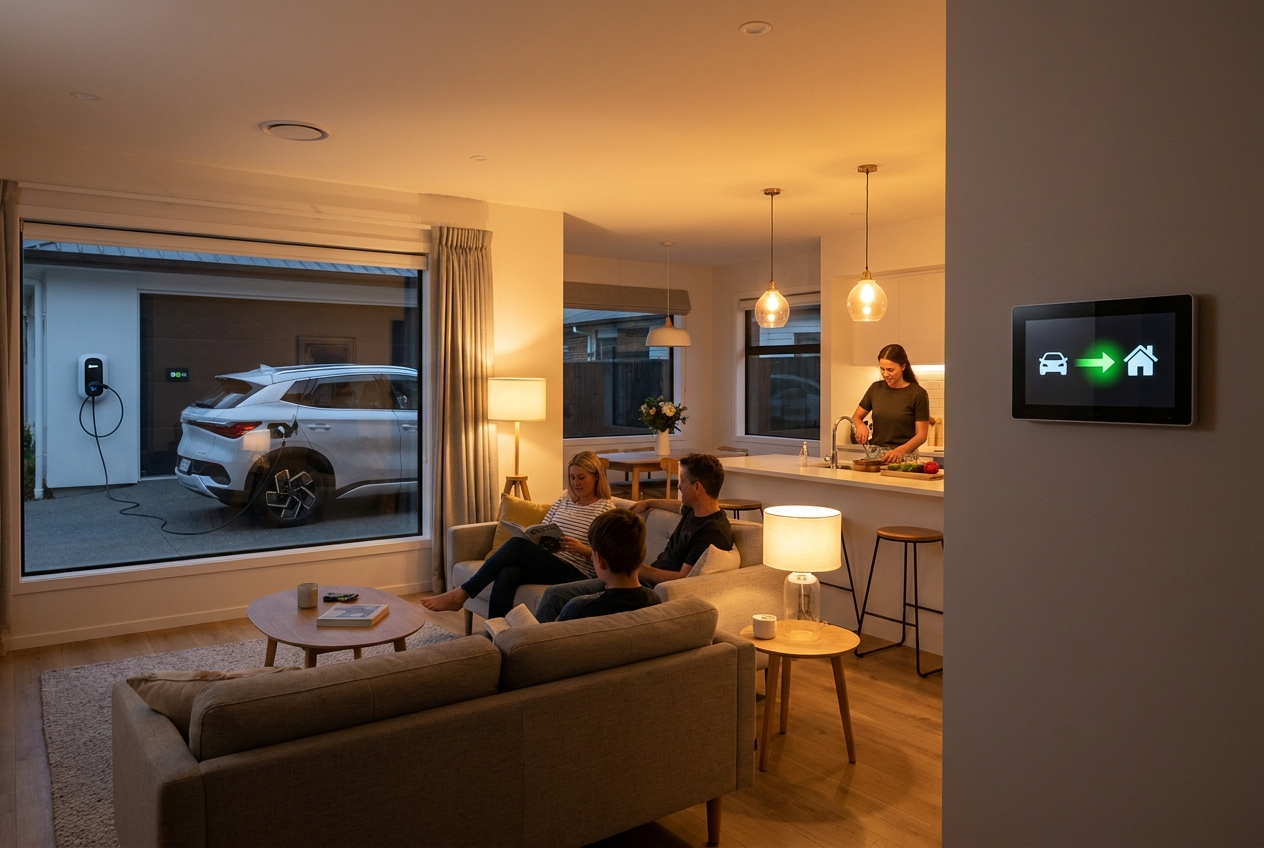
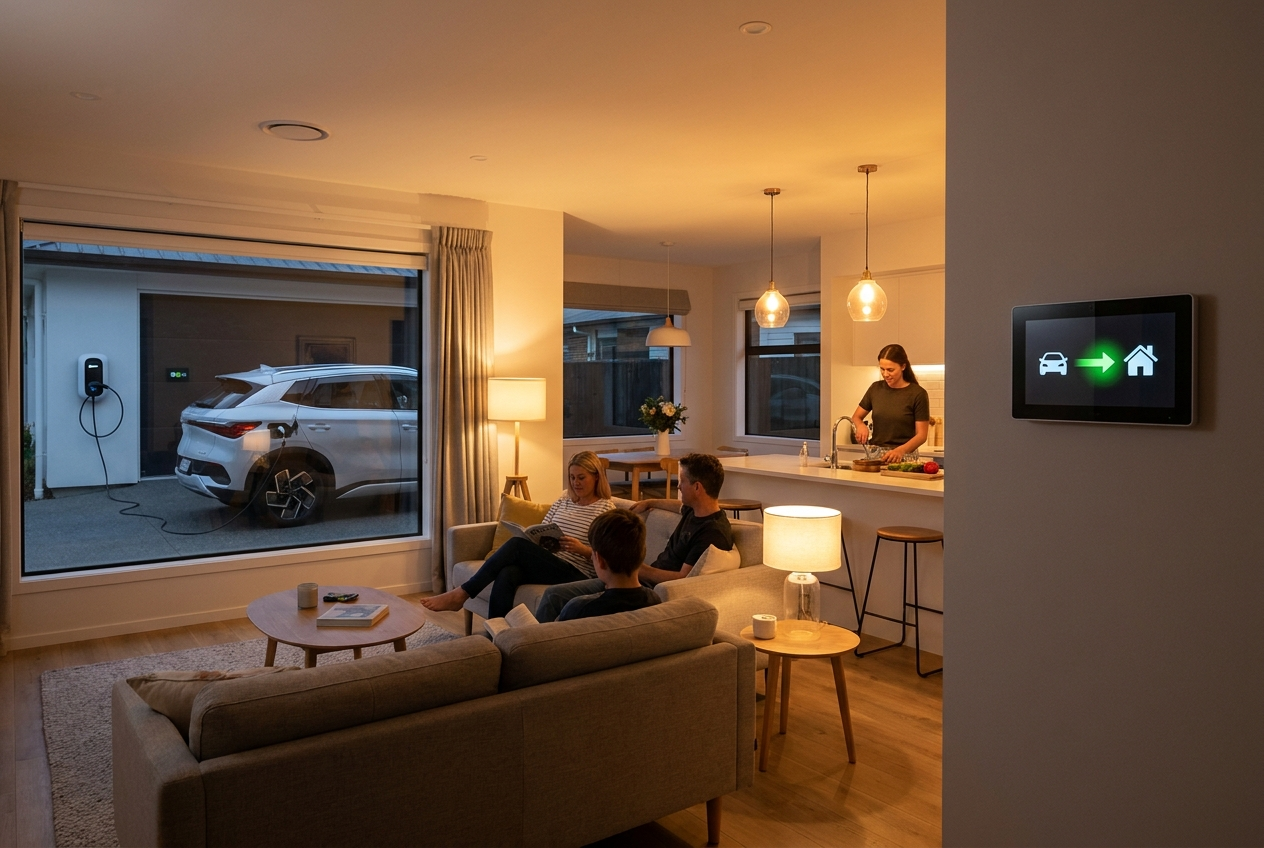
V2H takes the concept a step further, rather than powering a single appliance via a portable socket, your EV feeds power back into your home's electrical system via a bidirectional charger. This allows the car to run your lights, appliances, heat pump, and other household systems directly, just as a home battery like a Tesla Powerwall would.
The potential is significant. A typical 60kWh EV battery contains enough energy to run an average New Zealand home for two to three days. With a bidirectional charger installed and solar panels on the roof, the combination can work as a genuinely powerful energy management system: charge the car cheaply overnight or from solar during the day, then draw from it to power the house during peak-price evening hours, or as backup if the grid goes down.
What's currently available in NZ: The Wallbox Quasar is the most established bidirectional charger available in New Zealand. It currently works with CHAdeMO-equipped vehicles, which includes post-2019 Nissan Leafs and the Mitsubishi Outlander PHEV. The Polestar 3 Long Range also supports V2H. CCS-based bidirectional charging, which would open V2H to Tesla, Hyundai, Kia, and most modern EVs, is in development and expected to become available in the coming years.
Important considerations:
- V2H requires a dedicated bidirectional charger to be installed by a qualified electrician, it's not a plug-in-and-go solution
- Hardware costs remain high relative to standard wallbox chargers
- Check whether your vehicle manufacturer supports V2H for your specific model and what, if any, impact it may have on your battery warranty
V2G — Vehicle to Grid
V2G is the most ambitious of the three, and the one with the most transformative long-term potential. It extends the concept beyond your own home and allows electricity to flow from your EV battery back to the wider electricity grid itself.
In a V2G setup, your parked EV can charge up during periods of low grid demand and cheap electricity, then sell that stored energy back to the grid during periods of high demand, earning you a credit or payment in return. The vehicle becomes not just a way of getting around, but an active participant in the national electricity system.
Why this matters for New Zealand:
According to a 2026 report from Drive Electric New Zealand, if just 30% of New Zealand's vehicle fleet became V2G-enabled, the combined storage and output potential could rival the generating capacity of every power station in the country operating simultaneously at full output. That's a remarkable figure, and it reflects the fact that most cars sit parked and unused for the majority of each day, representing an enormous untapped reservoir of energy storage capacity.
New Zealand's strong electricity networks, high off-street parking rates, and relatively unified regulatory structures are all factors that make V2G deployment here more straightforward than in many other markets.
Where V2G currently stands in NZ:
V2G is still in the trial phase in New Zealand. EECA (Energy Efficiency and Conservation Authority) is conducting a V2G trial in Queenstown, initially installing fewer than ten V2G chargers with plans to expand to 30–40 chargers across homes and businesses if the first phase is successful. Installations are being completed through 2026, with data collection running through 2027.
Current V2G-capable vehicles in NZ include imported post-2019 Nissan Leafs, selected BYD models using third-party bidirectional chargers, and the Mitsubishi Outlander PHEV and Eclipse Cross PHEV. New Zealand Energy Minister Simon Watts has signalled that V2G is one of the options under consideration for New Zealand's energy security and affordability.
The AA's feasibility study on V2G in New Zealand found that the technology is technically viable and does not significantly degrade modern EV batteries, and estimates that individual EV owners could eventually offset vehicle ownership costs by up to $2,000 per car per year through participation in V2G programmes.
V2X — The umbrella term
You may also encounter the term V2X (vehicle-to-everything) which simply describes all of the above collectively, V2L, V2H, and V2G, plus vehicle-to-vehicle (V2V) communication technologies that allow cars to share safety information with each other. It's a shorthand for the direction of travel: EVs becoming active participants in the energy ecosystem rather than simply passive consumers of it.
Quick comparison
| Technology |
Powers |
Needs special hardware? |
Available in NZ now? |
| V2L |
Individual appliances |
No — just an adaptor |
Yes, widely |
| V2H |
Your whole home |
Yes — bidirectional charger |
Limited, but available |
| V2G |
The electricity grid |
Yes — V2G charger + network enrolment |
Trial stage (Queenstown) |
What this means if you're buying an EV today

V2L is worth actively seeking out when comparing current models, it adds genuine practical value at no extra cost and no special installation required. If camping, outdoor work, or emergency preparedness matters to you, having V2L capability is a meaningful feature that only a small number of people actually check for.
V2H is worth knowing about if you're planning a long-term solar and home energy setup. The technology is available now, but the hardware investment is significant and compatibility is currently limited to a smaller range of vehicles. It's worth building V2H compatibility into your decision-making when choosing a vehicle if home energy integration is part of your longer-term plan.
V2G is one to watch rather than act on today for most buyers, the technology is real, the potential is compelling, and the NZ trial will tell us a great deal about what a commercial rollout might look like. It's the kind of feature that may become a meaningful differentiator when choosing between EVs in two to three years' time.
Disclaimer
The content in this post is based on our own research, experience, and opinion and is intended for general informational purposes only. It does not constitute professional financial, technical, or electrical advice. While we strive for accuracy, V2G, V2H, and V2L technology, compatible vehicle and charger details, and regulatory frameworks are evolving rapidly and subject to change. We encourage readers to confirm current compatibility and consult qualified professionals before making any decisions based on bidirectional charging capability.
Target keywords: V2G V2L V2H New Zealand, vehicle to grid NZ explained, EV power your home New Zealand, bidirectional charging NZ 2026
Last updated: June 2026