Modern cars come packed with safety technology — but what do AEB, ACC, LKA, and BSM actually do? Here's a plain-English guide to the safety features you'll find on new and used vehicles
Browse any new car listing and you'll encounter a string of acronyms, AEB, ACC, LKA, BSM, LDW, FCW, that manufacturers use to describe their safety technology. Understanding what these features actually do, how they work, and whether they make a meaningful difference to safety helps you make a more informed decision when buying, whether the vehicle is brand new or a few years old.
This guide explains the most important modern vehicle safety features in plain English, how each one works, and what to look for.
What is ADAS?
ADAS stands for Advanced Driver Assistance Systems, the collective name for the electronic safety and convenience features found in modern vehicles. These systems use cameras, radar, ultrasonic sensors, and in more advanced vehicles, LiDAR, to monitor the vehicle's surroundings and either alert the driver to hazards or intervene to help avoid a collision.
Unlike passive safety features such as airbags and crumple zones, which are designed to protect occupants once a crash has already begun, ADAS features are designed to help prevent crashes from happening in the first place. Airbags save lives when everything else has failed; ADAS tries to prevent reaching that point.
Research suggests that Automatic Emergency Braking alone reduces rear-end crashes by approximately 50%. The combined effect of multiple ADAS systems working together is contributing to a measurable reduction in road fatalities in countries where they've become standard equipment.
Automatic Emergency Braking (AEB)
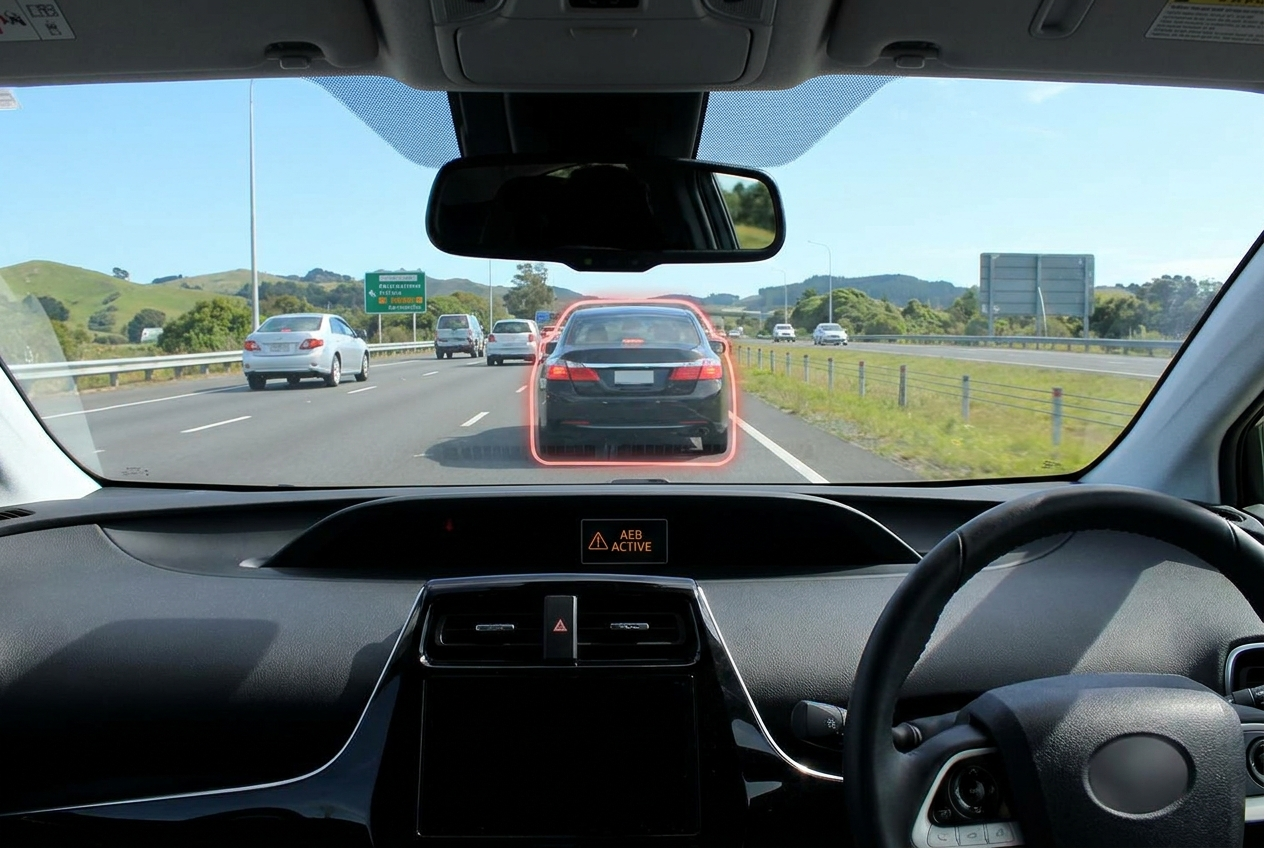
What it does: AEB continuously monitors the road ahead using cameras and radar. If it detects that a collision is imminent and the driver hasn't responded in time, it automatically applies the brakes, either avoiding the collision entirely or significantly reducing its severity.
How it feels to drive: In normal conditions you'll never notice it. It only intervenes when the system calculates a collision is unavoidable without action. Most systems give a visual and/or audible warning first, and only apply the brakes if you don't react.
Pedestrian and cyclist detection: More sophisticated AEB systems can also detect pedestrians and cyclists, not just vehicles. From 2026, new safety standards in many markets require AEB to be capable of stopping vehicles for pedestrians even in low-light conditions at speeds up to 100km/h.
Why it matters: AEB is widely considered the single most important active safety technology currently available. It intervenes at the moment of crisis, when human reaction time is often insufficient, and its effectiveness is well-documented across real-world crash data.
Adaptive Cruise Control (ACC)
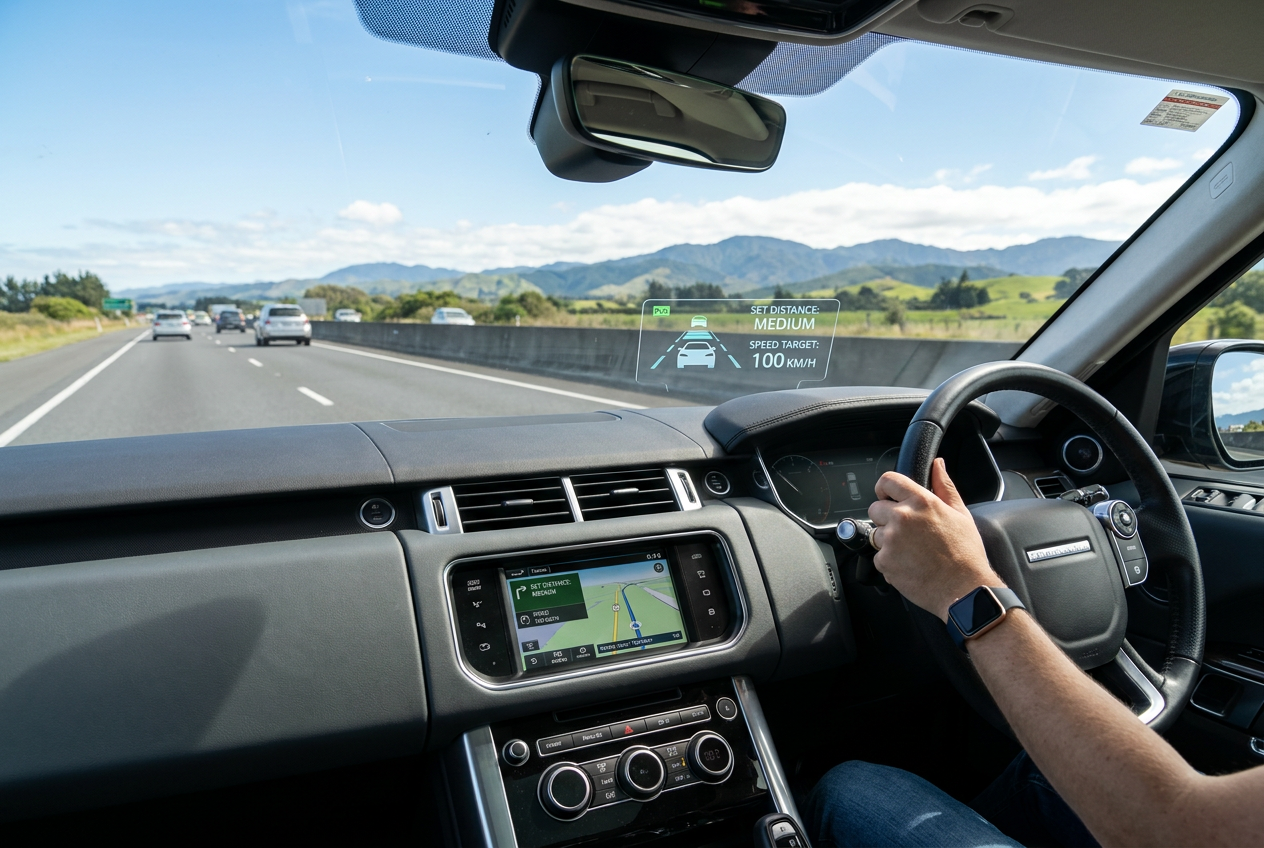
What it does: ACC extends conventional cruise control to maintain a set following distance from the vehicle ahead, automatically adjusting speed to match traffic. When traffic slows, the system brakes; when it clears, it accelerates back to your set speed.
Stop-and-go capability: More advanced ACC systems can bring the vehicle to a complete stop in traffic and automatically pull away again when traffic moves, sometimes called Traffic Jam Assist. This is particularly useful on motorways and in heavy stop-start commuting conditions.
How it feels: On long motorway drives, ACC significantly reduces driver fatigue by removing the constant micro-adjustments of accelerating and braking. Many drivers describe the difference as substantial on trips longer than an hour.
Lane Departure Warning (LDW) and Lane Keep Assist (LKA)
Lane Departure Warning monitors your vehicle's position within the lane using forward-facing cameras. If you begin to drift across a lane marking without indicating, it alerts you, typically with a visual warning, an audible beep, or a steering wheel vibration.
Lane Keep Assist goes further: rather than just warning you, it applies gentle corrective steering input to guide the car back into the lane. The intervention is typically subtle, a light nudge rather than a sharp correction.
Important limitation: Both systems rely on being able to read lane markings clearly. On rural roads without clear markings, in heavy rain, or where road paint has faded, these systems may behave unpredictably or deactivate. They're highly effective under good conditions; less so in the kinds of challenging rural conditions common across New Zealand.
Blind Spot Monitoring (BSM)
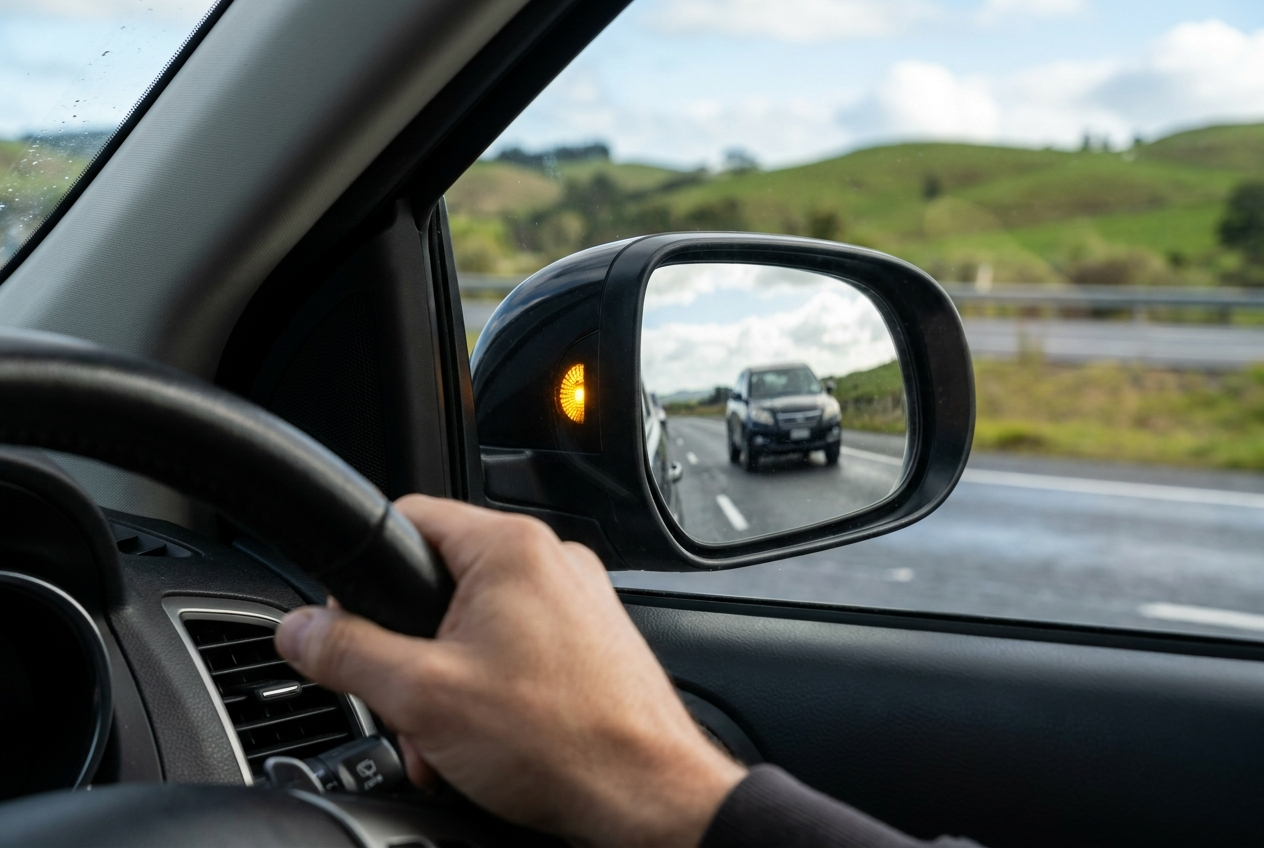
What it does: BSM uses radar sensors to watch the areas beside and slightly behind your vehicle, the blind spots that mirrors don't adequately cover, particularly relevant when changing lanes on a motorway. When a vehicle is detected in your blind spot, a warning indicator (typically on or near the relevant wing mirror) lights up.
Blind Spot Intervention: More advanced systems go beyond warning to actively intervene, if you indicate and begin to change lanes with a vehicle in your blind spot, the system can apply light braking on the appropriate wheel to prevent the merge.
Why it matters: Blind spot crashes during lane changes are among the most common motorway accidents. BSM is one of the most practically useful safety features for everyday driving, particularly on multi-lane roads.
Rear Cross-Traffic Alert (RCTA)
What it does: RCTA uses rear radar sensors to detect vehicles approaching from either side while you're reversing, particularly useful when backing out of a parking space where your view to the sides is blocked by adjacent vehicles.
Rear Automatic Emergency Braking: Some systems add automatic braking capability, stopping the vehicle if you continue reversing toward a detected object without responding to the warning.
Forward Collision Warning (FCW)
What it does: FCW monitors the gap between your vehicle and the one in front, and alerts you when the gap is closing too quickly for you to stop comfortably at your current speed. Unlike AEB, FCW only warns, it leaves the braking to the driver.
Most modern systems combine FCW and AEB together, so the warning comes first and automatic braking follows if you don't respond.
Driver Monitoring System (DMS)
What it does: DMS uses an interior camera to track the driver's eye movements, head position, and blink rate to detect signs of drowsiness or distraction. If you appear to be falling asleep or looking away from the road for too long, the system provides an alert, often a coffee cup icon and an audible warning suggesting you take a break.
More advanced versions can detect when a driver has become unresponsive altogether, a medical emergency, for example, and initiate a controlled stop. Subaru's 2026 EyeSight system includes an Emergency Lane Stop Assist feature that will automatically pull the vehicle over and call emergency services if the driver doesn't respond.
Autonomous Emergency Steering (AES)
What it does: More advanced than AEB, AES can steer the vehicle to avoid a collision when braking alone won't be enough, for example, swerving to avoid a sudden obstacle that appears in the car's path. This requires a more sophisticated sensor suite and is currently found primarily on higher-specification vehicles.
Parking Assistance Systems
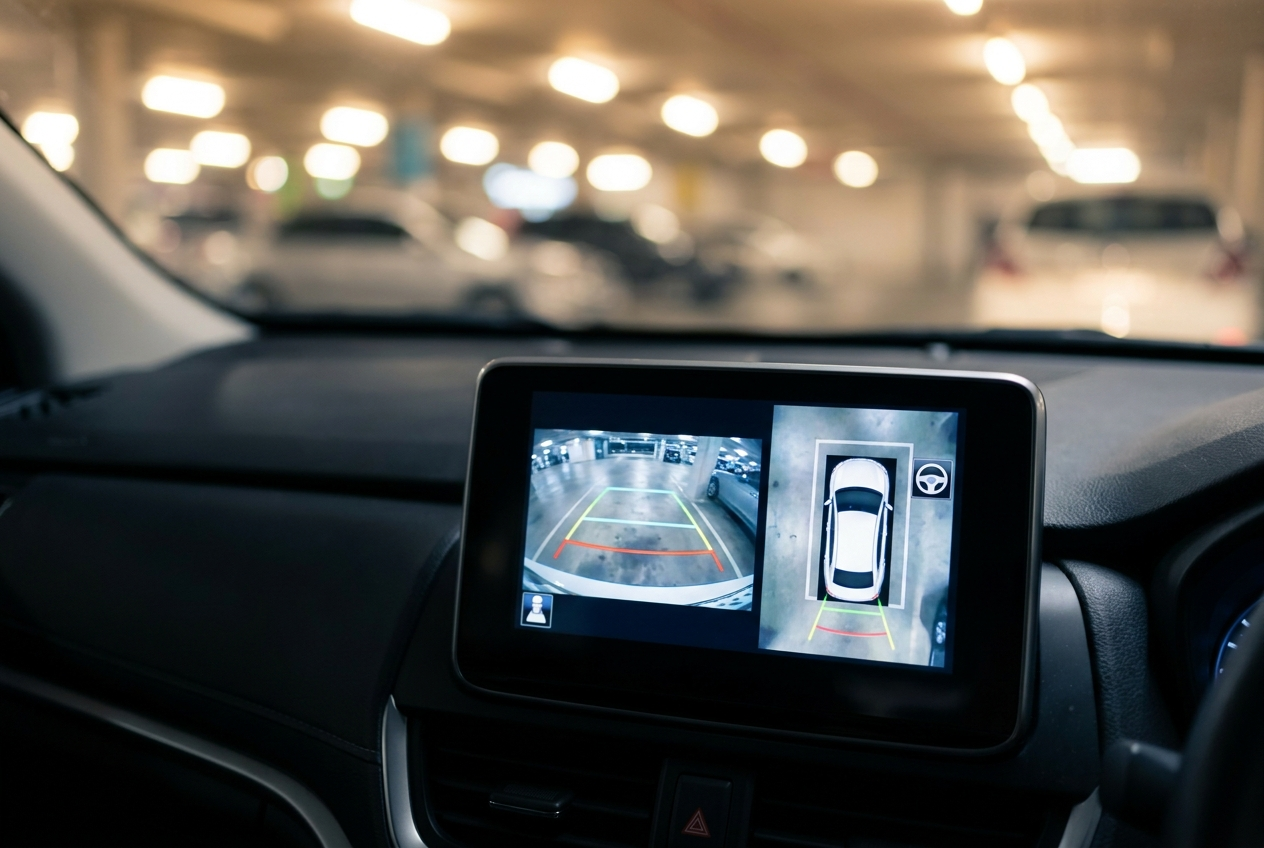
Modern parking assistance ranges from basic to comprehensive:
- Rear camera: A legal requirement on new vehicles in many markets, providing a rear view while reversing
- Surround-view / 360° camera: Uses multiple cameras to generate a virtual bird's-eye view of the vehicle, very useful in tight car parks and urban environments
- Parking sensors: Ultrasonic sensors that detect distance to objects and provide audible warnings as you approach
- Automated parking: The vehicle can identify a suitable parking space and execute the parking manoeuvre itself, the driver controls the speed via the accelerator and brake, while the car handles the steering
Traffic Sign Recognition (TSR)
What it does: TSR uses a forward camera to read speed limit signs and other road signs, displaying the current speed limit on the dashboard. Some systems go further and adjust adaptive cruise control speed automatically when a new limit is detected, though most drivers prefer to keep that aspect manual.
Adaptive Headlights
Modern adaptive headlights adjust their beam direction and intensity automatically based on steering input, vehicle speed, and oncoming traffic. The most sophisticated systems use LED matrix technology that can deactivate individual LEDs to avoid dazzling oncoming drivers while maintaining maximum visibility for your own road ahead.
ADAS limitations worth knowing
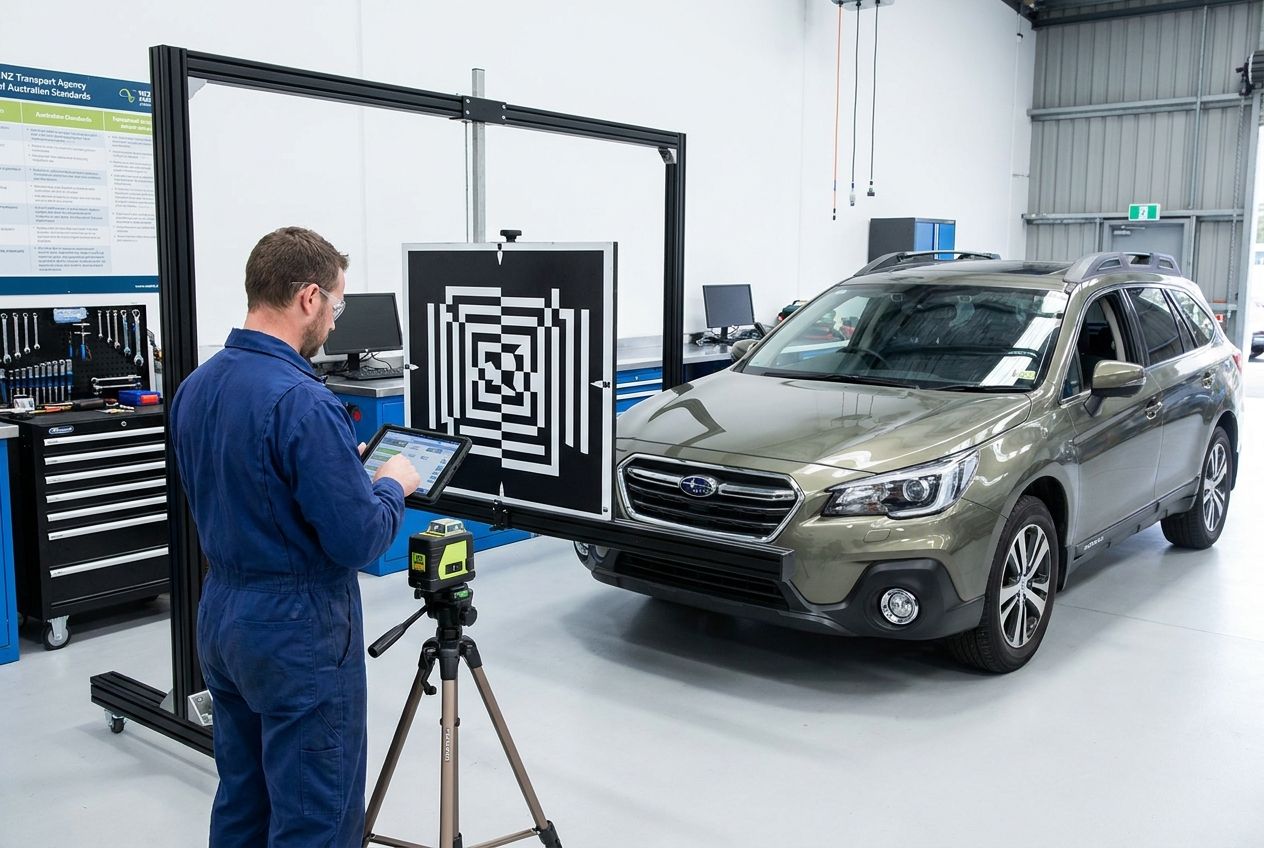
Calibration dependency: ADAS systems rely on cameras and sensors that must be precisely aligned to work correctly. Any event that could shift these sensors, a windshield replacement, collision repair, even suspension work, may require the system to be professionally recalibrated. An ADAS system that is even slightly out of calibration can provide inaccurate information that the driver trusts implicitly, potentially more dangerous than having no system at all.
Not a substitute for attention: Every ADAS system currently available is classified as Level 1 or Level 2 automation, meaning it assists the driver, not replaces them. The driver must remain attentive and ready to take control at all times. Treating ACC or lane keep assist as a hands-free driving system is both unsafe and contrary to how these systems are designed.
Weather and lighting limitations: Camera performance can be affected by heavy rain, direct sunlight, fog, and dirty sensors. Radar sensors are more weather-resistant, but not immune. Most systems will alert you when they're operating in degraded conditions.
What to check when buying a used vehicle
Not all used vehicles will carry all of these features, they've become standard across the industry at different rates over the past decade. When assessing a used vehicle:
- Ask specifically which ADAS features are fitted, don't assume
- Test each feature on the test drive (AEB can sometimes be tested with a supervised low-speed demonstration by the dealer)
- Check whether any sensors or cameras have been damaged or replaced, and whether recalibration was completed afterward
- Newer vehicles (2020 onwards) are increasingly likely to carry a full suite; older vehicles may have only basic AEB and a rear camera
Safety credentials from independent testing organisations such as ANCAP (the Australasian New Car Assessment Program, which applies in New Zealand) provide a useful cross-check, a 5-star ANCAP rating reflects not just crash test performance but the presence and performance of active safety systems.
Disclaimer
The content in this post is based on our own research, experience, and opinion and is intended for general informational purposes only. It does not constitute professional technical or safety advice. While we strive for accuracy, specific feature availability, system names, and performance characteristics vary by vehicle make, model, year, and specification. We encourage readers to confirm safety feature details directly with the manufacturer or dealer and to consult ANCAP ratings and manufacturer documentation for model-specific guidance.
Target keywords: vehicle safety features explained, ADAS explained NZ, AEB automatic emergency braking explained, modern car safety technology 2026
Last updated: June 2026